
An Interview with the winner of The FACE Highly Commended Prize: Faria Xu from the University of Edinburgh
Before studying fashion, Faria Xu was first a painter. If she had to describe herself in one sentence, she would say that she first learned to understand the world through a paintbrush, and later learned to continue that same conversation through clothes. Even now, she thinks of herself first as a creator, and only after that as an artist or designer, the two have never been in any particular order for her, but rather two outlets for the same impulse.
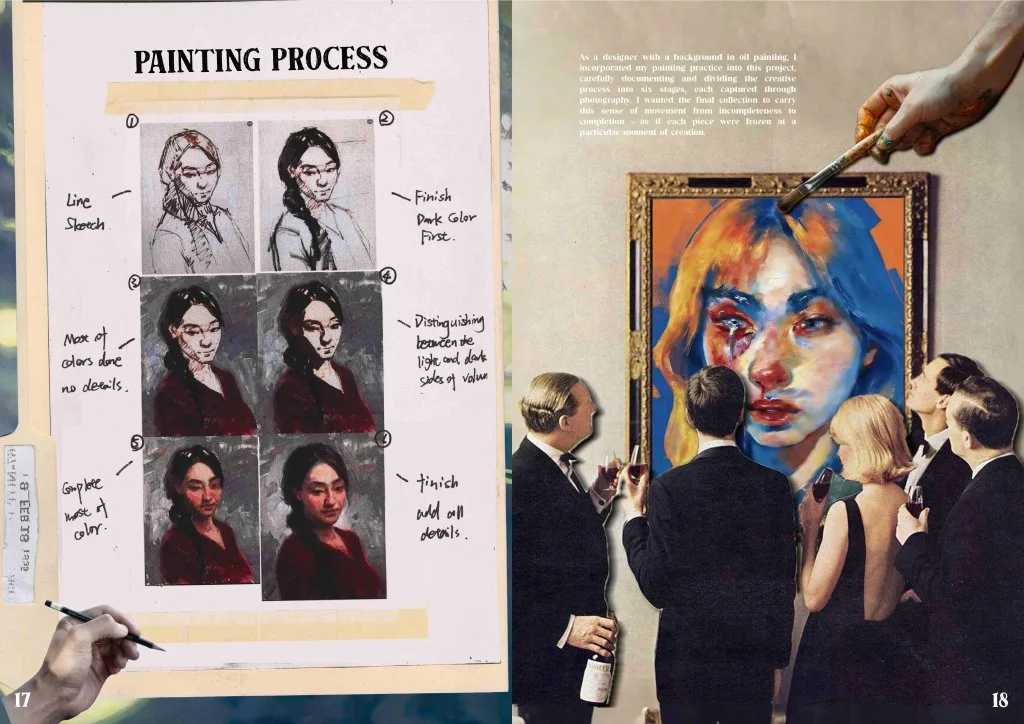
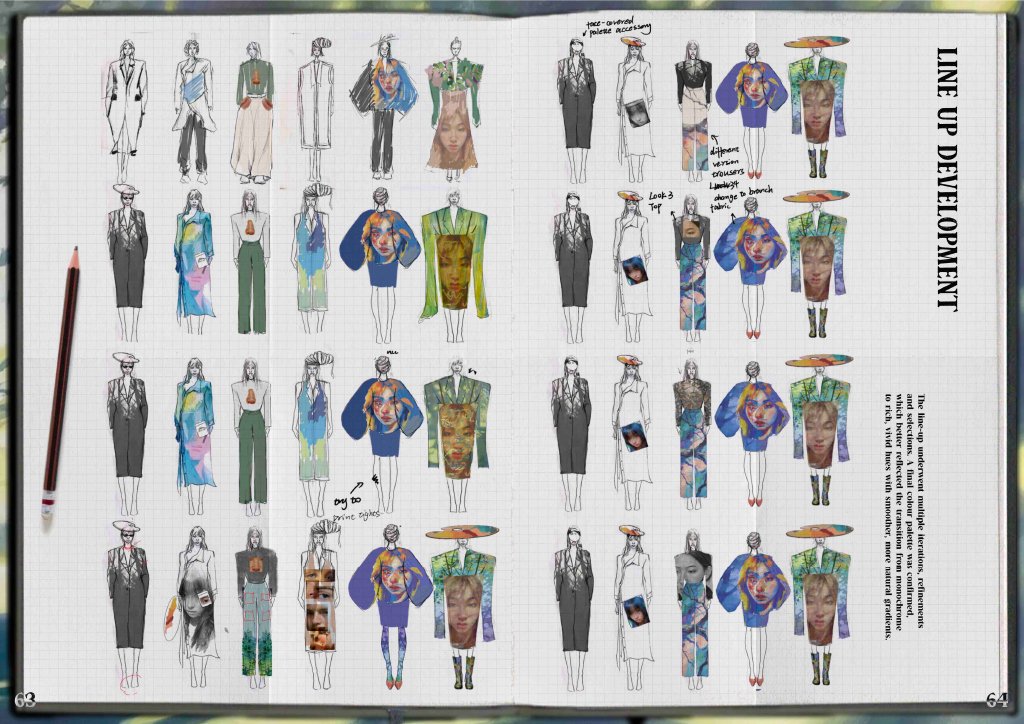
The way Faria approaches every design is much like the way she approaches a painting. Before beginning a piece, she observes it as she would a canvas, not thinking about what a garment “should” look like, but looking at it as she would a still life or a person, layer by layer, again and again, until she understands what she actually wants to say. Almost every direction her work takes begins from that same observational instinct: a private, half-formed intuition developed through constant experimentation, sampling, and rebuilding until it slowly takes shape, much like a painting moving from its first sketch to its final layer of colour.
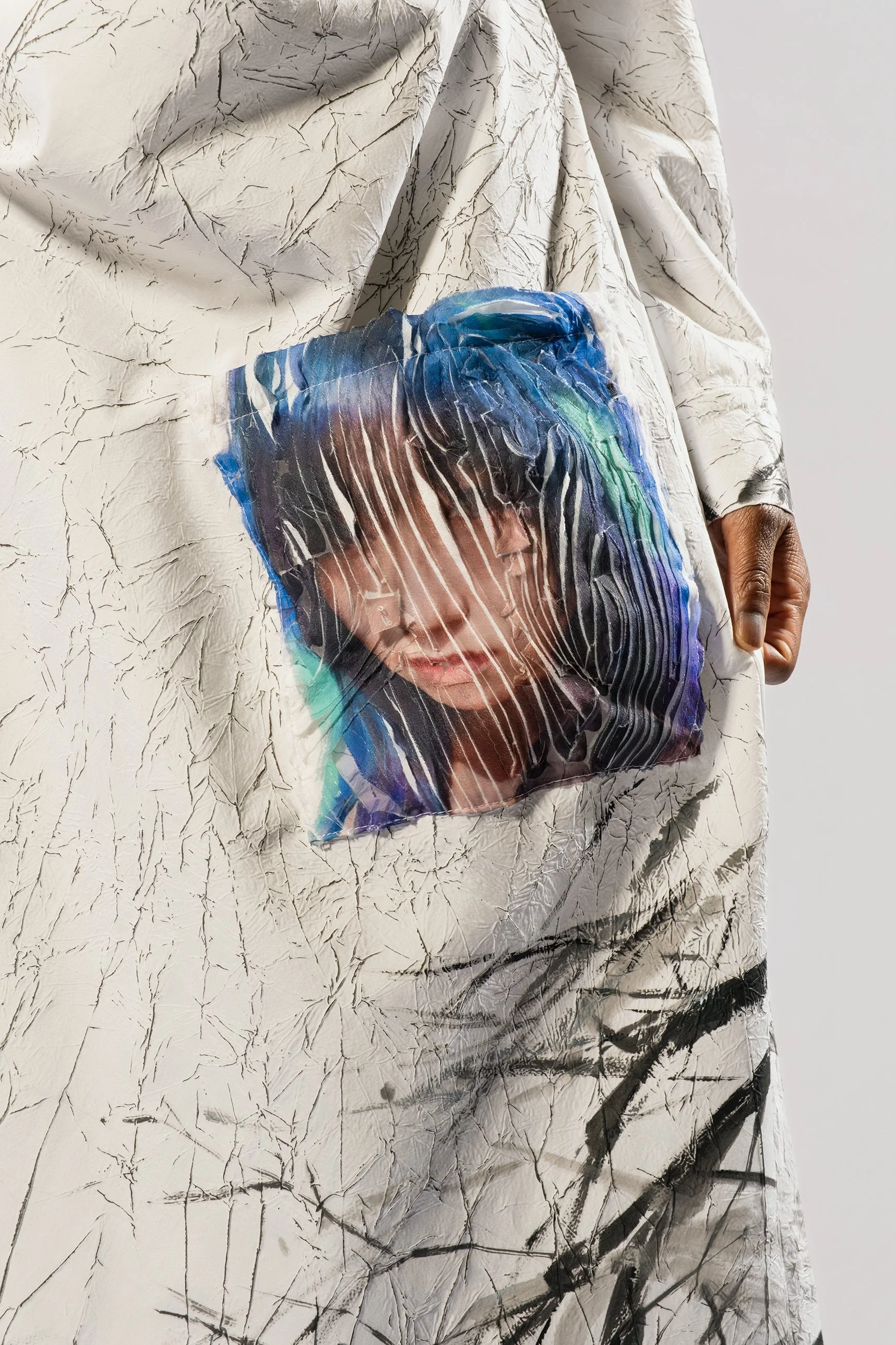
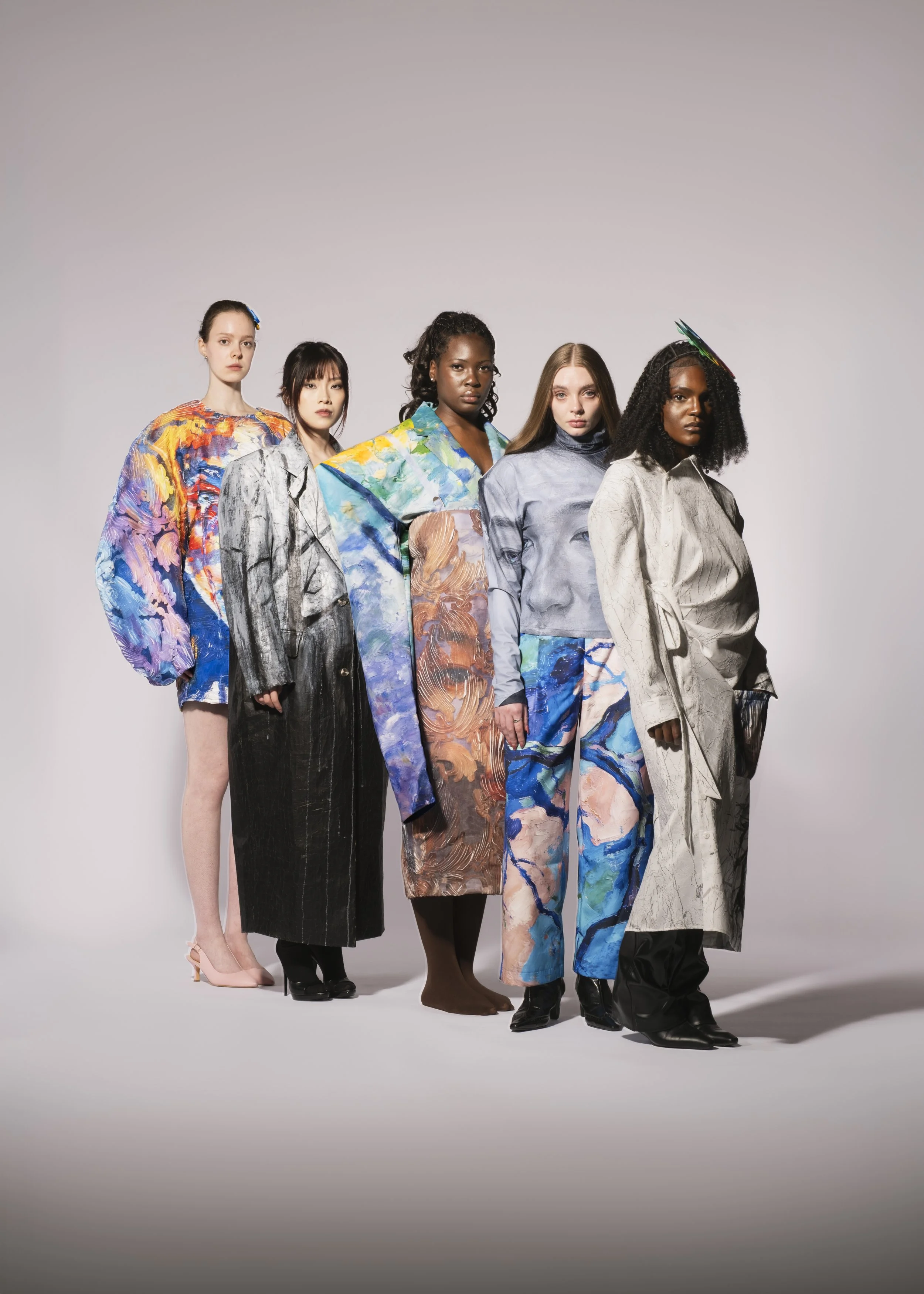
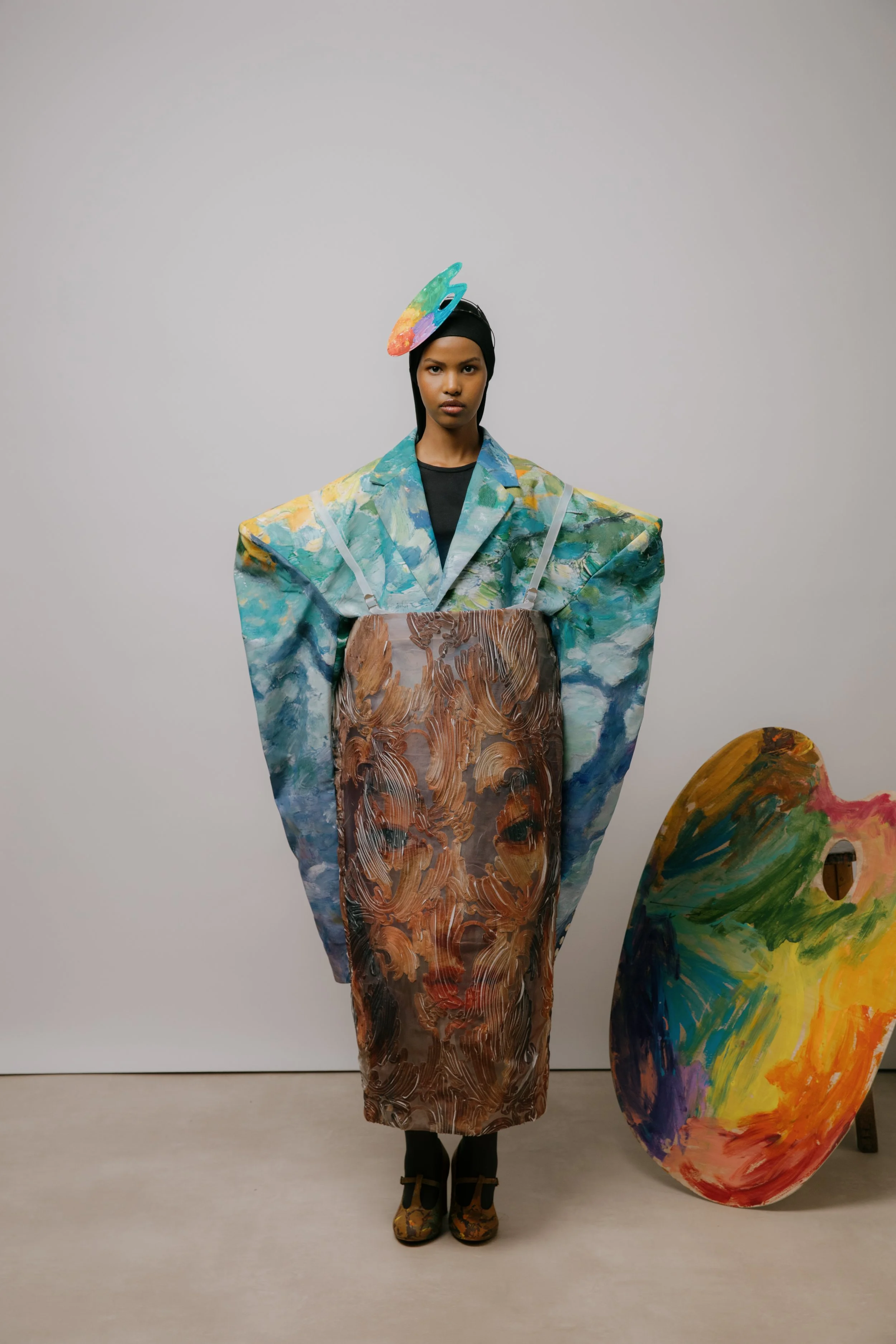
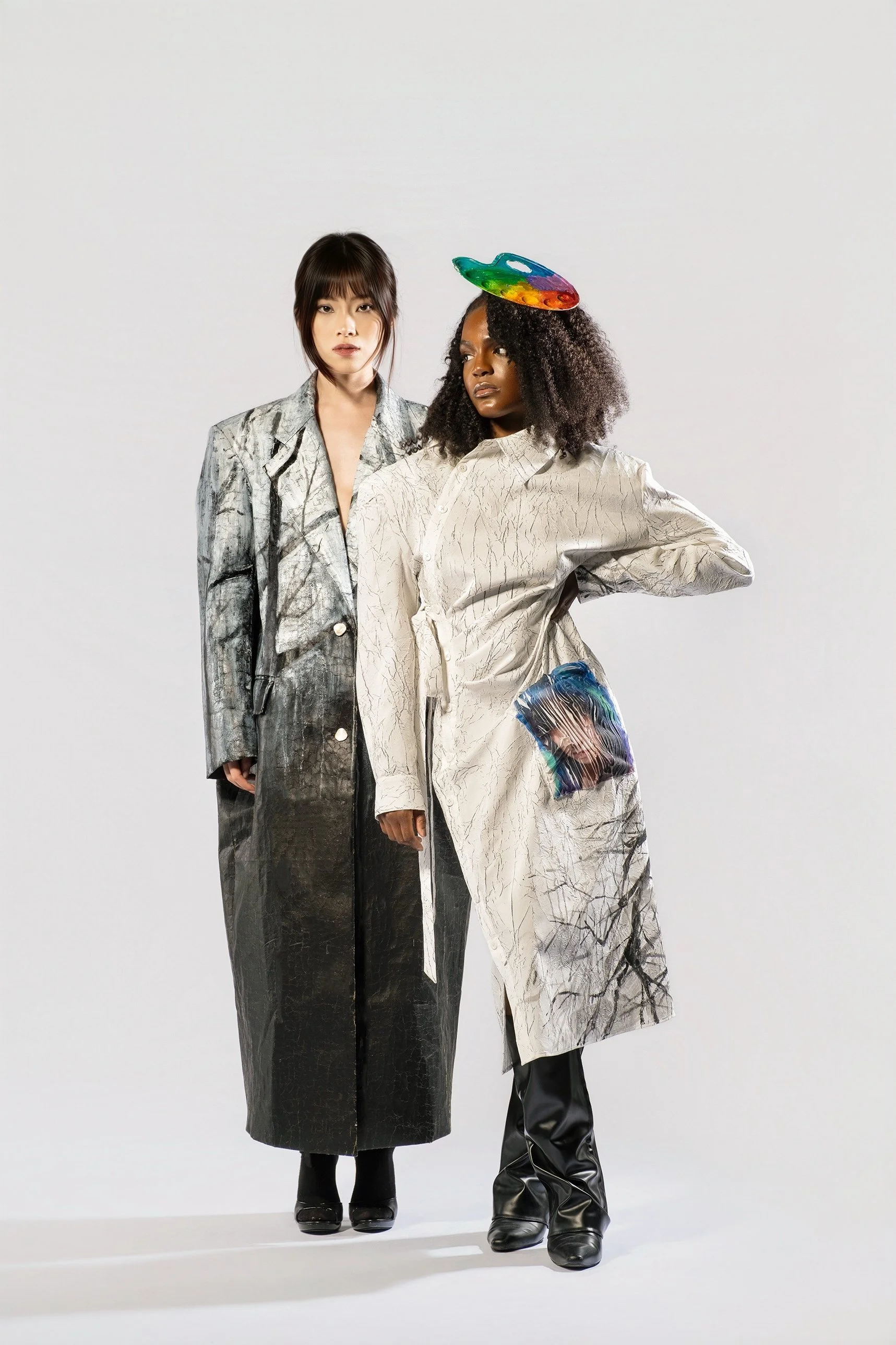
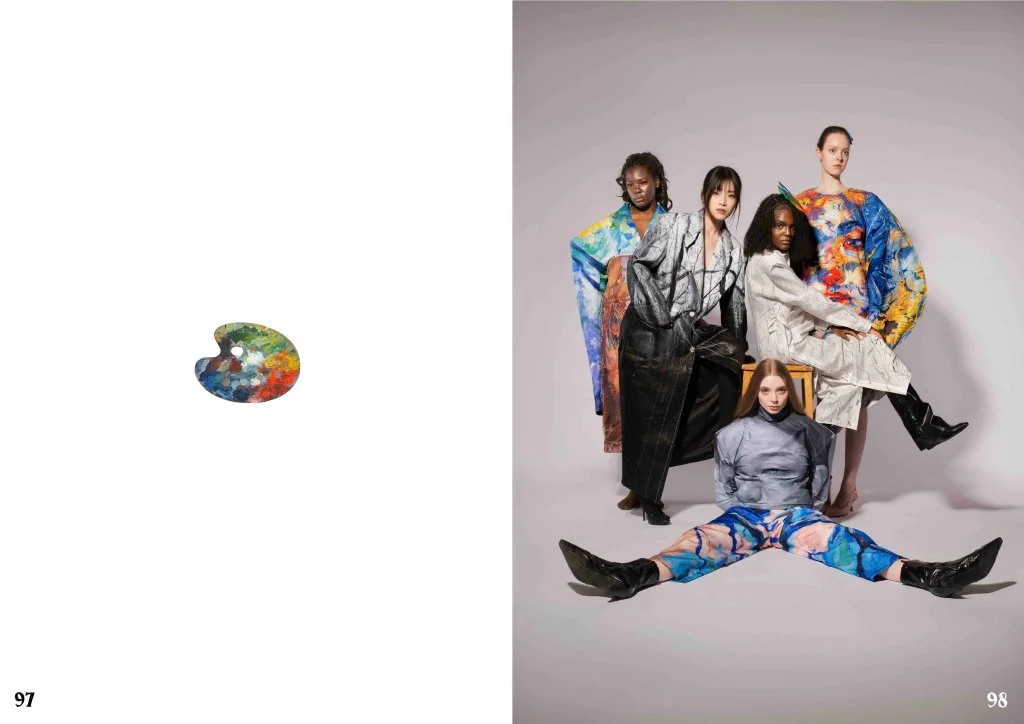
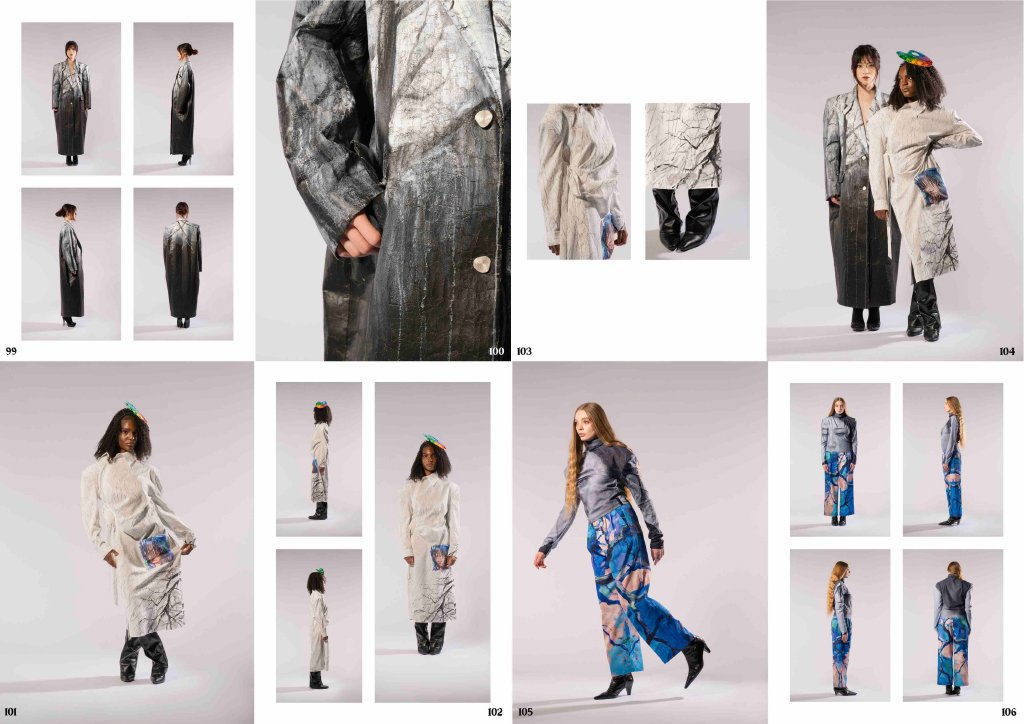
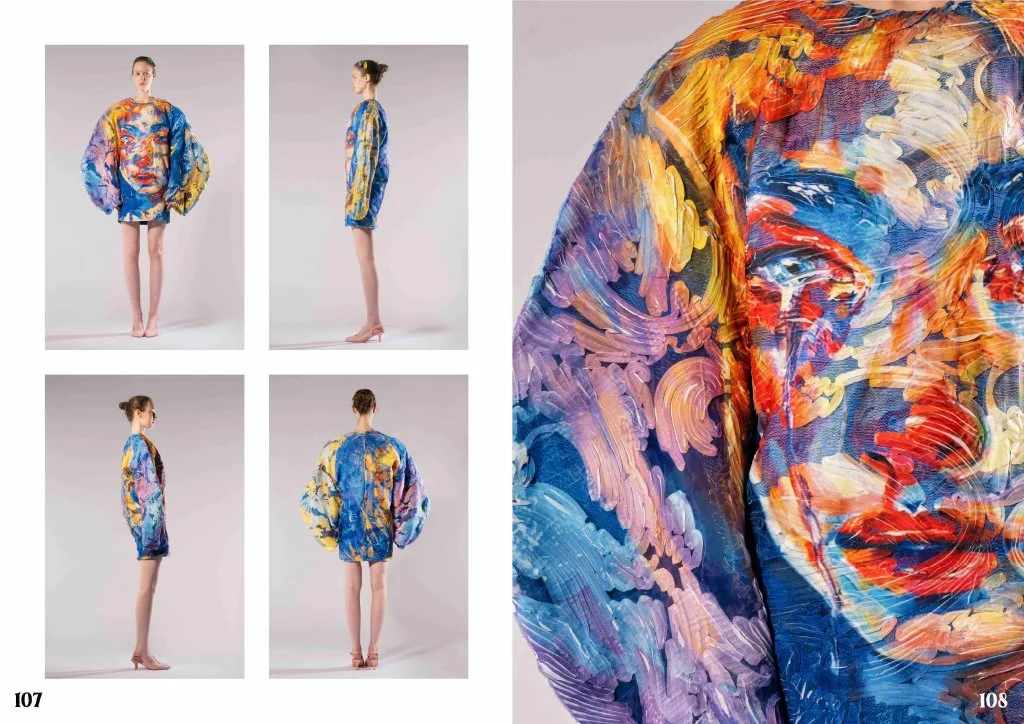
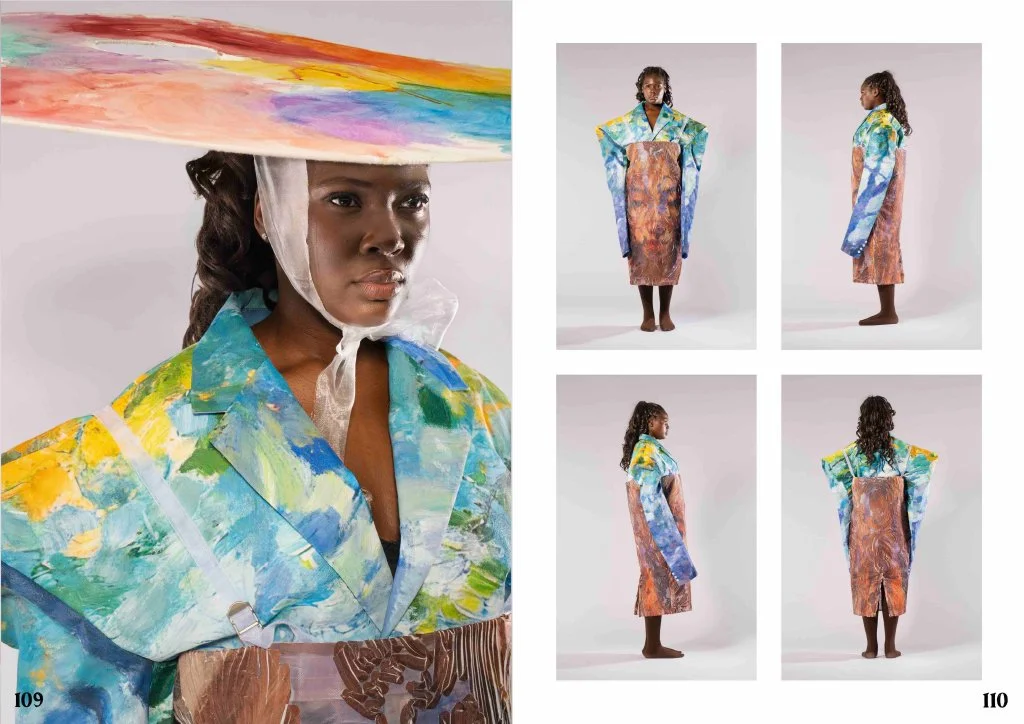
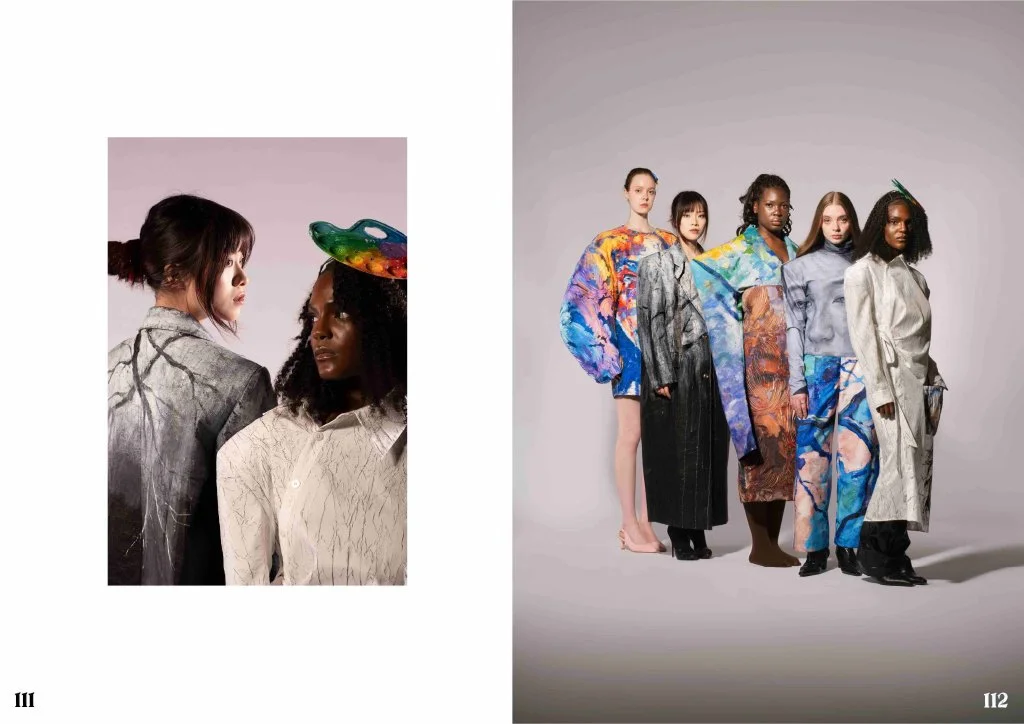
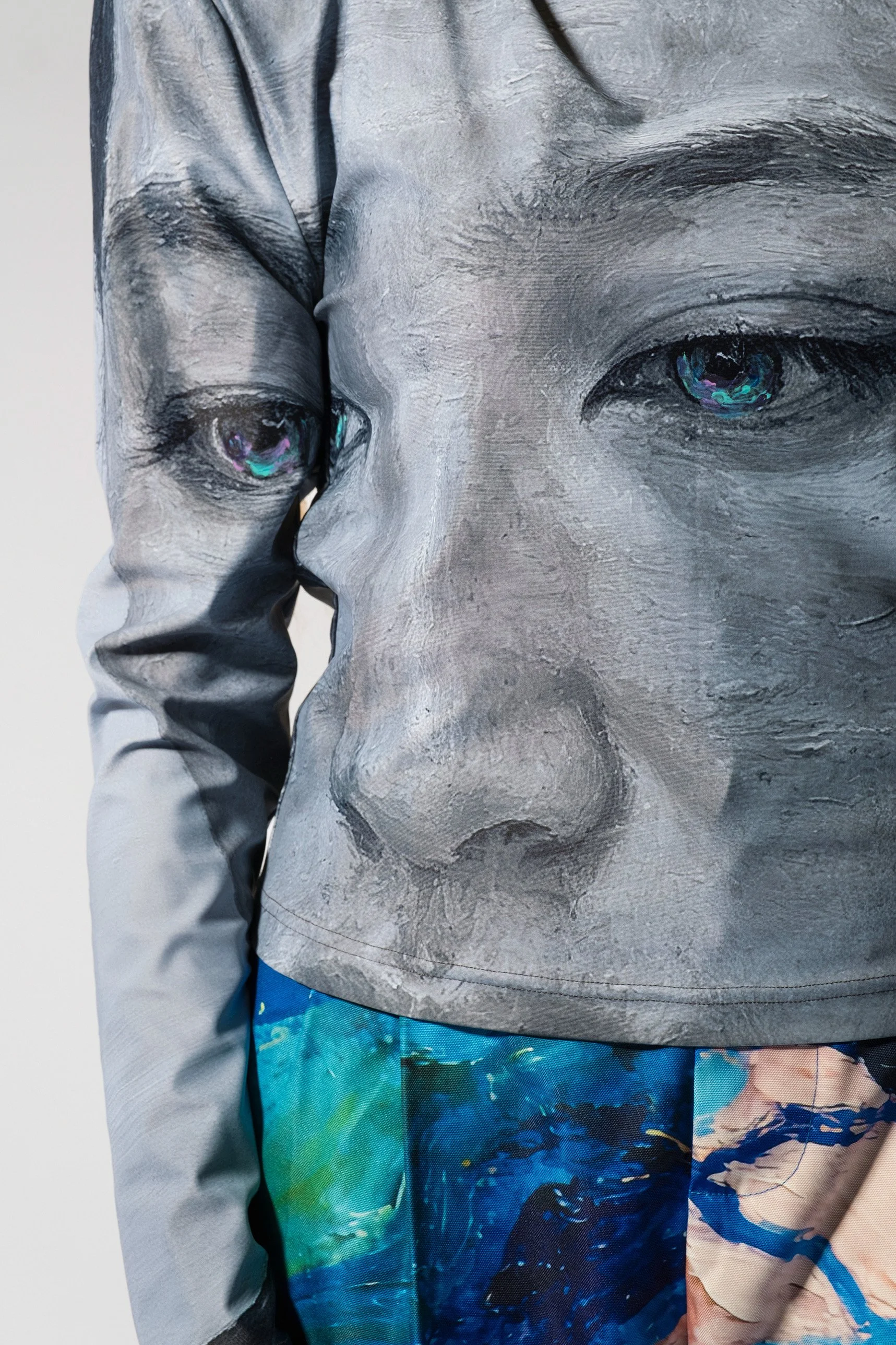
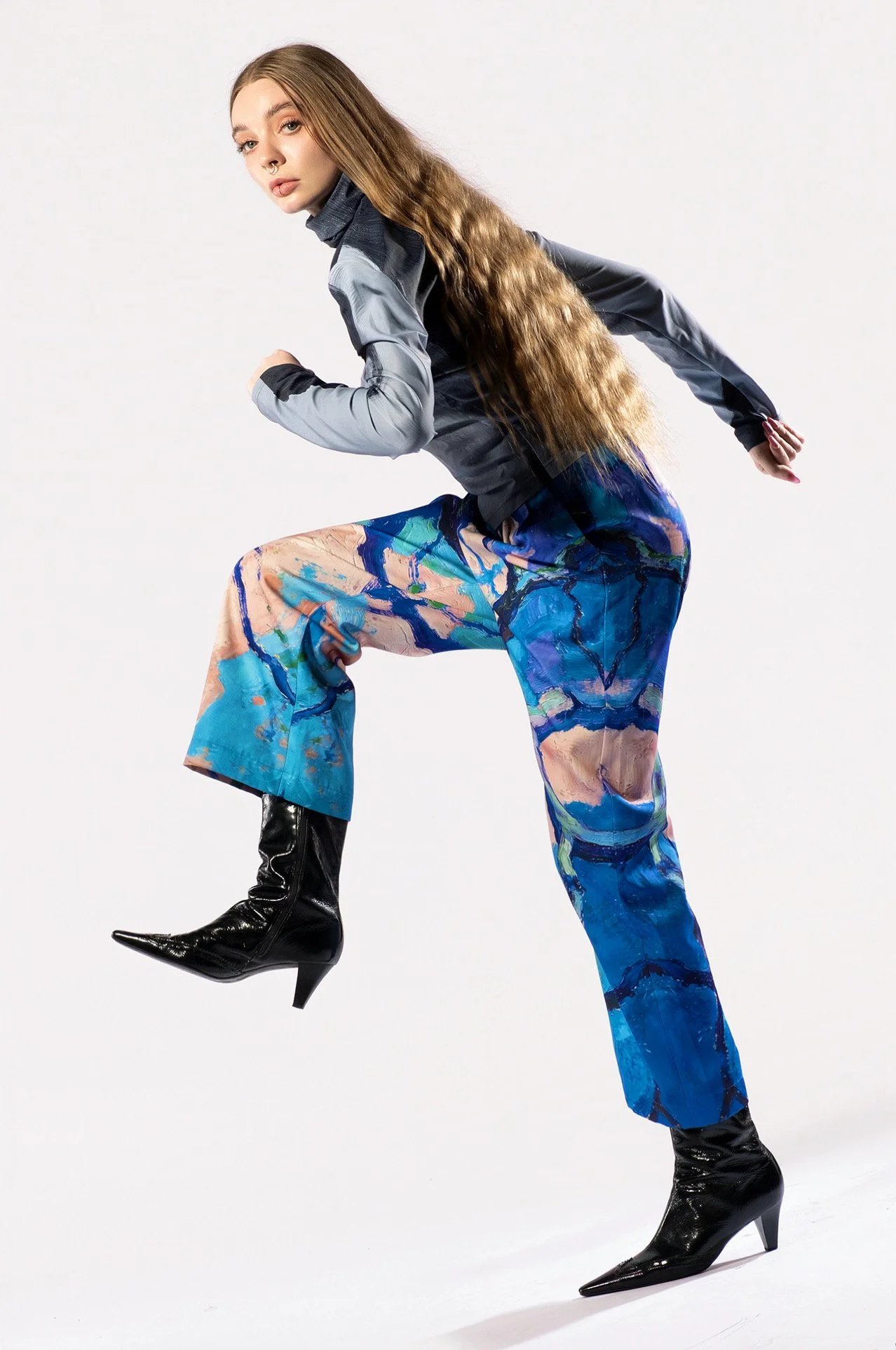
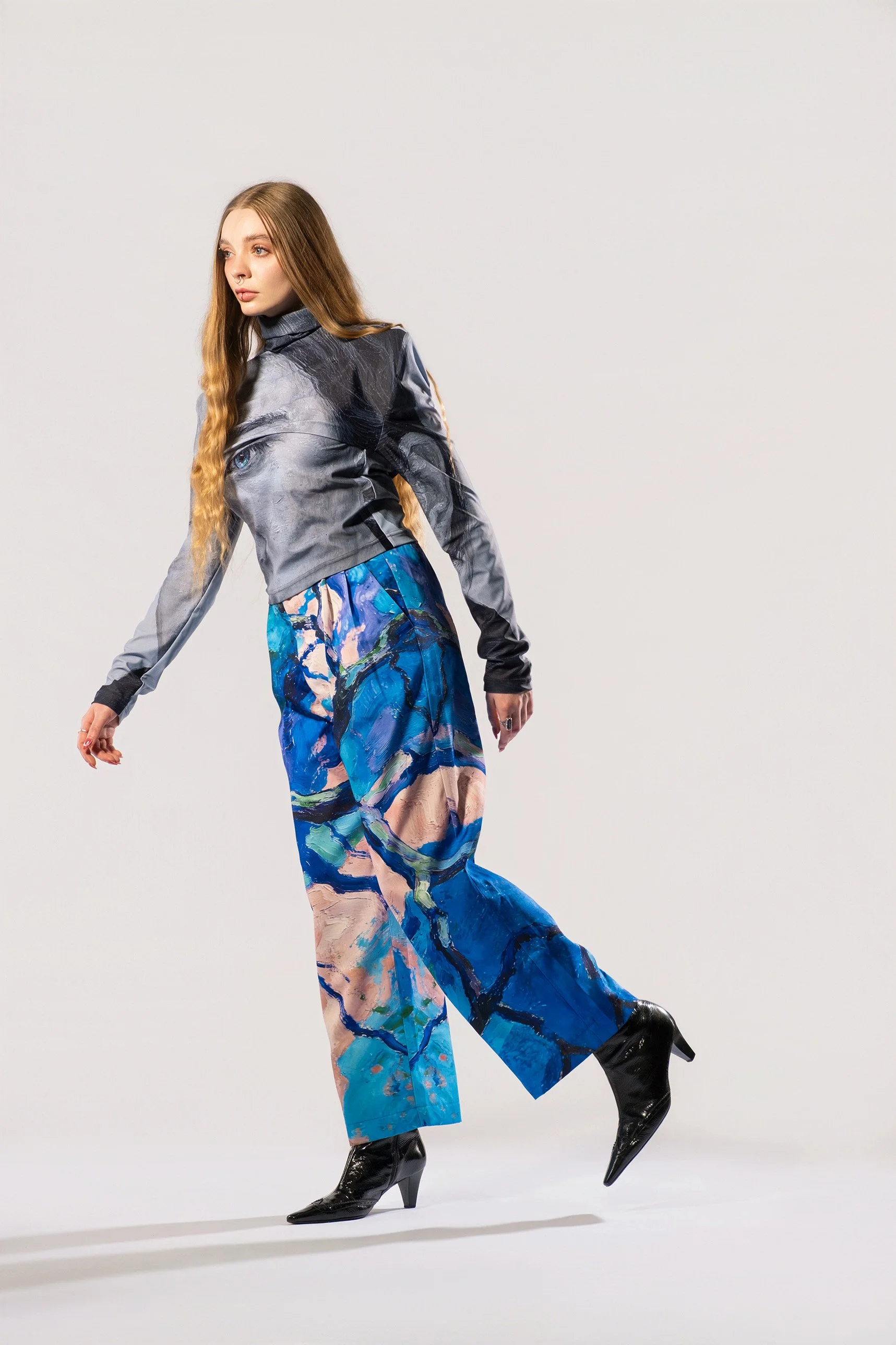
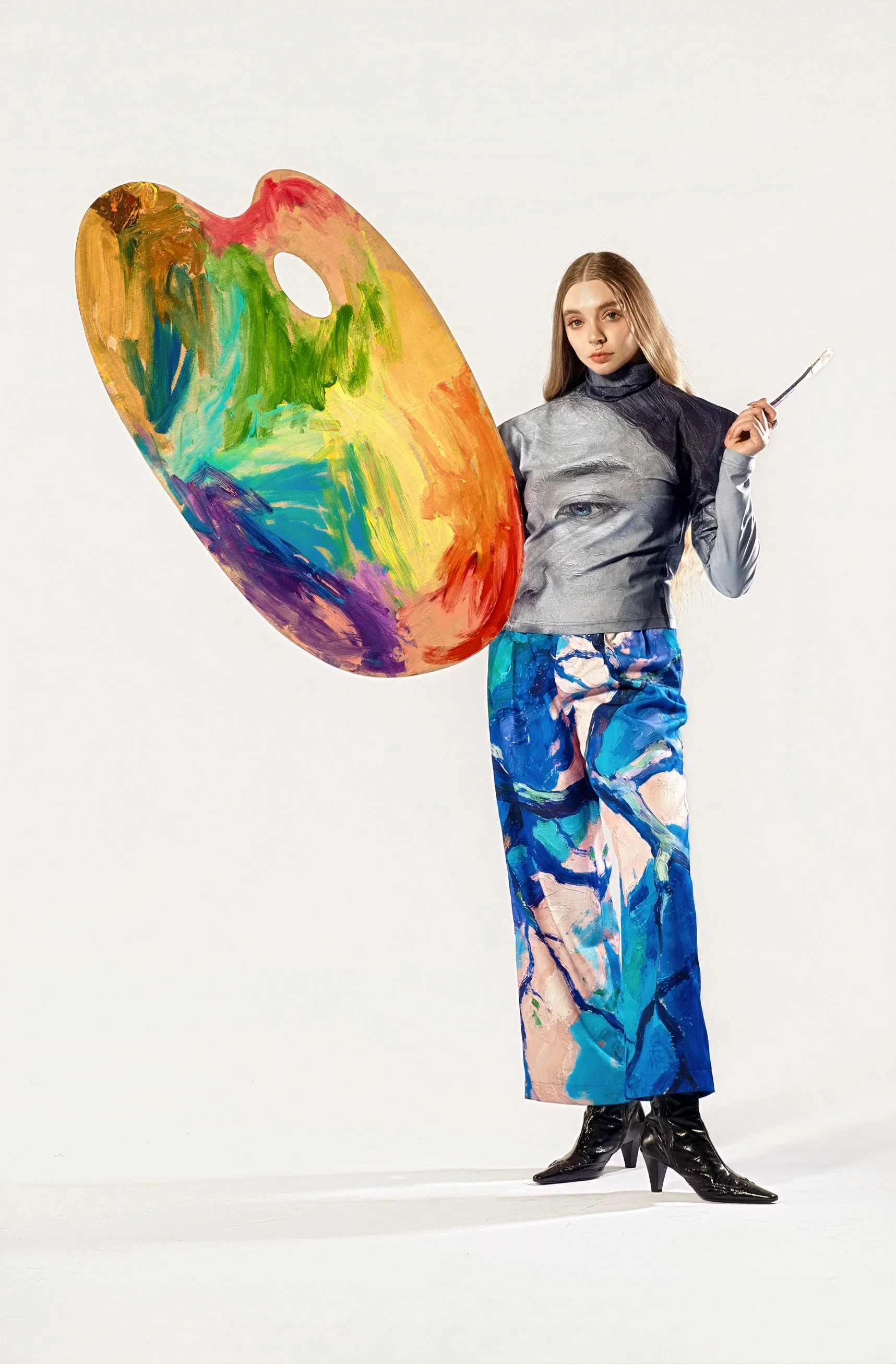
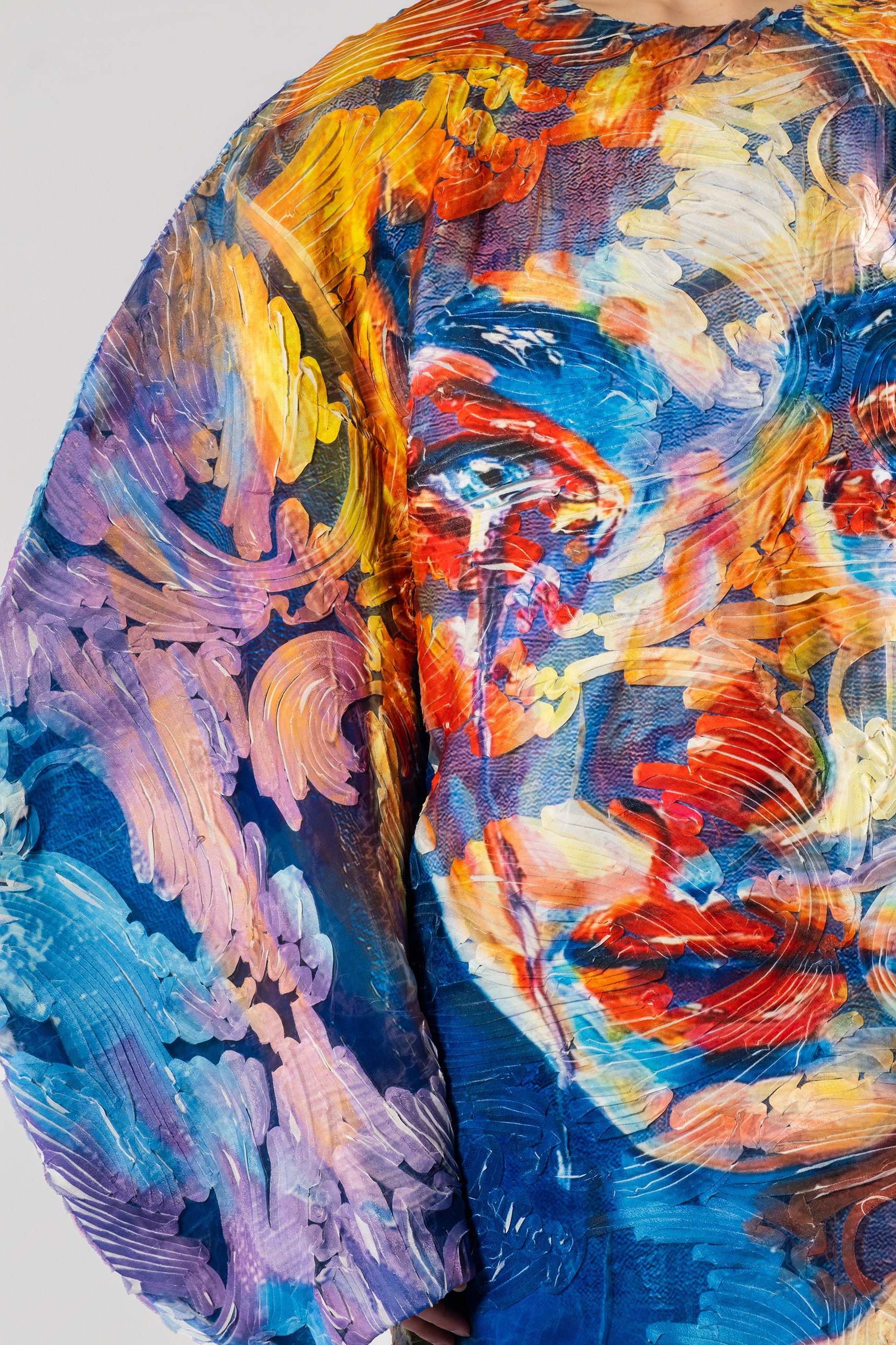
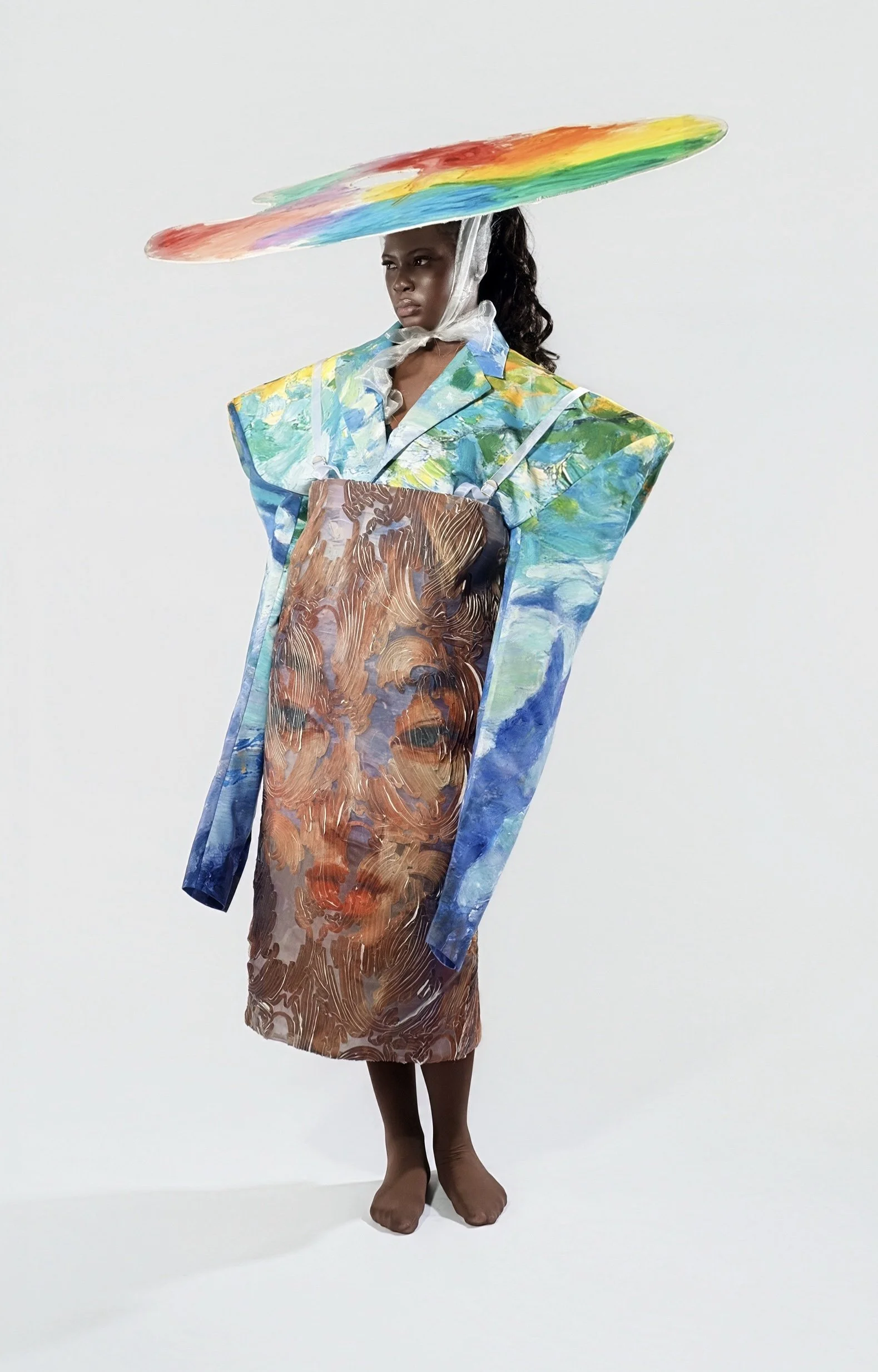
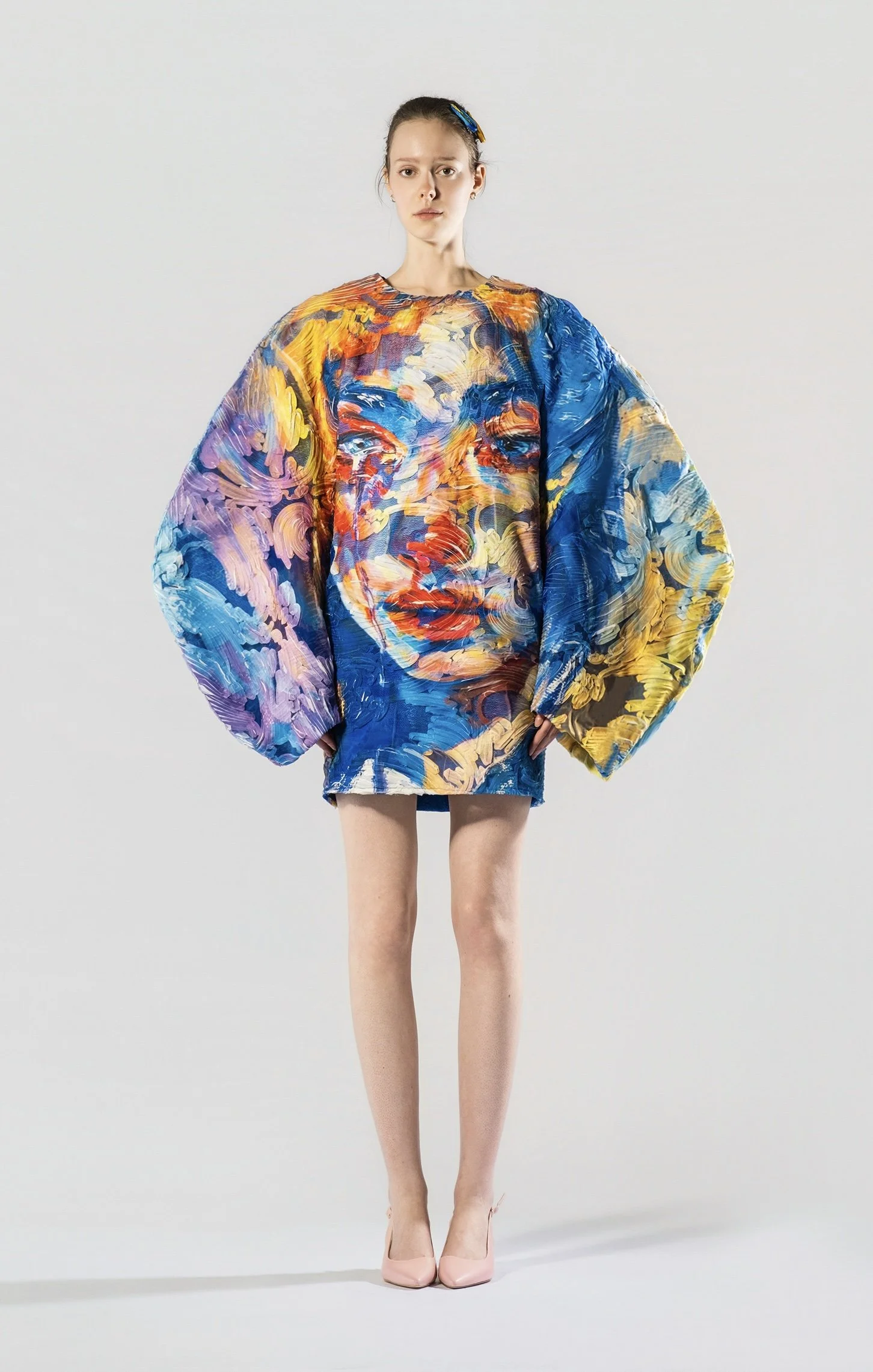
Her graduate collection is the first time this method has been used completely and without compromise within a single body of work. Each of the five looks corresponds to a different stage of a painting in progress, while the fabrics themselves are constructed with a painter’s logic, allowing the material to build up, crack, reveal, and conceal in the same way that paint does. For Faria, design has never been about decorating a garment with a painterly language; it is about carrying the actual thinking process of painting, unchanged, into the making of clothes.
What unexpected source influenced your final outcome?
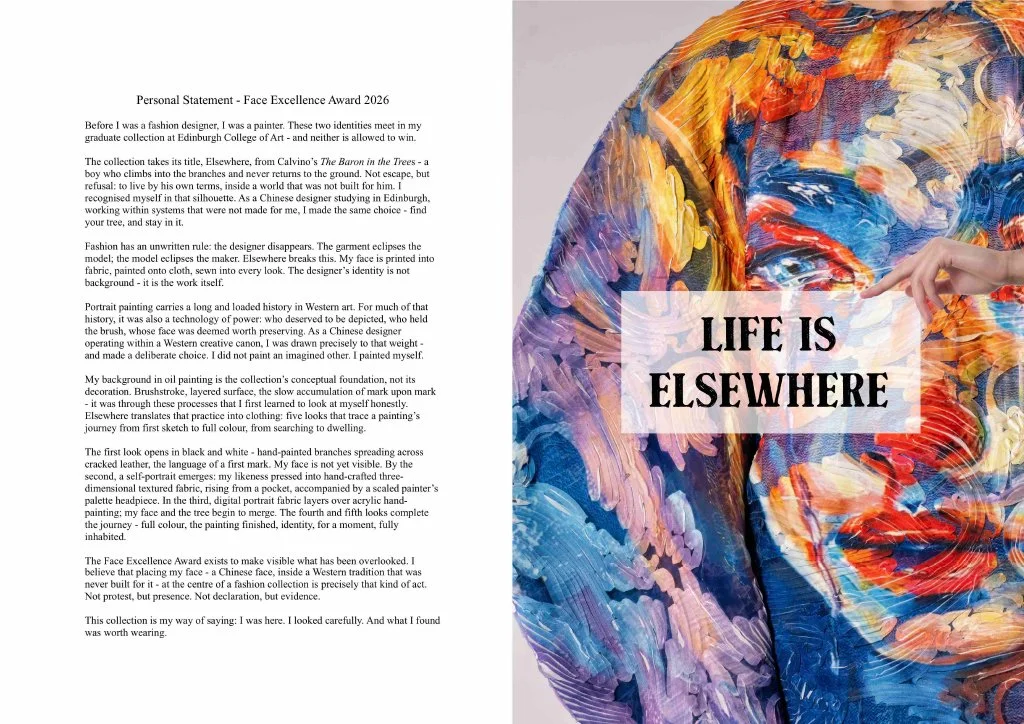
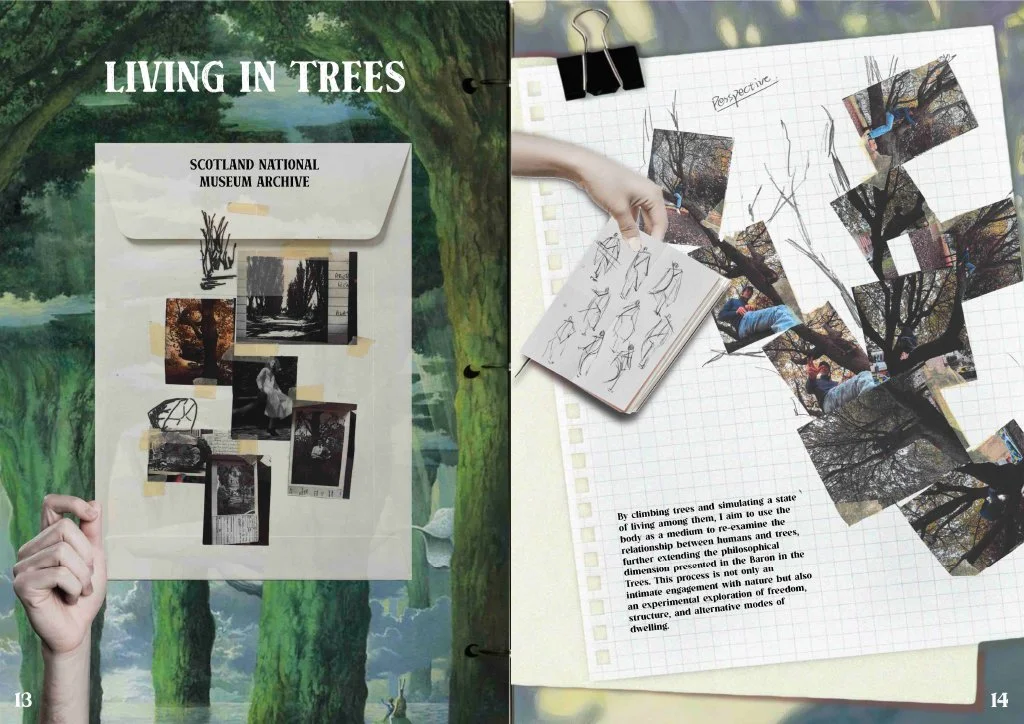
“Before this collection began, I put myself through a very deep process of self-exploration. I wanted to hand this project entirely over to myself, so that every idea in it would come from nowhere but me. It was in that process that I returned to a novel I’d read long before, and never fully understood until then: Italo Calvino’s The Baron in the Trees.
I recognised myself completely in that boy. At eight years old he climbs into a tree and never comes back down, not as an escape, but as a refusal to live by the rules of the ground. I realised the tension I’d always felt between painting and design was very close to what he was facing, I never actually felt I had to give one up for the other, I simply didn’t know how to hold both at once, or whether they could coexist in the same person. The novel gave me an answer: perhaps there is a third position, one that doesn’t require choosing, one that belongs entirely to me. That’s also where the collection’s title, Life is Elsewhere, comes from. "Elsewhere" was never a place for me, it is that third position itself, a space that sits outside the territory of art and outside the territory of fashion, in the unnamed ground between the two. This collection was the process of finding that position, and truly moving into it.
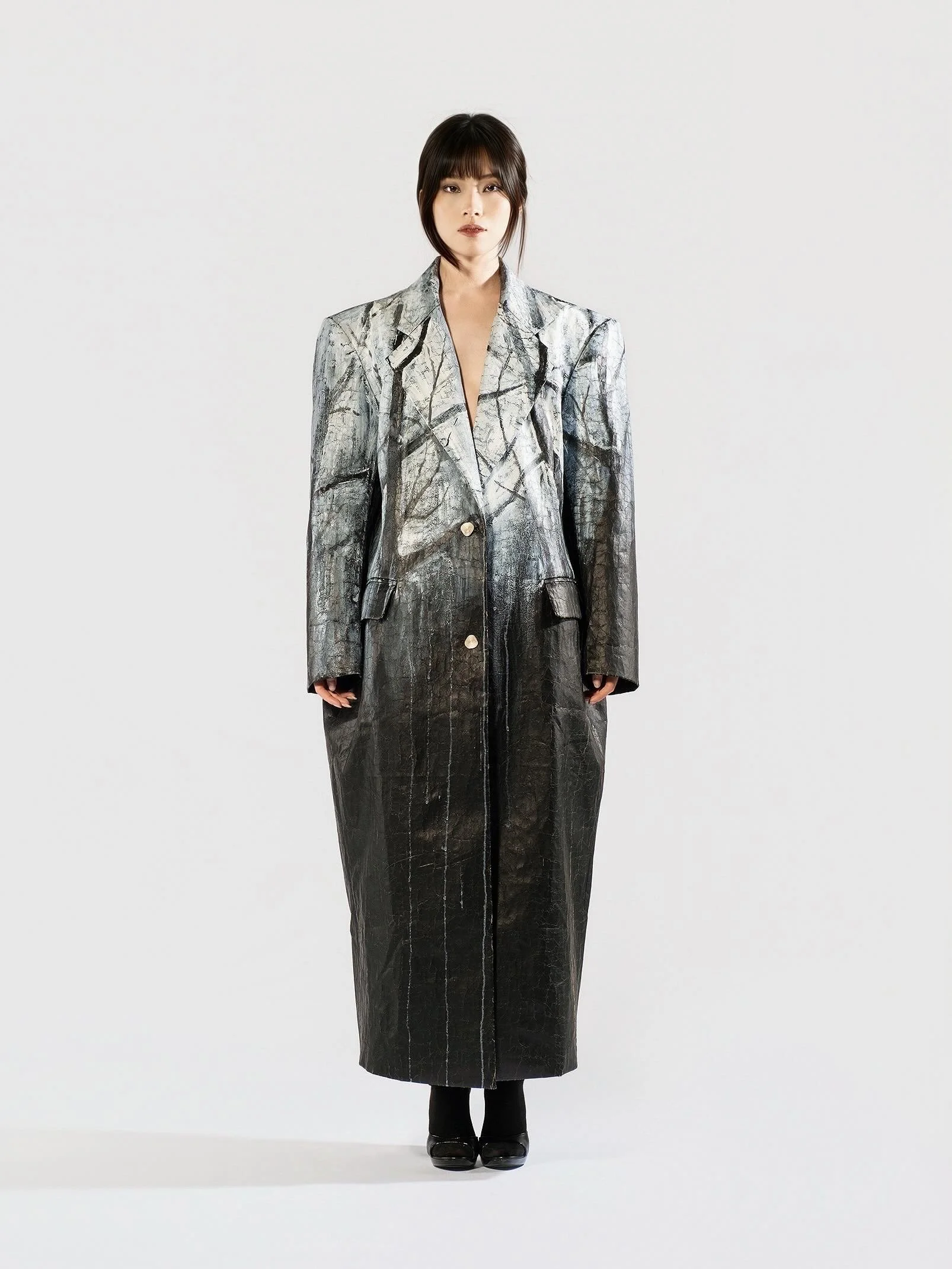
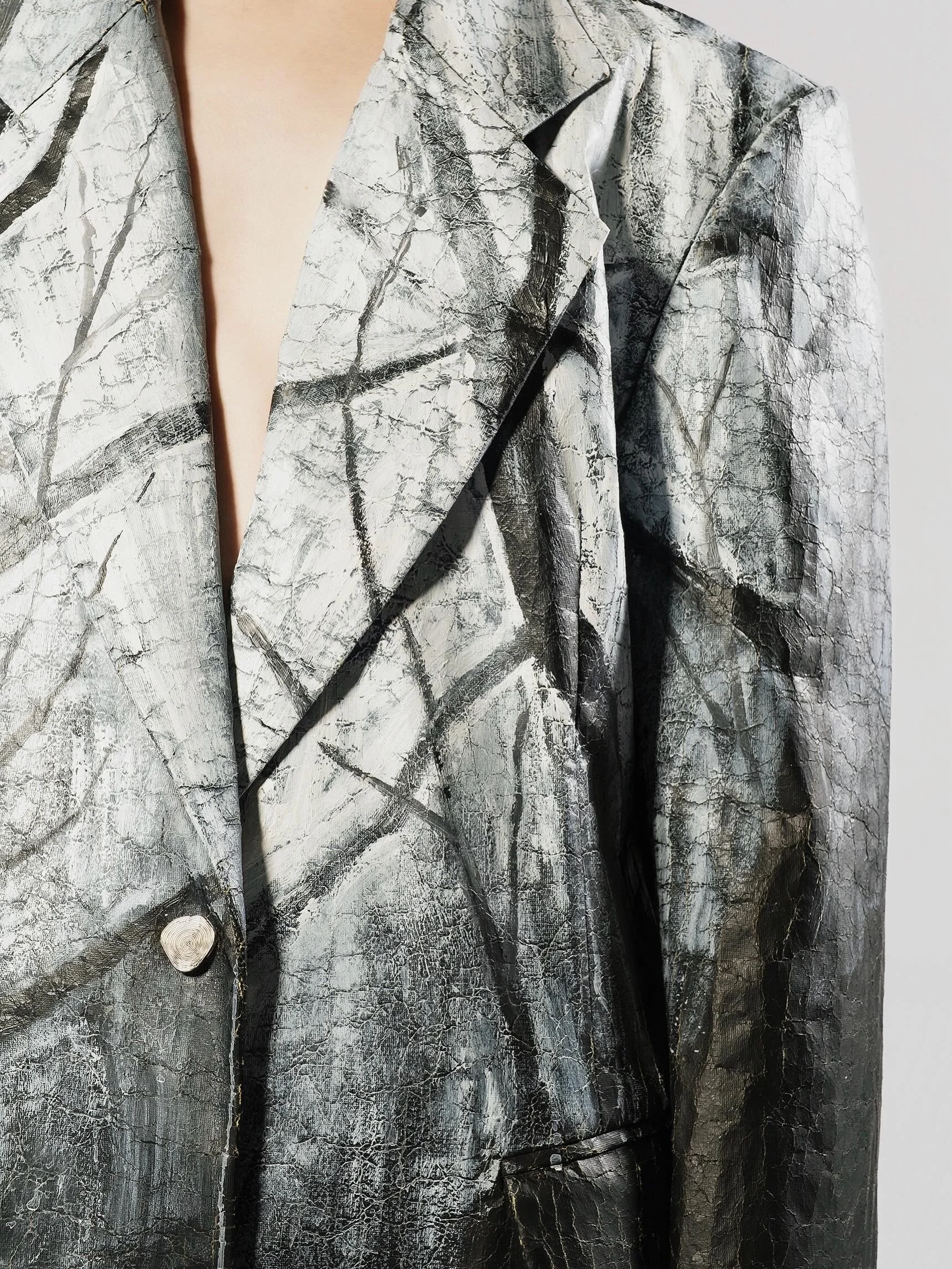
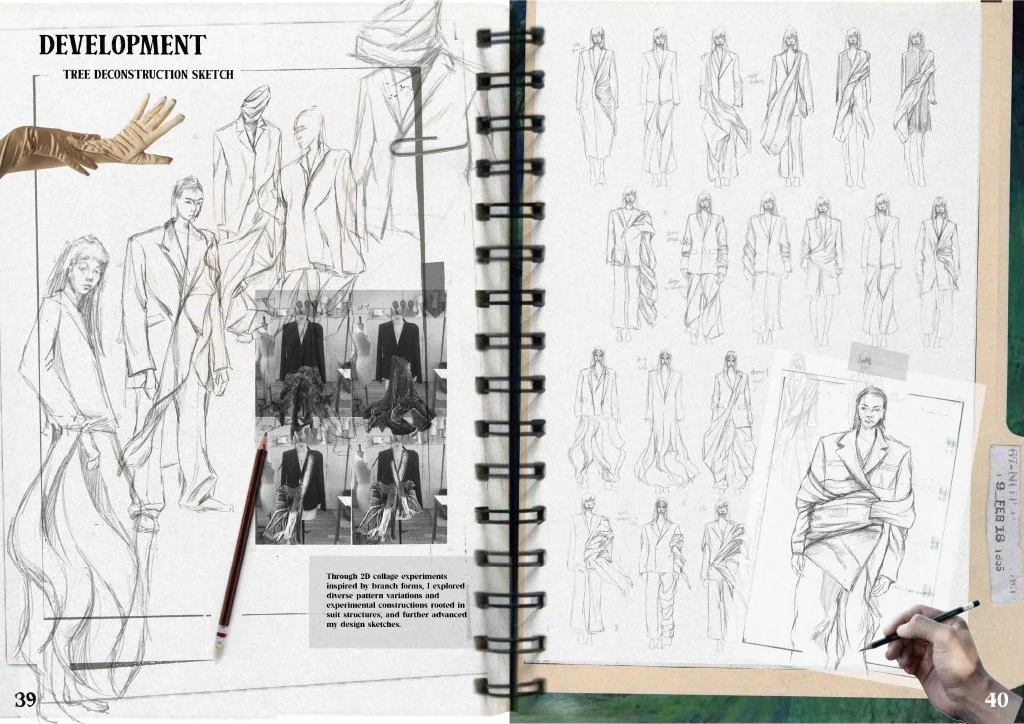
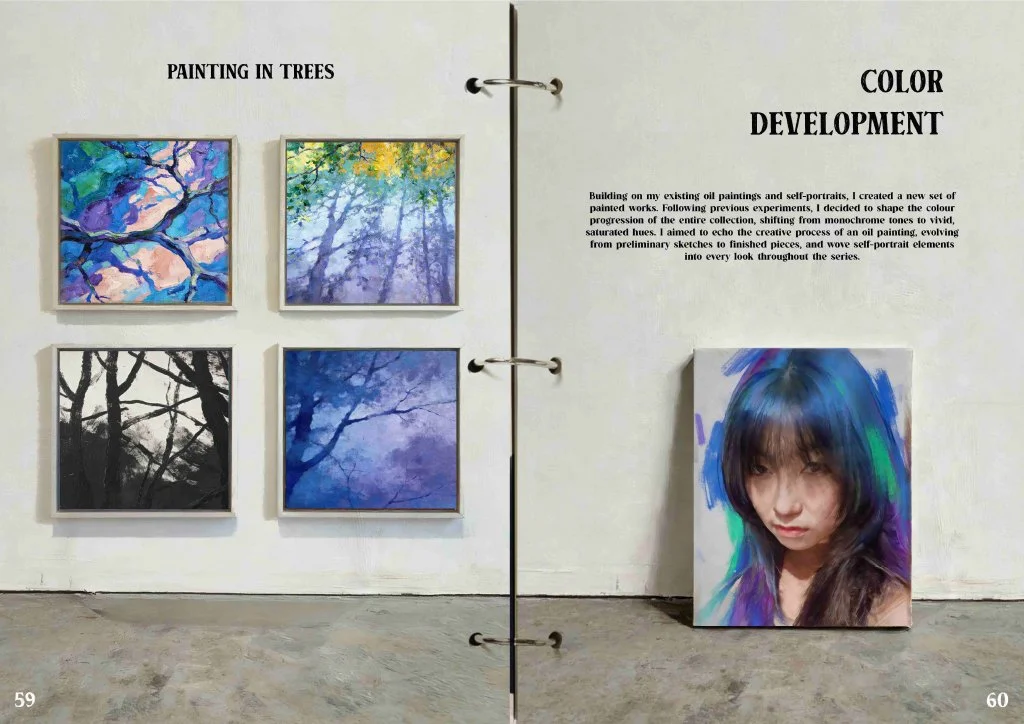
So the collection grows out of trees. I imagined myself as that boy, living in the branches, looking at the world from that height, from a vantage point that doesn't touch the ground, trying to imagine what "elsewhere" might actually look like, not a destination, but a way of existing. The collection opens with nothing but black and white branches spreading across cracked leather, no figure at all, just a trace that's barely there, which is exactly how I imagined my own earliest, still unformed state, living alone in that tree. The novel's influence wasn't just an image, it changed how I understood my own identity, and it shaped every decision in the collection, from concept to colour progression to silhouette.”
What’s the best piece of creative advice you’ve ever received?
“I often struggle with confidence, and before making an important decision I tend to ask the people around me, friends, tutors, which in some ways is letting someone else’s judgement stand in for my own certainty. My tutor once told me, at a moment when I was going back and forth over a decision I couldn’t settle, that I was the designer, that I needed to trust myself, and that what I owed the world was my own point of view, not everyone else’s approval of it. That landed like a small but exact correction, it was the first time I understood that the certainty I kept looking for outside myself was never something anyone else could give me, and that uncertainty itself isn’t a mistake to be eliminated, it’s closer to where the real work actually begins. I’ve thought of that sentence every time since, whenever I catch myself wanting to ask what do you think, it hasn’t answered any specific question for me, but it reminds me that the responsibility, and the freedom, to choose has always been mine alone.”
How would you describe your creative voice in three words?
“Painterly, Liminal, Tactile.
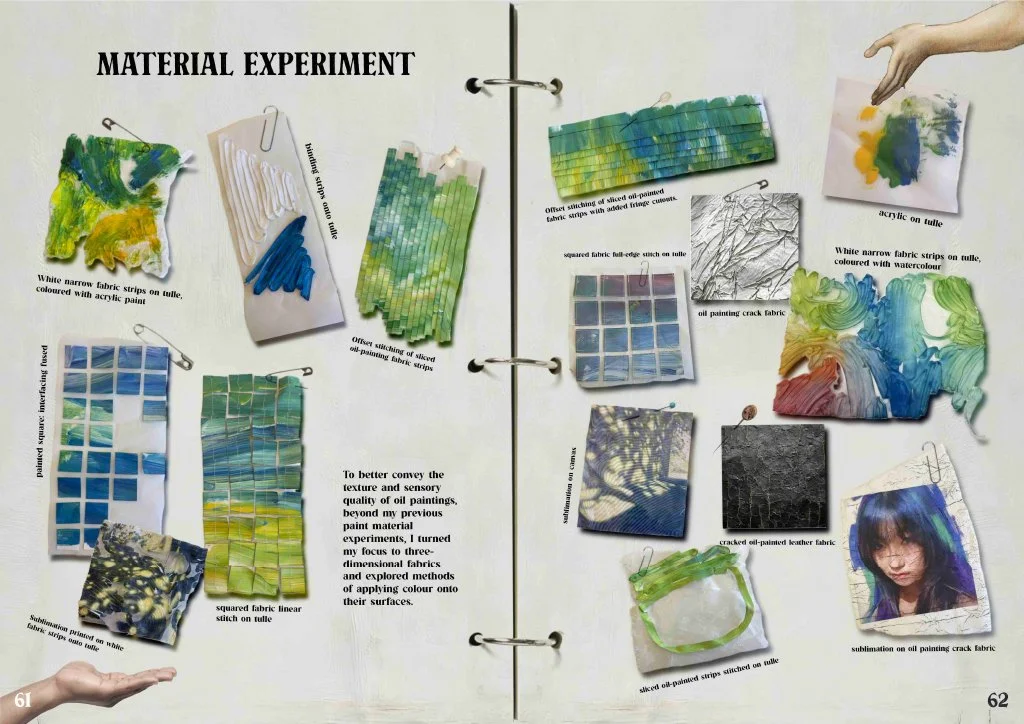
Painterly, because even when I’m cutting cloth rather than mixing paint, I’m still thinking in terms of brushstrokes and layering, every piece carries the trace of “still being painted” rather than arriving finished in one go.
Liminal describes that in-between state of no longer being who you were, and not yet who you’re becoming. The word comes originally from anthropology, and has since been used to describe existing between two cultures or two disciplines, which overlaps almost exactly with what I’ve always meant by “elsewhere is not a place, it’s a position.” I’m not oscillating between painting and design, I’m choosing to stay in that unnamed space between them.
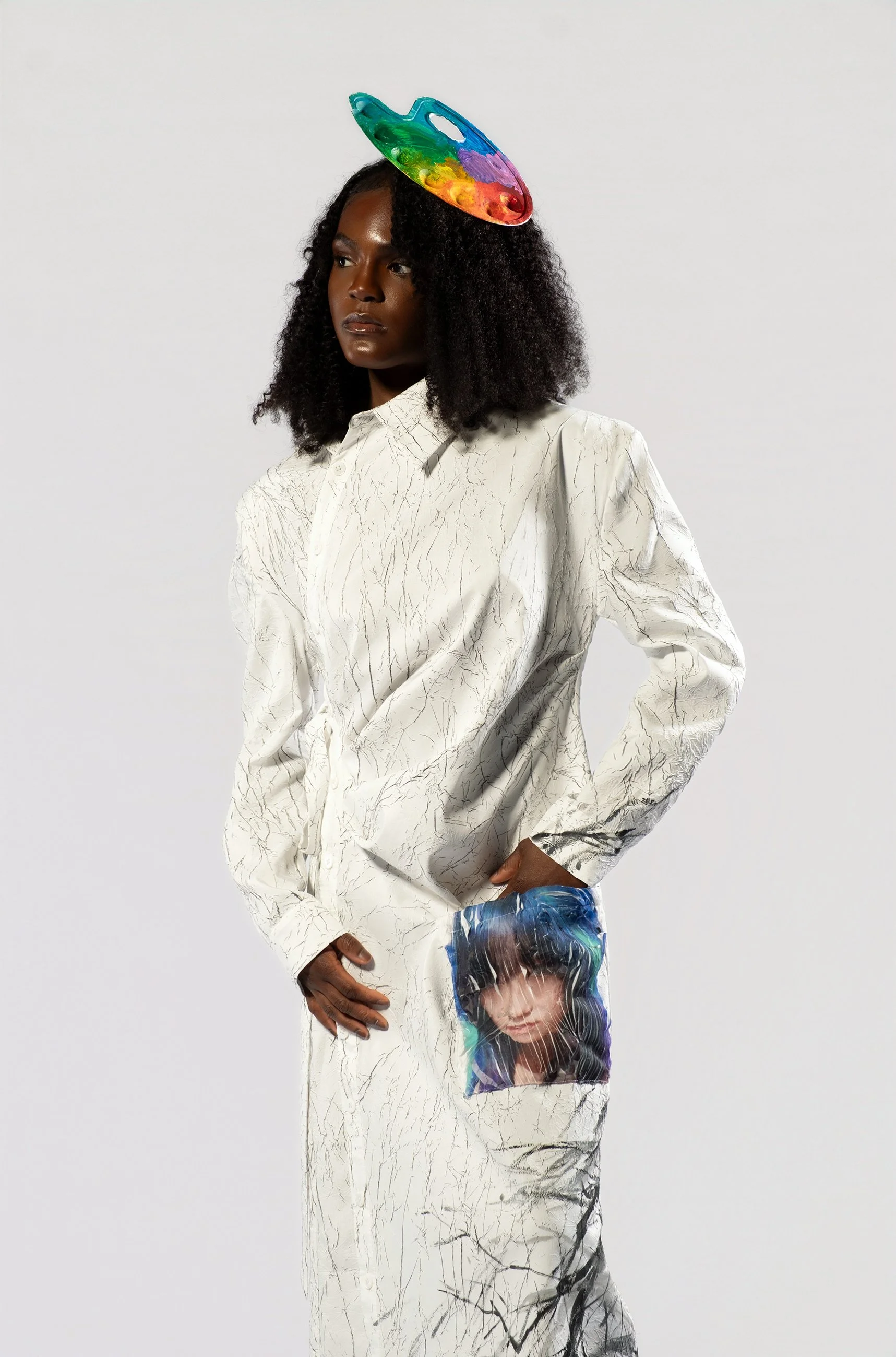
Tactile is about the very specific sense of texture running through my work. I’m rarely satisfied with how something looks, I care more about how it feels under a hand. All the three-dimensional fabrics in this collection, the cracked leather surface, the built-up acrylic texture, the marks that sit on the cloth like dried paint, are meant to carry a physical weight you can register with your fingertips, not just a visual effect. It’s also the word that widens my practice beyond painting alone, whether I’m working with canvas, sculpture, or fabric, what I care about is always that sense of something real enough to touch.”
What kind of impact do you hope your work has beyond aesthetics?
“Fashion design carries an unspoken rule that everyone quietly follows: the designer should stay invisible. You can’t recognise a person from a single garment, and you certainly can’t see their struggles, or the parts of themselves they haven’t figured out yet. What I’ve done contradicts that.
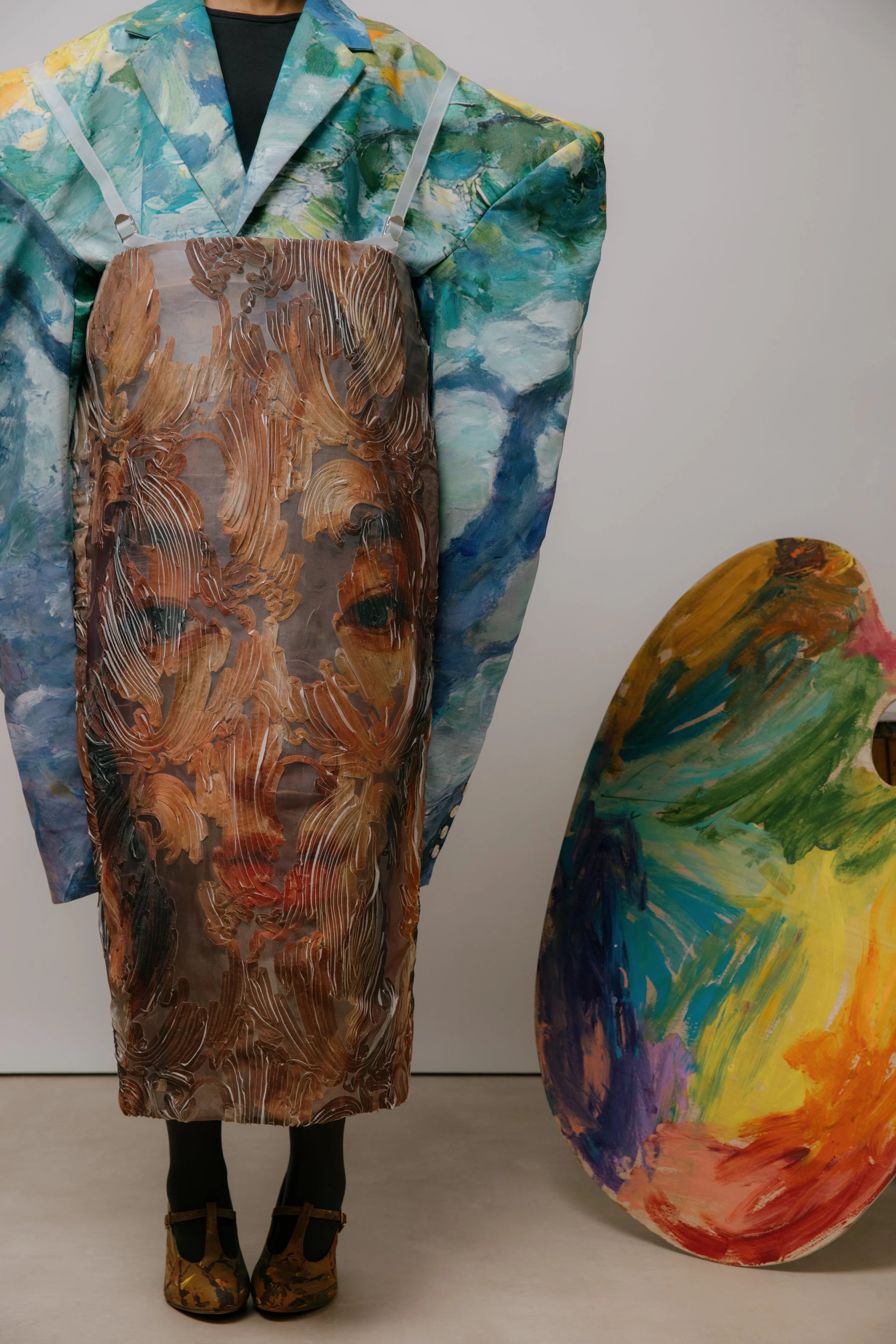
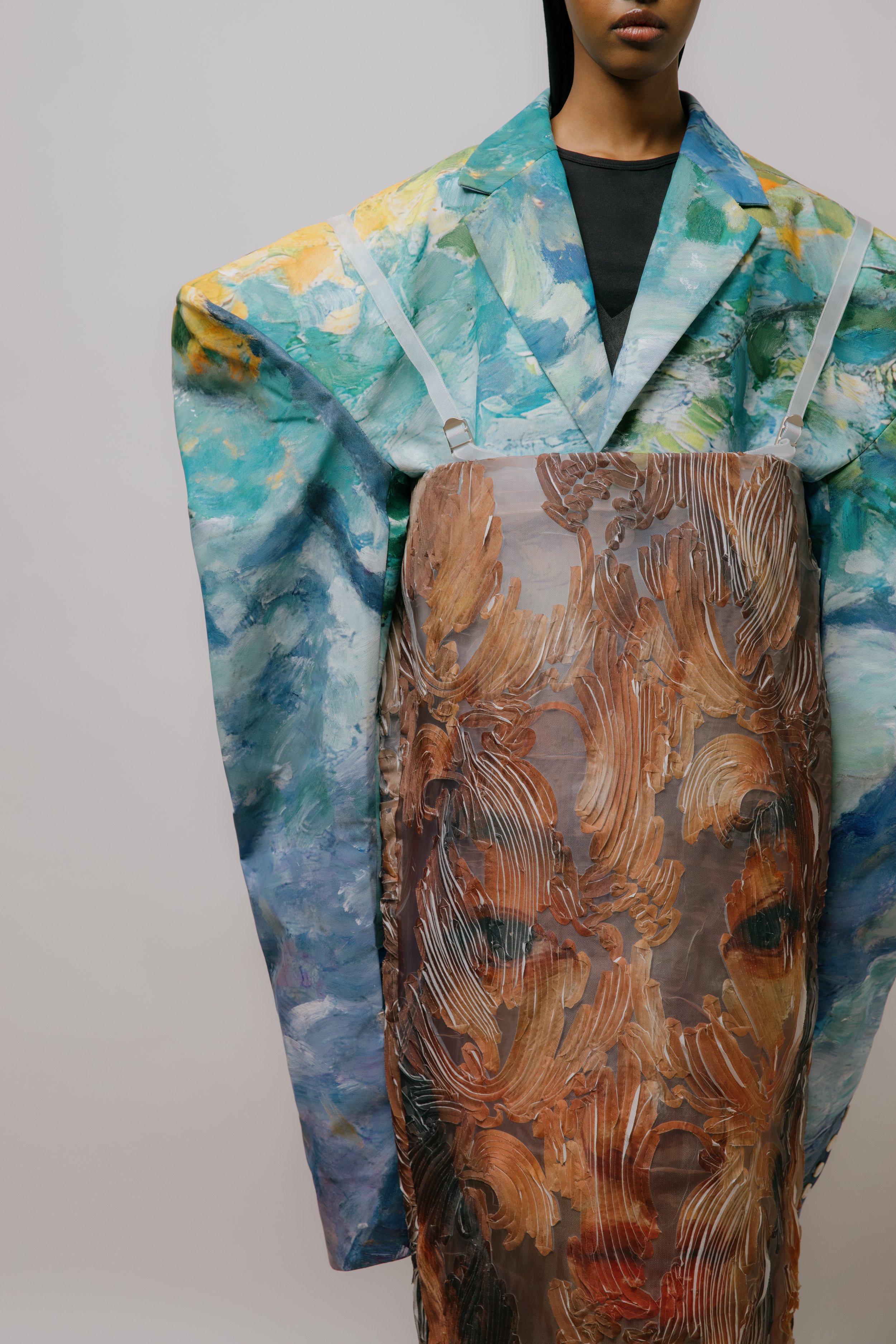
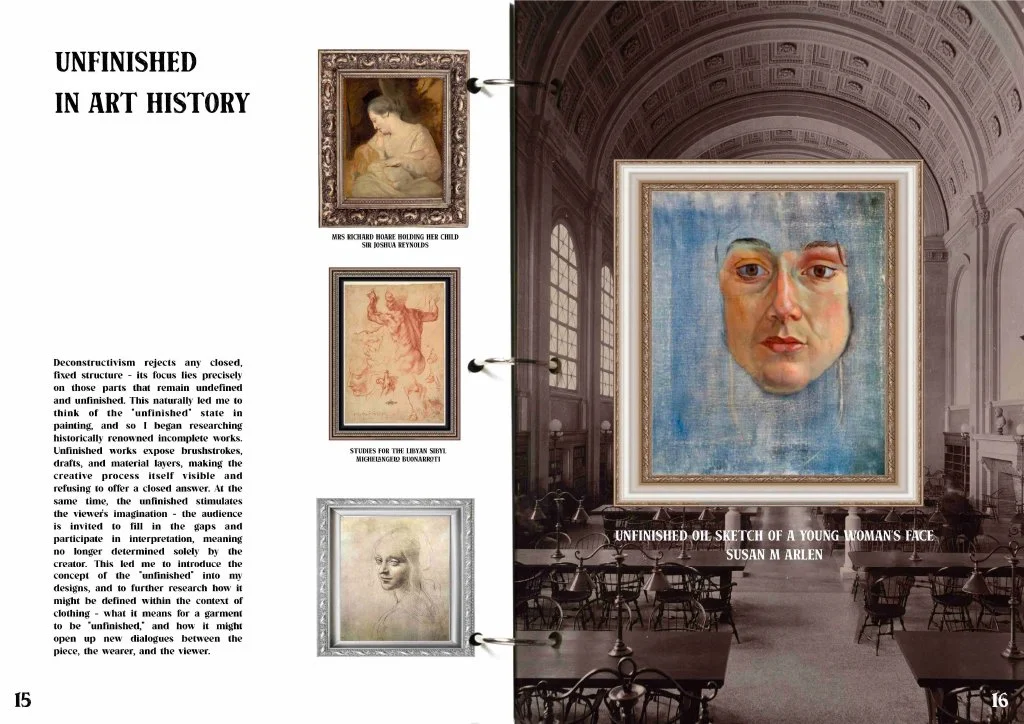
I put my own self-portrait into every look, and I deliberately chose not a polished face, but several faces painted from different periods and different states of mind, none of which reads as a finished portrait. The fabric itself is built the same way, each layer sits over the last without smoothing it away, wherever it cracks I let it keep cracking, wherever the colour bleeds unevenly I let that unevenness stay. Across the collection’s progression from black and white into full colour, you can still clearly see the marks left by the earlier stages, nothing is quietly covered up by what comes after. To me, that is what “unfinished” actually looks like, not a conceptual statement, but every individual choice honestly keeping its own trace.
I hope it reminds people that we’re used to presenting a version of ourselves that’s already been polished and made ready to be seen, and rarely make room for the self that’s still figuring things out, still searching, still a little clumsy. A finished piece of work is easy to love, but a piece that’s honest enough to say I’m not finished yet asks for a different kind of courage, and deserves a different kind of respect. If this work can lead even one person to be a little more patient with themselves, to let themselves be seen in an unfinished state instead of waiting until everything feels ready, that, to me, is its meaning beyond aesthetics.”
Which designer, artist or creative would you most like to show your work to?
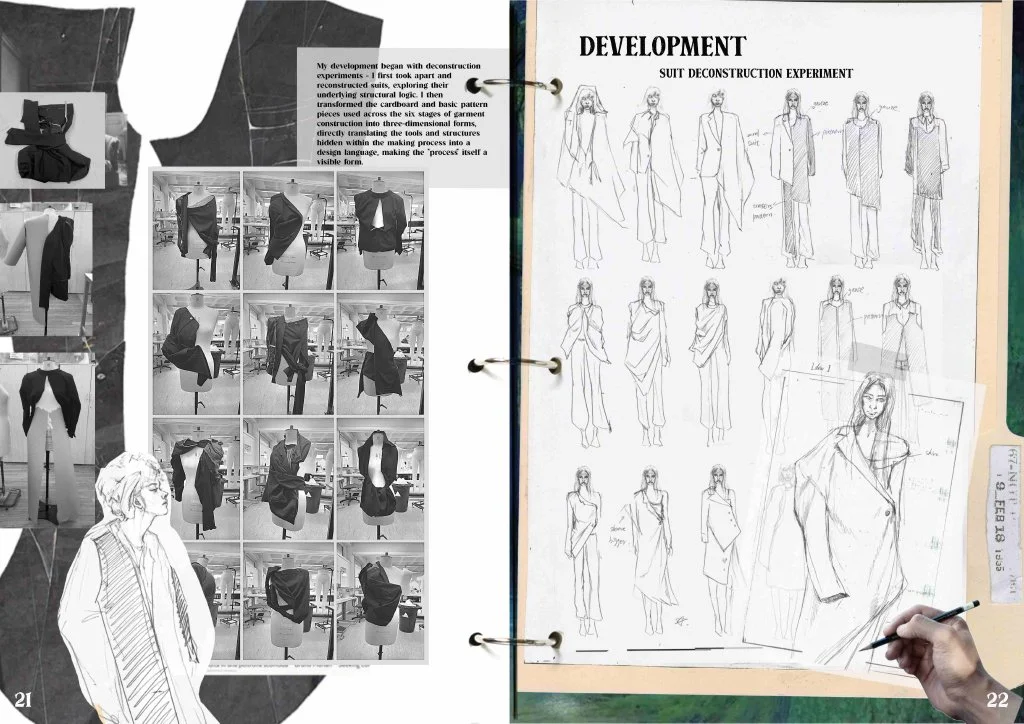
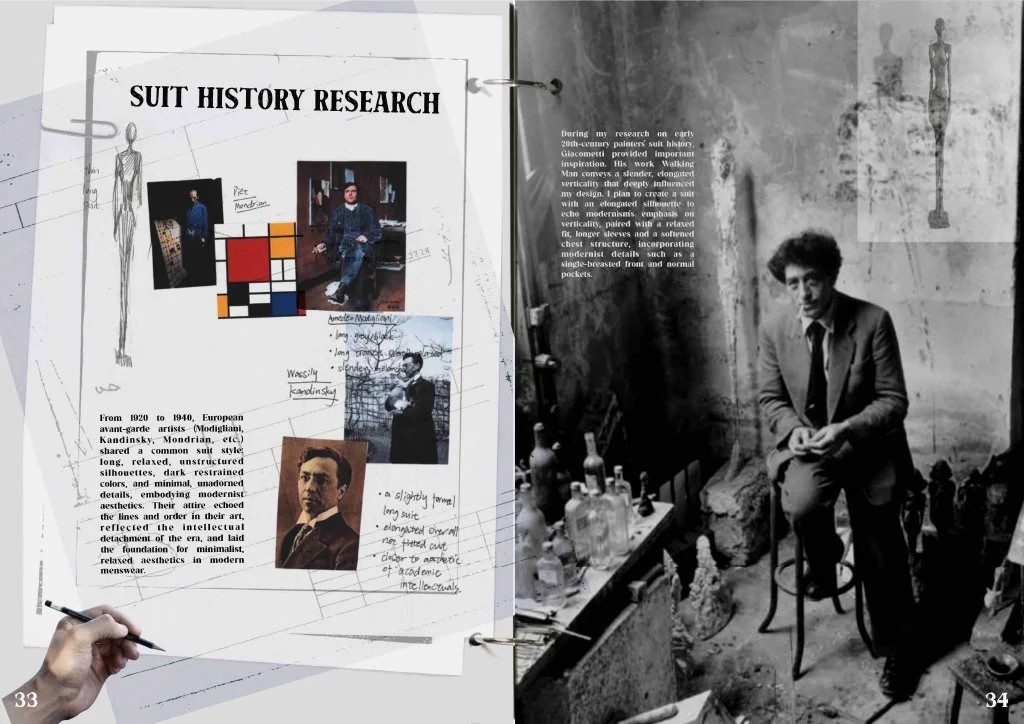
“If I could choose only one artist, it would be Giacometti. I first encountered his sculpture in high school through a research project, and the way he approached the human form has stayed with me ever since. He believed no single fixed angle could ever fully capture a whole person. My self-portraits work on a very similar logic, every face in the collection belongs to the same person, me, but taken from a different period, a different state of mind. None of them is the whole truth, each is only a fragment, shaped by exactly where I was when I made it, and “finished” was never the destination, only ever one step closer. The long, loose tailoring worn by intellectuals and artists of Giacometti’s era was also part of my research, I translated that intellectual, elongated silhouette into the structural language of the whole collection, and you can trace it clearly across the five looks, the shoulders growing wider, the silhouette growing larger, until the final look reads almost like a painting given a body. I’d love to know how he’d respond to seeing a young maker answering the same questions he asked through cloth instead of bronze.
On the design side, I’d love for Daniel Roseberry to see this collection. His most recent haute couture line began with a poem, and the whole season asked whether beauty, once a creator fully surrenders certainty and lets go of control, has to come from materials traditionally considered precious, or whether it can also come from the ability to reimagine ordinary materials as something else entirely. That’s very close to what I’ve been doing all along, treating something private and literary, for me, a novel, as the actual starting point for material experimentation, rather than deciding on a visual outcome first and looking for materials to match it. I’d want him to see this collection because we arrived at the same place from opposite directions, he started from a poem and made a body of couture that reads almost like sculpture, I started from a novel and turned painting into something you can wear. I’d be curious whether there’s an interesting conversation between us, two people using words as a method rather than a decoration, from completely different backgrounds and completely different points in their careers.”
What advice would you give to a student currently starting their final collection or portfolio?
“Looking back on my graduate year, what it gave me that mattered most wasn’t these five looks, it was an entire year of genuinely coming to know myself. Before stepping into the industry, I had, for the first time, the chance to stop and ask myself what I actually cared about, and what belonged only to me. The answer to that question ended up shaping this collection more deeply than any technical decision I made.
What I’d say is: enjoy the process of making, don’t fix your eyes only on the final presentation. What gives a piece of work real weight is usually hidden in the repeated attempts, the things you tried and undid again, the 2AM adjustments, and the versions that didn’t work out. It’s in that process that you slowly discover the things that belong only to you, the way you see things, the instincts behind your decisions, the qualities that set you apart from everyone else. None of that can be taught, and none of it can be imitated, but it’s the most valuable thing you’ll ever bring into this industry.”
What conversations do you hope your work starts?
“I hope it opens up a conversation about whether clothing can stand as an independent work of art. In this collection, every look is a complete painting in its own right, cut and reconstructed directly from my own oil paintings into wearable material, rather than a garment designed first and then printed with something artistic. It blurs a distinction that’s usually kept quite clean, worn on the body, it’s a garment, laid flat and removed from the body, it reads closer to something you’d hang on a wall.
Before entering this industry, I worked at a contemporary art gallery, where I saw up close how the value of an artwork is established, discussed, and recognised, and it made me realise how much of the boundary between fashion and art is drawn by industry convention rather than by the material or the process itself. I hope my work can be a concrete example within that conversation, when a garment’s creative logic, material experimentation, and conceptual depth reach the standard of a contemporary artwork, should it be taken just as seriously, placed in a gallery, collected and discussed as an independent art object, rather than folded into a seasonal fashion narrative.”
So what’s next for you after graduating?
“I want to work within an environment that genuinely treats art, craft and fashion as connected rather than separate, houses like Loewe, which continuously build dialogue between fashion, craft and contemporary art, or studios like Iris van Herpen, which keep pushing the boundaries of material and craft, are both directions I’d want to move toward. At the same time, I’d also love to join smaller, independent studios focused on bespoke work or textile research, where I can bring my fine art background properly to life within the fashion industry.
Alongside that, I want to keep exhibiting independently in galleries and cultural spaces, working with curators and art institutions, and continuing to explore the possibilities of garments as an independent art form. The two paths have never been in conflict for me, one keeps deepening my understanding of craft, materials and making, the other lets me keep asking the question that has carried me through this whole collection: what fashion can become, when it’s allowed to breathe like art.”
