
Where It All Began… An Interview With Sadie Clayton
From sculptor to educator, artist to cultural communicator, Sadie Clayton’s work spans creativity in all its forms. As a recognisable figure across television, social media and the art world, Sadie started her journey at Kingston University, showcasing at Graduate Fashion Week in 2013.
We sat down with Sadie to learn more about her exciting career journey so far, what advice every young person should know and why it’s always important to know yourself and your values when embarking on creative pursuits.
We explore authenticity, being a bold voice with a story, navigating the creative industries and building a network of collaborators and supporters. Sadie epitomises the multidisciplinary career, working across art, television, journalism, fashion and education to name a few, all emboldened by a creative education. Read on to discover why a fashion education doesn’t have to limit you to a purely fashion based career, and three tips you can take right now to develop yourself ahead of Graduate Fashion Week 2027.
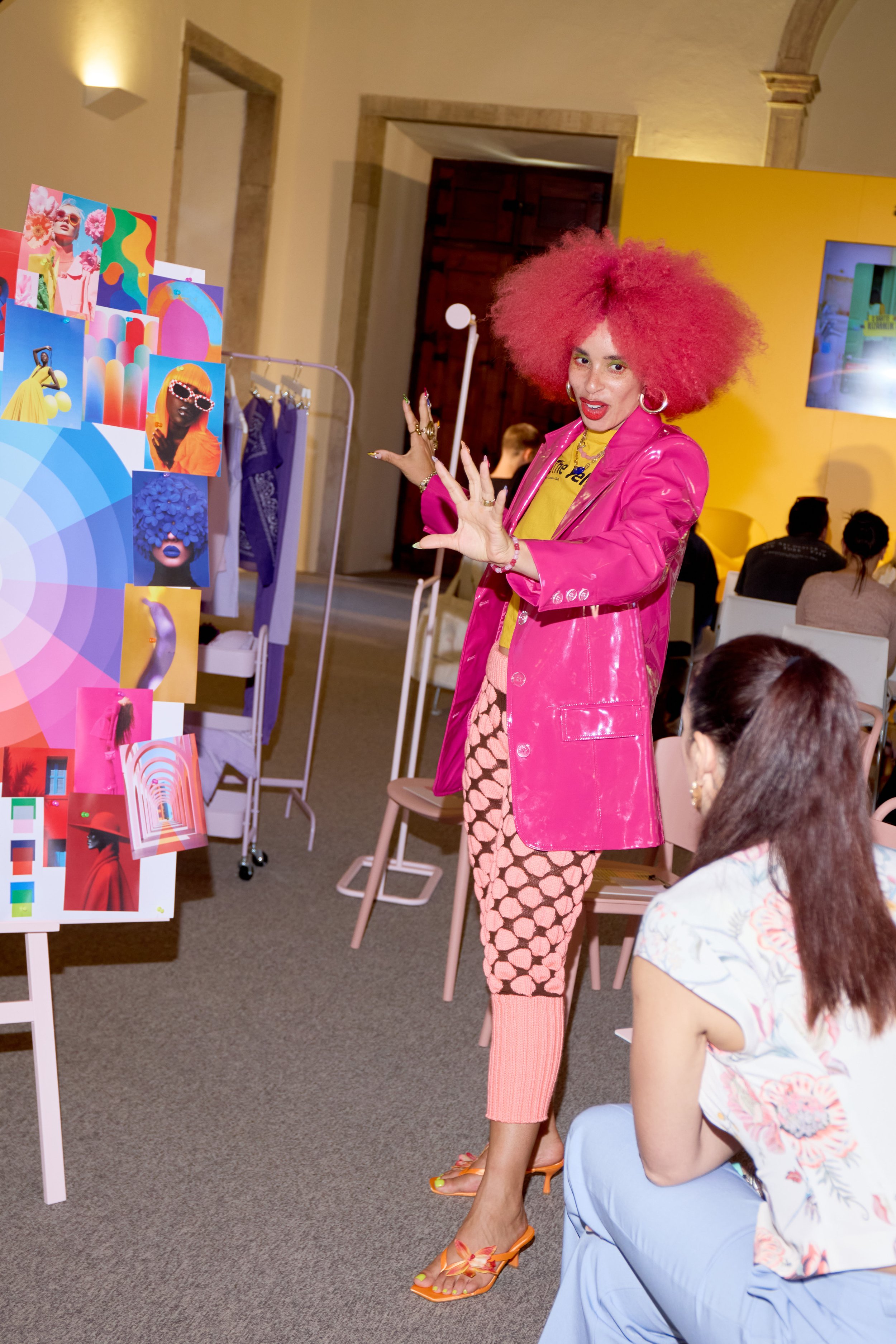
Sadie, thank you for taking the time to sit down with Graduate Fashion Foundation!
Your career journey so far has crossed media, education, the worlds of art, technology and fashion. It all started at Graduate Fashion Week, as a graduate of Kingston University! In 2026, you joined the judging panel for the Culture and Heritage award. How did it feel coming back to Graduate Fashion Week?
It felt so good! Showing in 2013, I didn't actually make it onto the catwalk and I was absolutely devastated. Sometimes, if you don’t get what you expect and want initially, what you see as the ‘ultimate prize’ like being on the catwalk, it’s a redirection. The exposure I received from being a part of the exhibition during GFW, was significantly more beneficial than being on the catwalk for me. Those conversations and connections were far better than if I hadn’t been able to speak directly to industry.
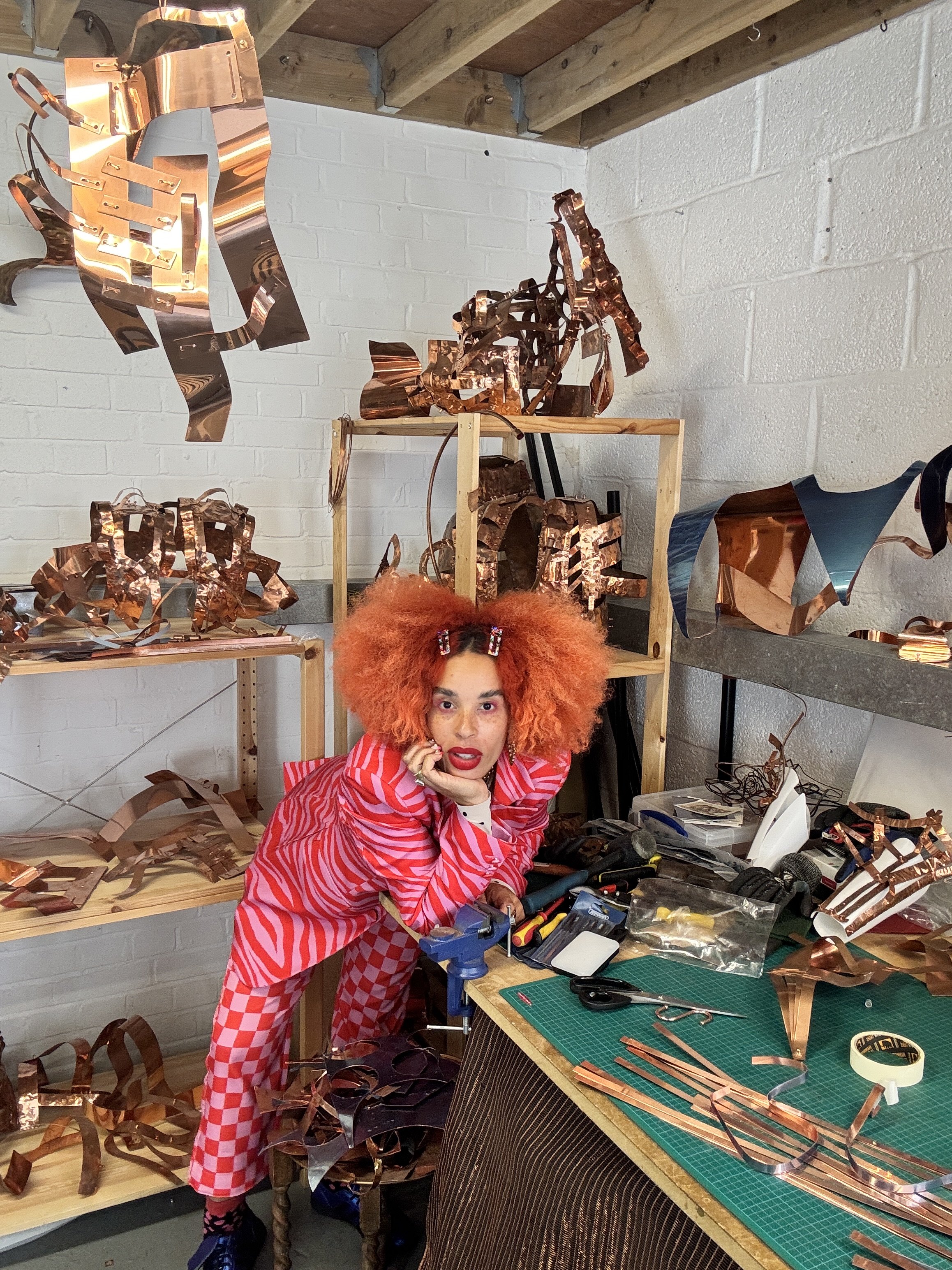
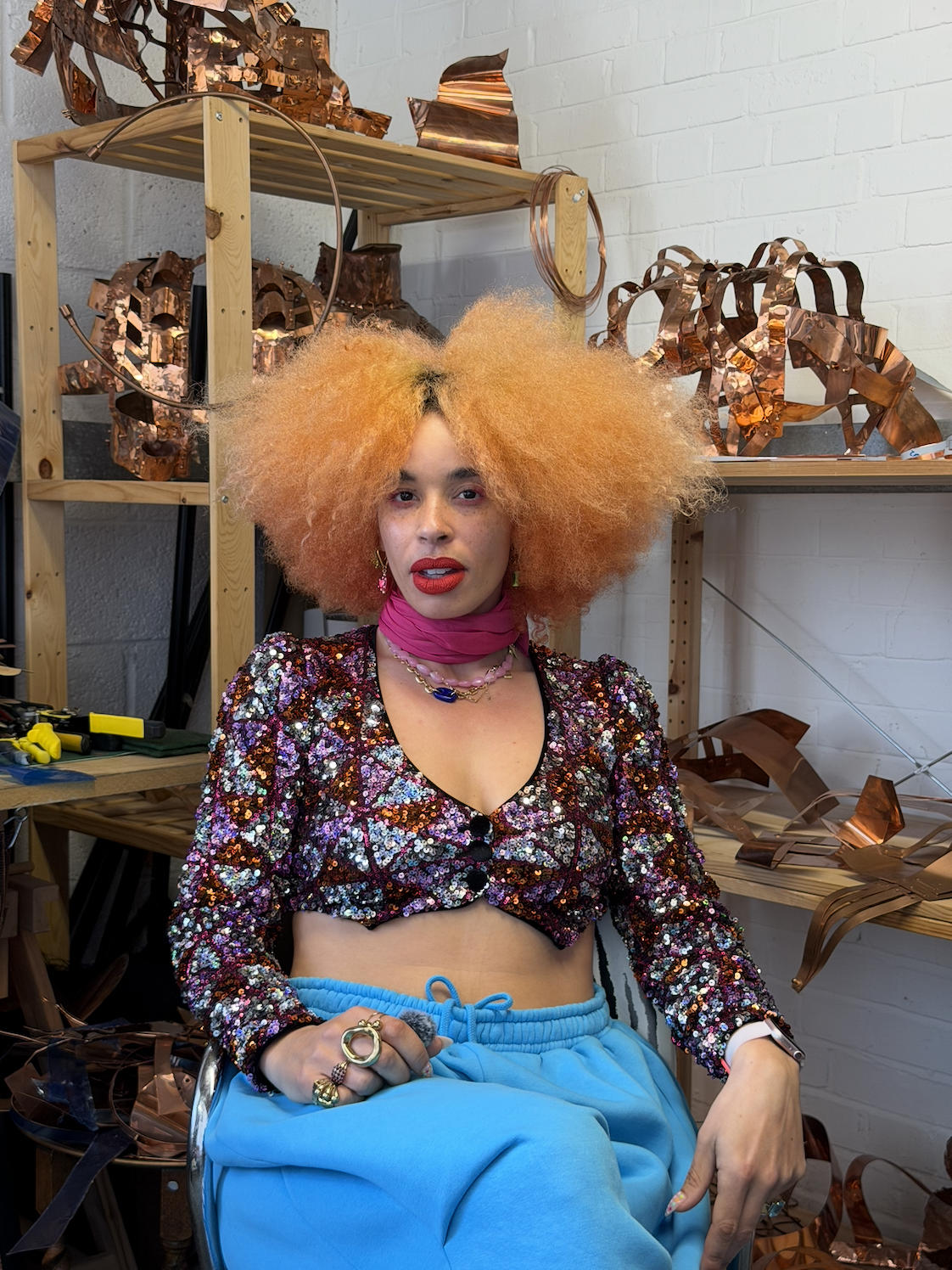
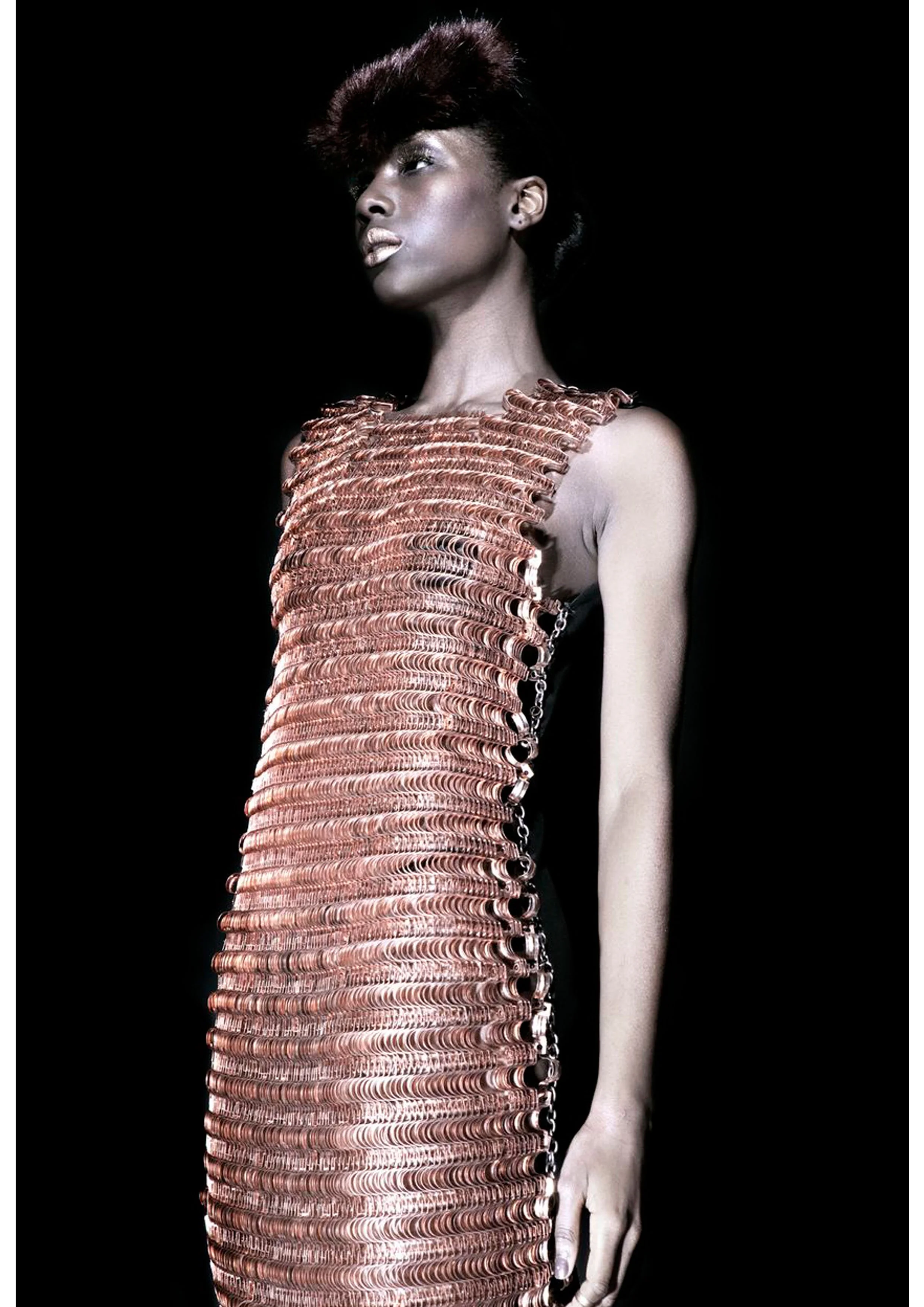
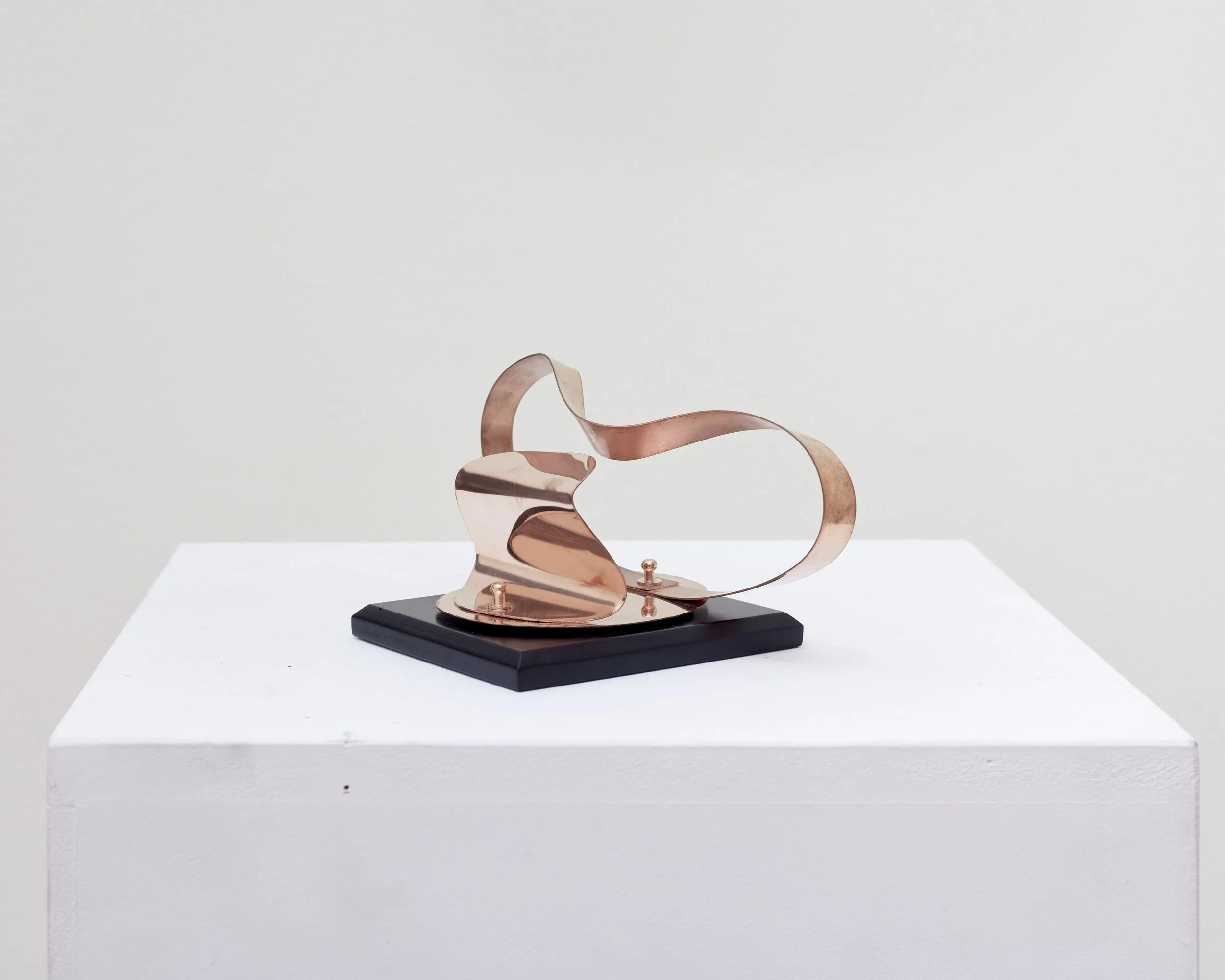
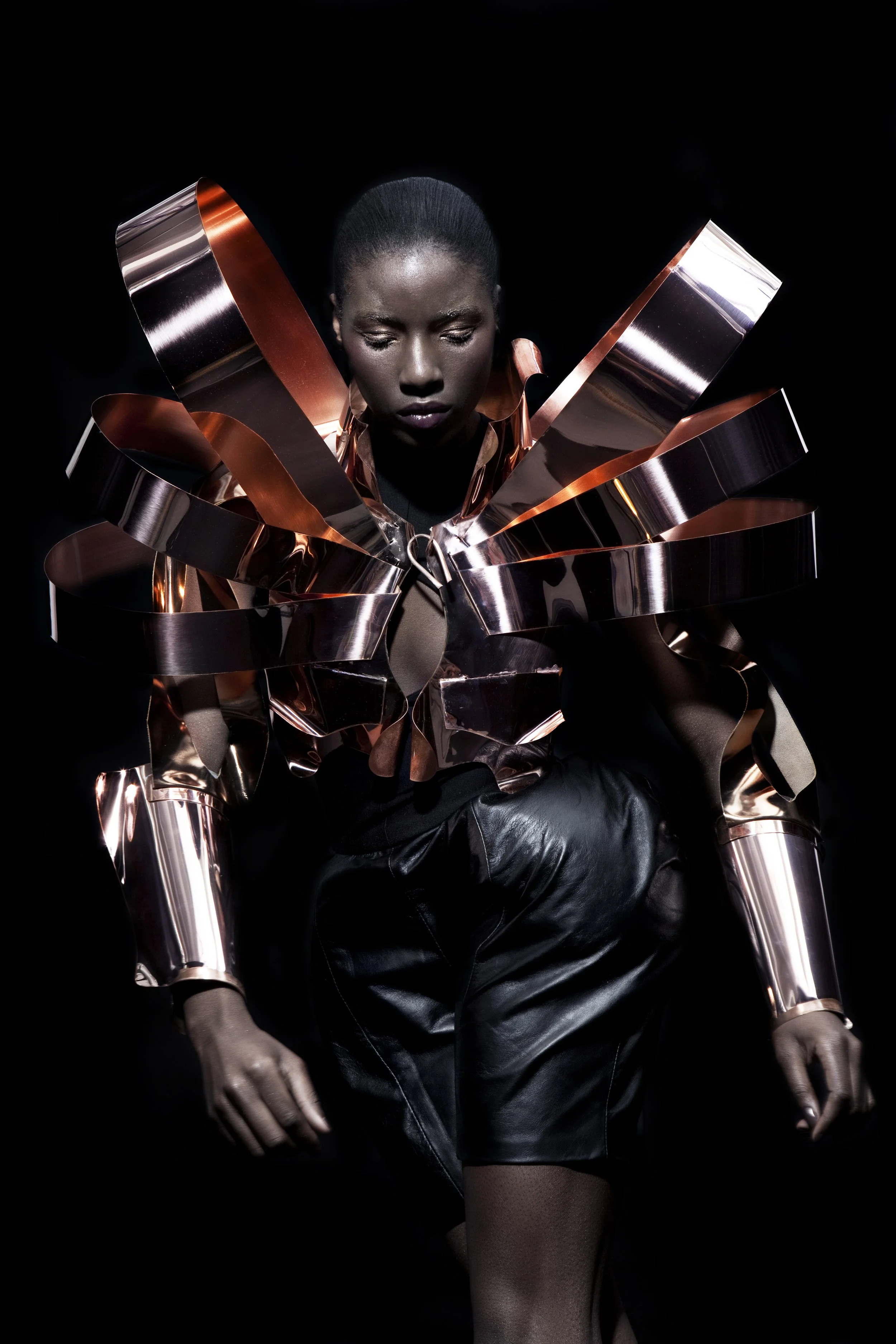
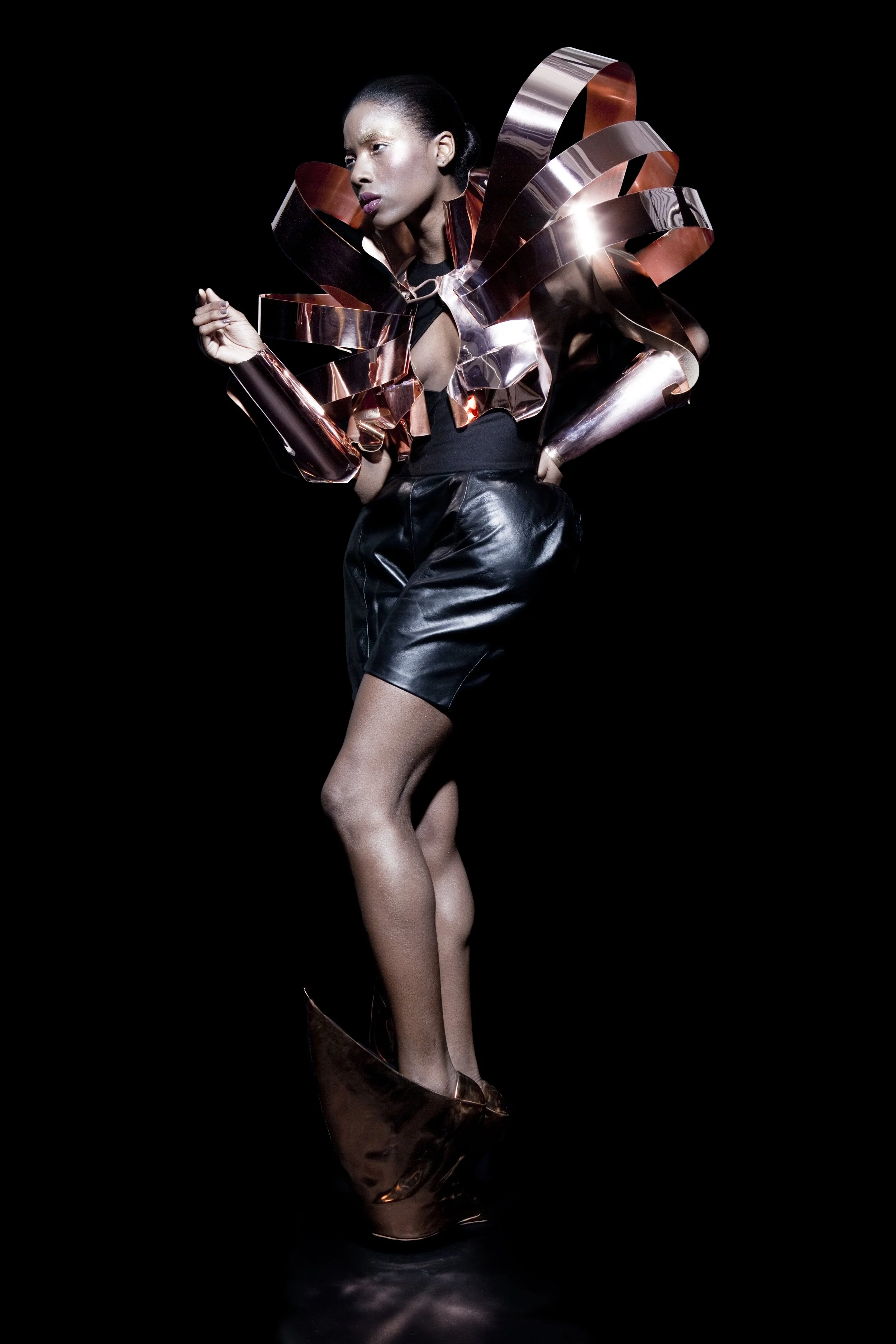
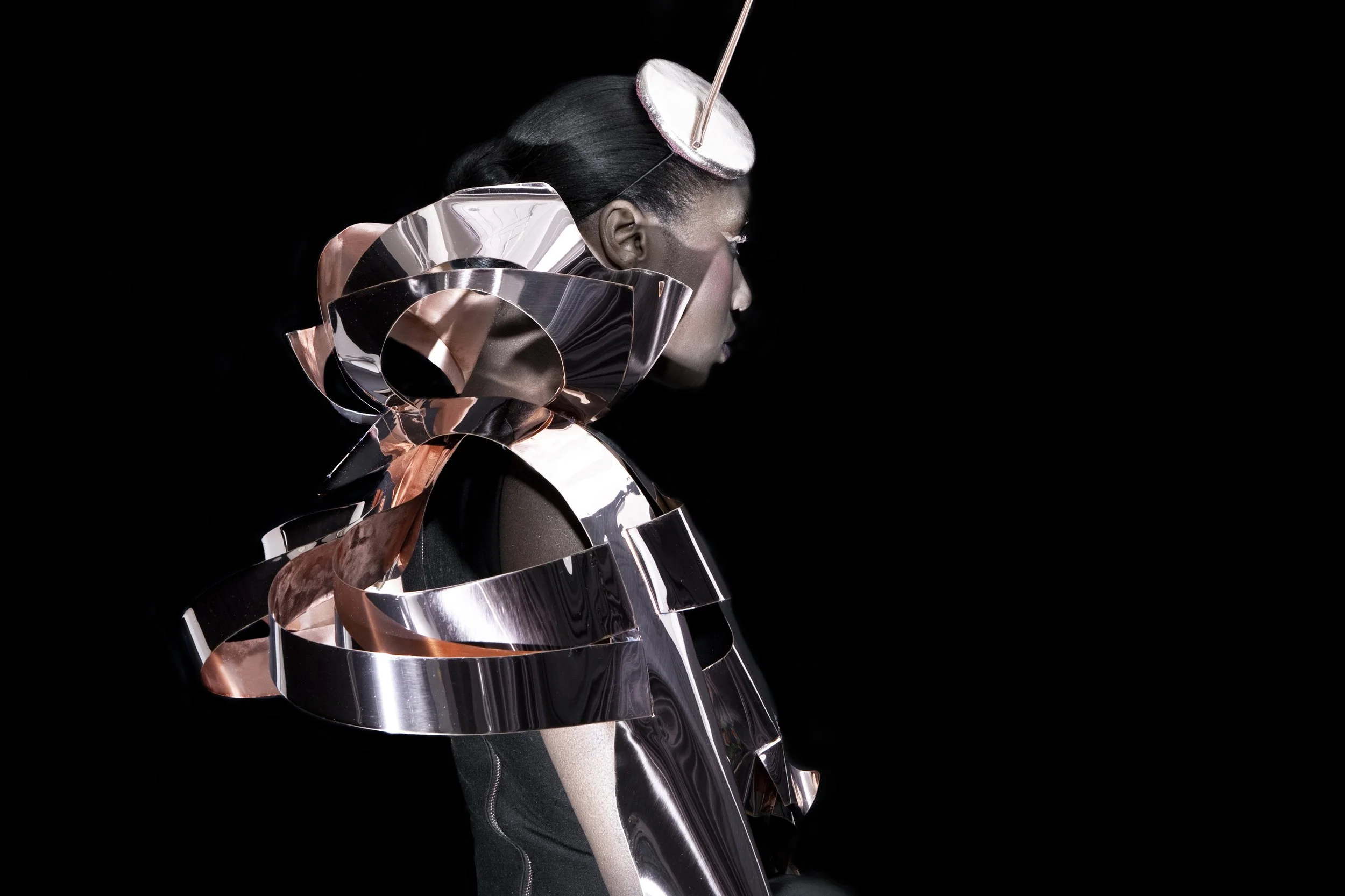
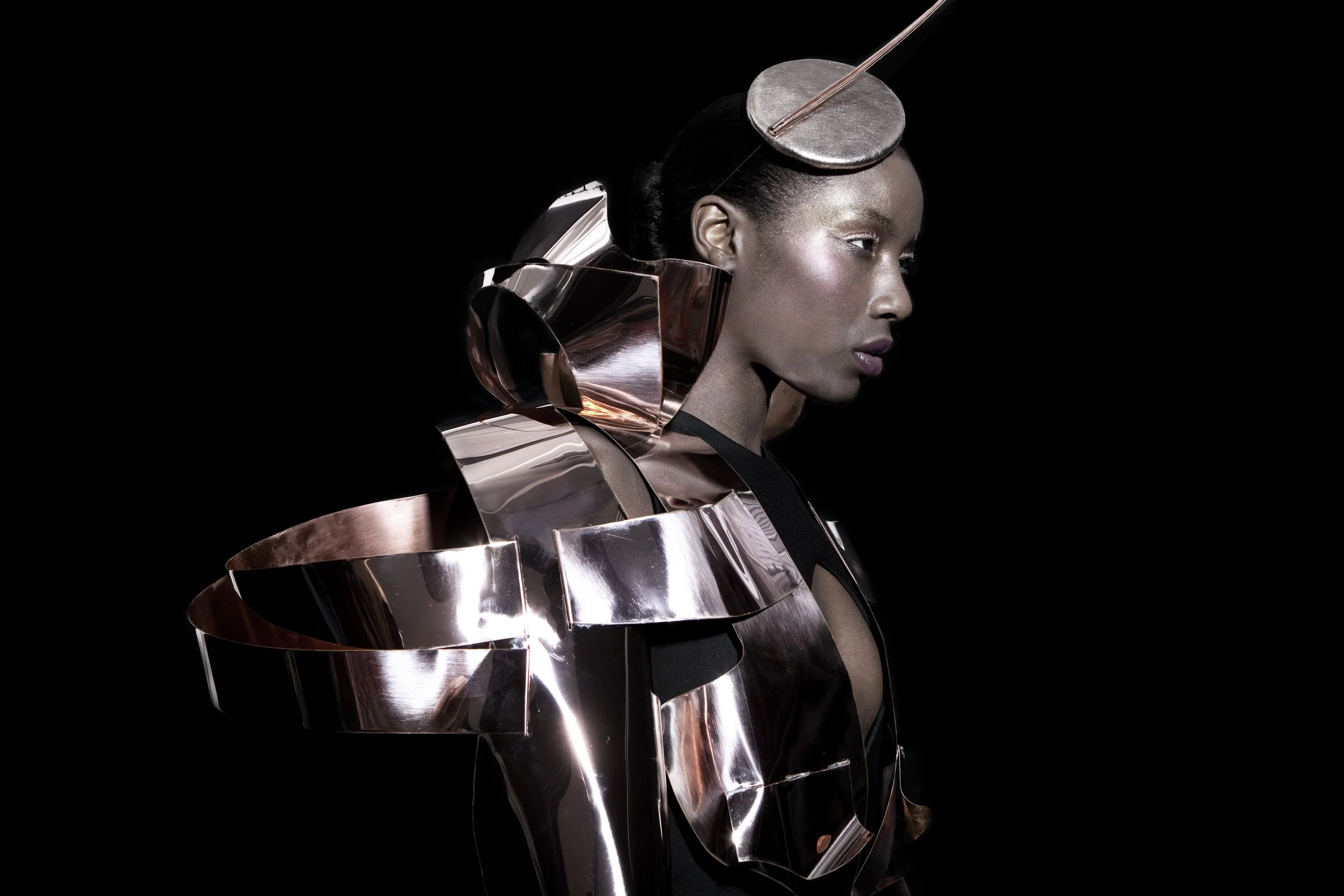
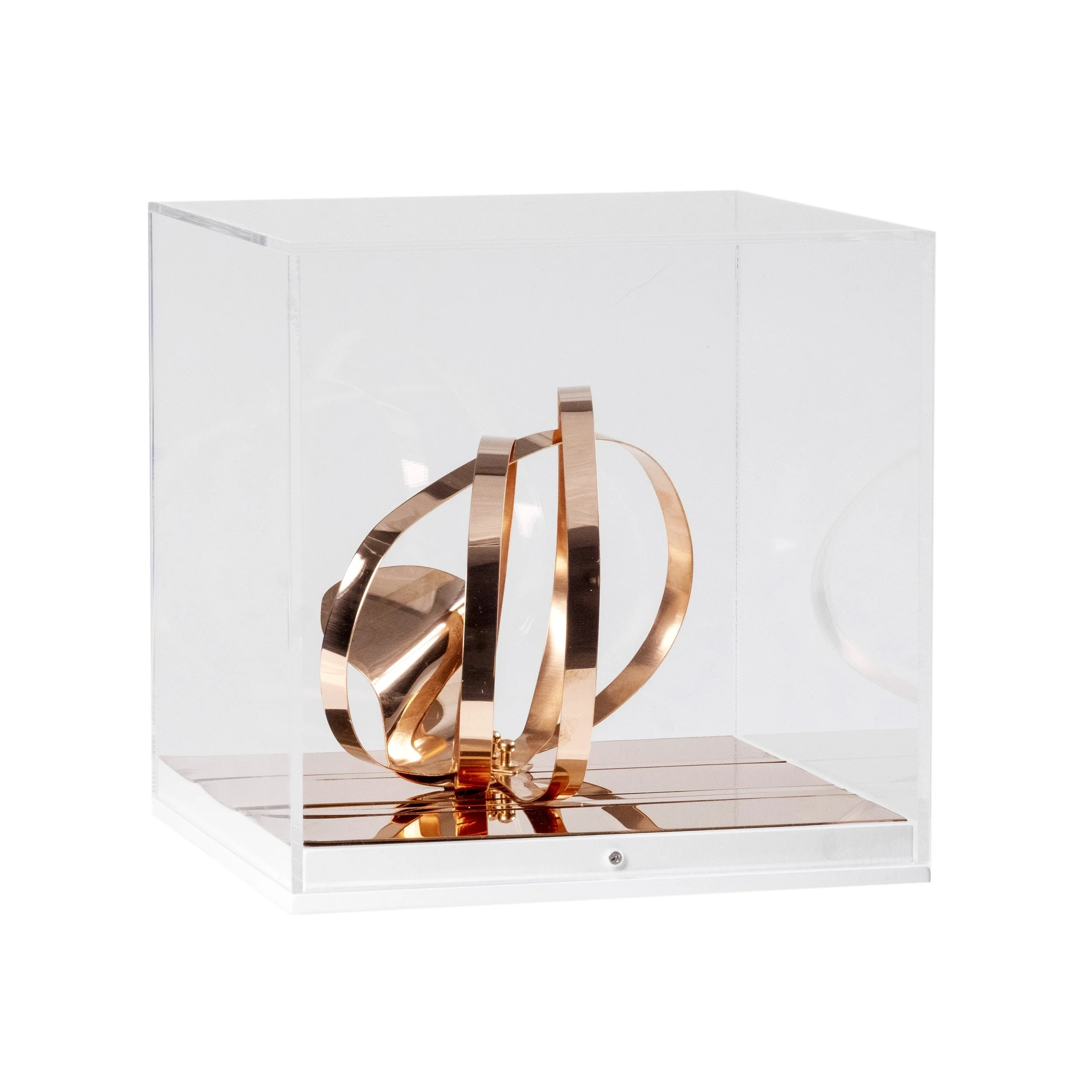
But what my head of school fought for was getting my copper sculptures on the stand for the whole three days, and I actually got more exposure that way. That was the platform that catapulted me into the fashion world. Fred Butler wrote about it for AnOther magazine, which was my first bit of press.
So when I hear of Graduate Fashion Week and the awards, there's this warm, tingly feeling. Coming from Yorkshire and being the first in my family to go to university, it was such a significant springboard into the creative world. Having judged the FACE category award before as part of the FACE crew, and judging this year, I feel really honored to give my expertise and experience back to the next generation of students.
Could you share more about your experience as a student and recent graduate at Graduate Fashion Week?
Kingston is an amazing university, but it's quite commercial, and I didn't fully fit in. In my second year, we did projects for commercial brands that I didn't personally identify with. I passed the projects, but during that time, I went out to London Fashion Week and did loads of interning - first at Nick Knight’s studio, who introduced me to Gareth Pugh, which also led to an internship.
I built my black book of contacts before I even graduated, getting my face and voice out there early on. The industry was trying to pigeonhole me, I experienced that during the sales period at Paris Fashion Week and it just wasn't working. At that point I was like, "I'm going to have to change my narrative."
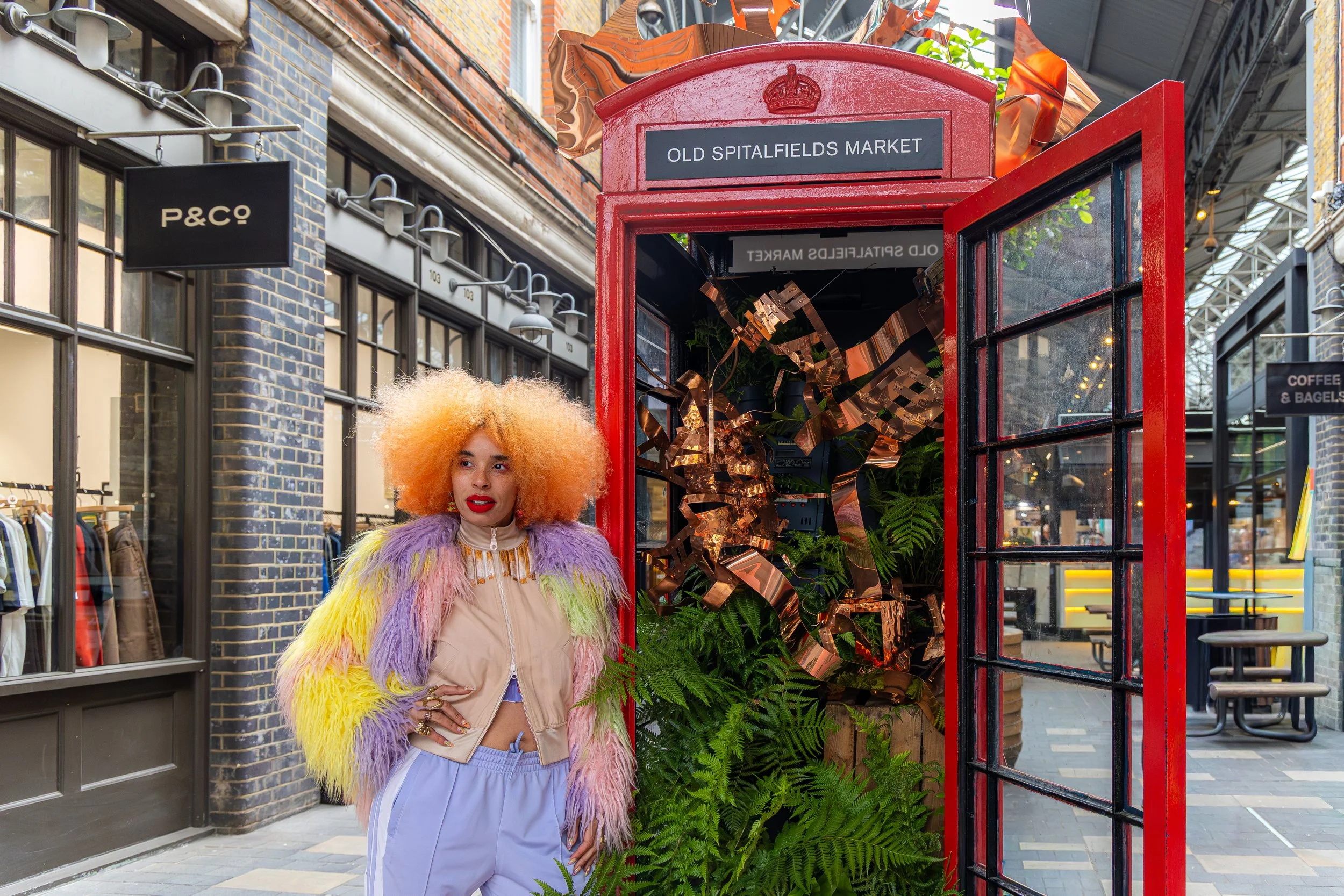
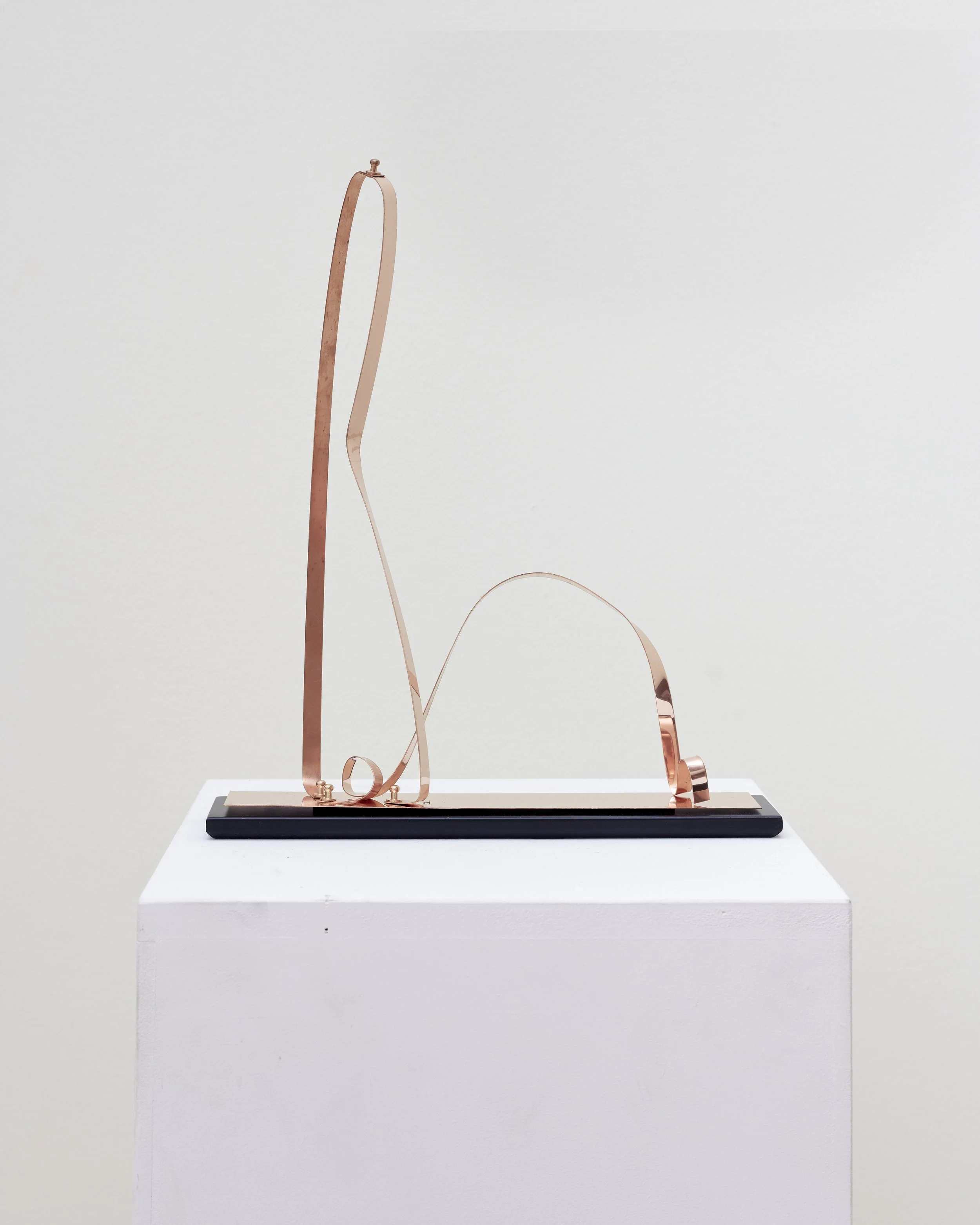
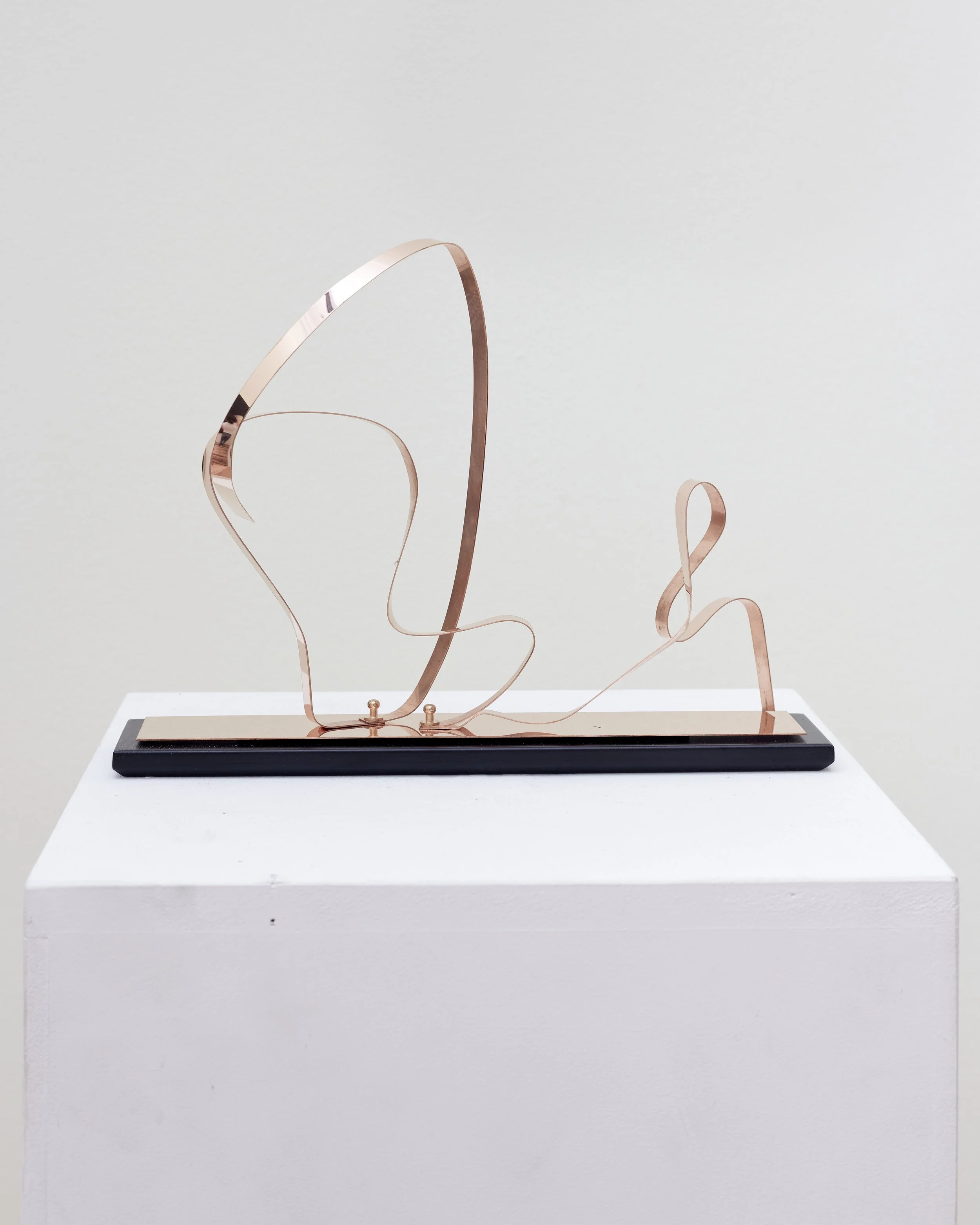
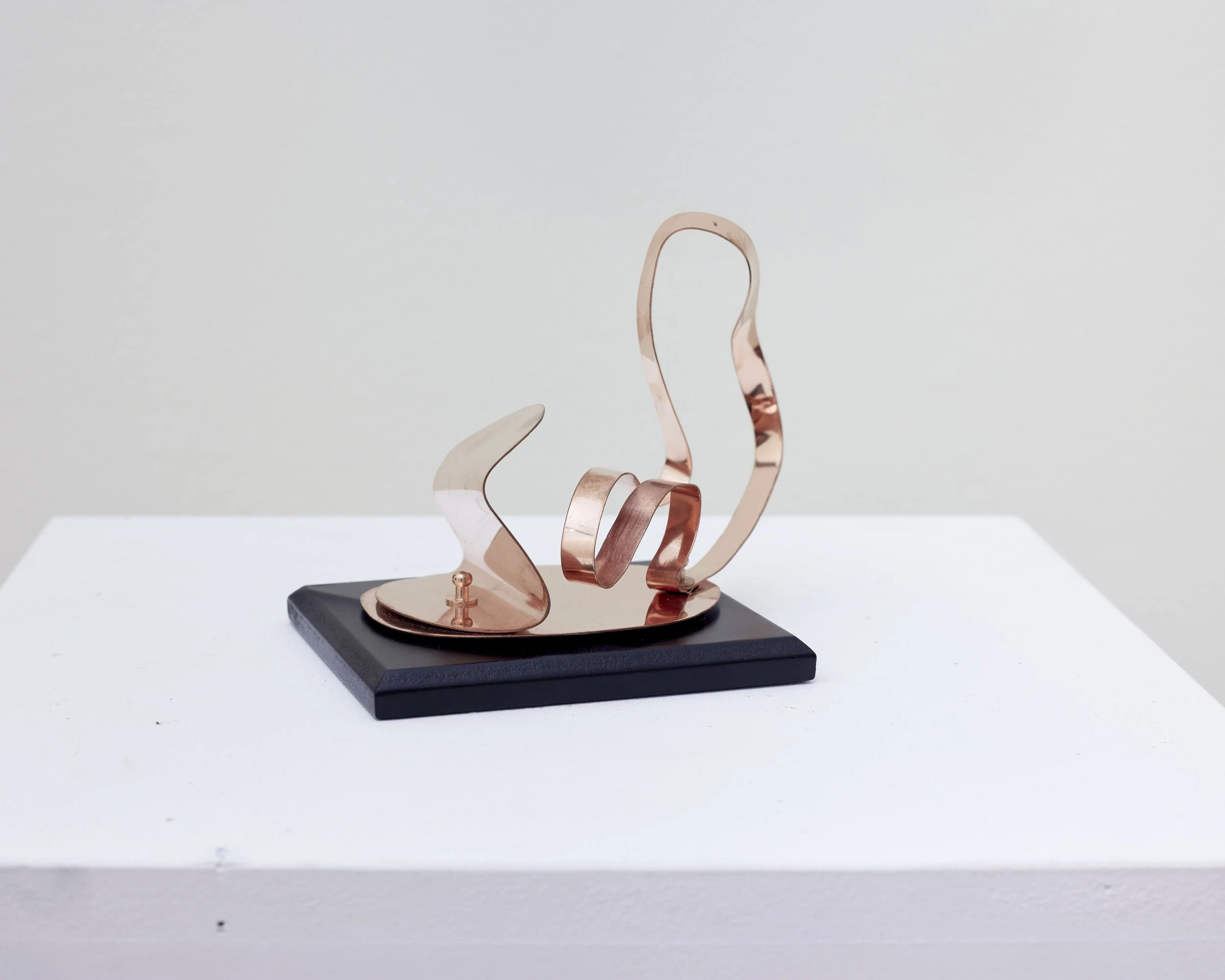
So, I said, "Right, if you take my copper sculpture away from the body, hang it from the ceiling—it's a light fitting. Put it on the floor— it's a prototype for a coffee table." And the minute I changed my message, I landed new exciting projects. The first media project that I got was on a radio show called Only Artists on BBC Radio 4. I could choose anybody. I chose Ron Arad, who's an artist that people, graduates, should know about because he trained in architecture, but yet is well known for his furniture to his jewelry - a multidisciplinary approach, which I really resonated with.
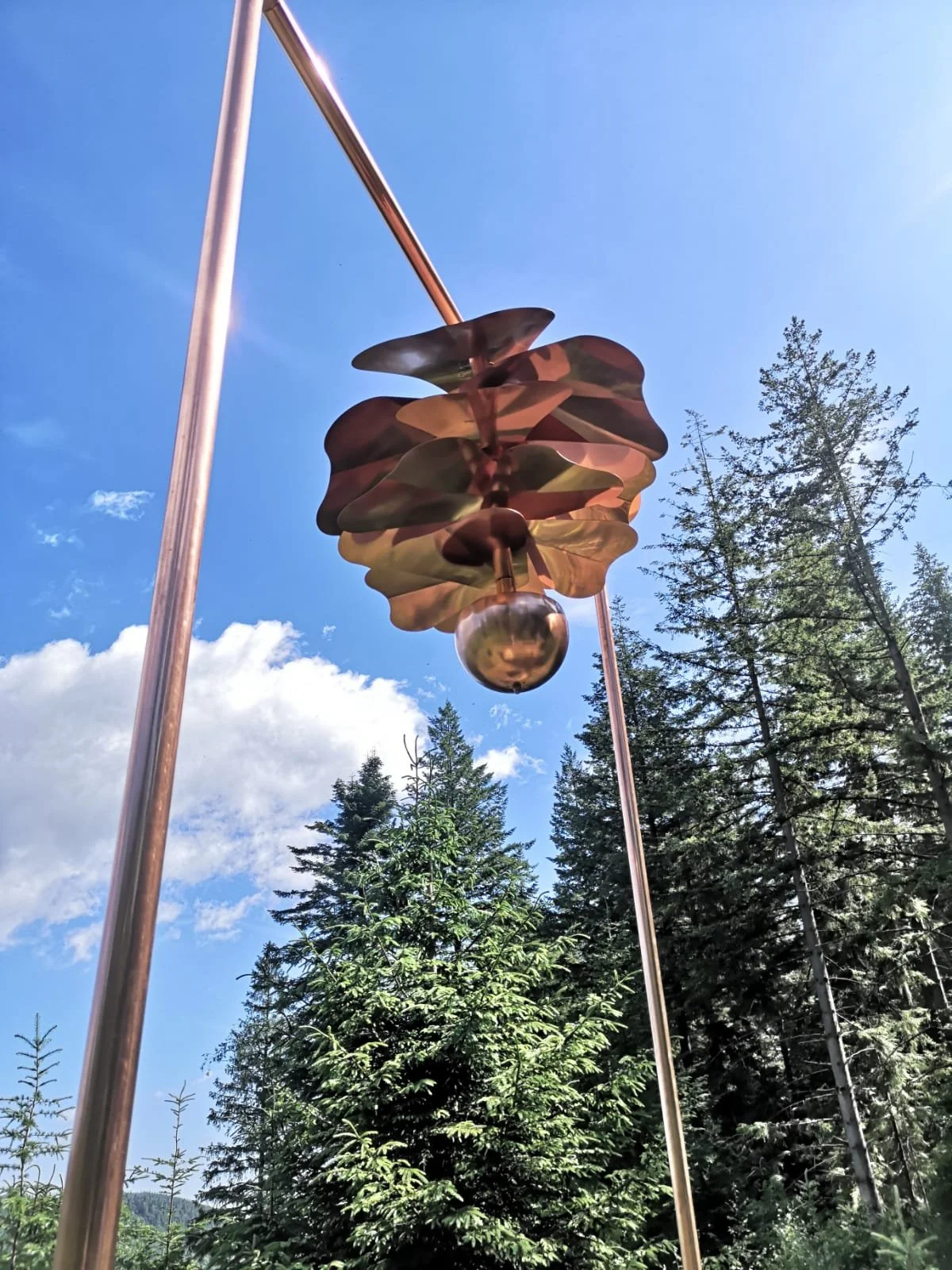
. Because I did fashion design I didn't think, "I'm just going to be a fashion designer." It’s this idea of not fitting into a box. And that approach catapulted me. Within three months, I got my first copper public sculpture commission. I made an 11-foot copper Christmas tree, a public sculpture for The Ivy. I've now got a permanent sculpture up in the Lake District that was commissioned by Sky Arts.
I showed my work on my university stand at Graduate Fashion Week - if I were on the catwalk, people might have seen it and moved on to the next show. On the stands, people could speak directly to me, look at my portfolio, and see the copper pieces. You hadn't seen sculptural copper pieces empowering women through shape and structure in fashion like that. The stand was way more beneficial for getting real connections.
What advice would you give to someone who isn't feeling confident about presenting their work and having these conversations with the industry?
Having confidence to talk about your work is crucial because you can have the best idea in the world, but if you can't articulate it, you'll lose the opportunity.
“My advice is to find a pocket of what you're really passionate about in your project to use as a springboard.”
Have a few key words to engage the person so it becomes a free-flowing conversation. Think of an elevator pitch—if you had 15 seconds in a lift with an investor, what would you say? Show that you're proud of your work and care about it.
As long as you know deep down who you are, your values, and your core pillars - any project that comes your way, will need to fit into that because otherwise that's when you lose yourself. That's when you're a bit like, "Oh, I don't know what I'm doing." I know exactly what I'm doing with every project that I do. Whether I'm writing for The Independent, on a BBC art show, bridging the gap between the fashion industry and students, or hosting - whatever it is, it all fits into my core pillars. And now obviously, being a mum of a 2-year-old, it's another thing that I've had to pivot on. So understand your core pillars and you’ll be guided by them throughout your career.
It would be great if you could tell us a little more about your journey to becoming an award winning artist and creator published in Vogue, Elle, and Wallpaper* to name a few!
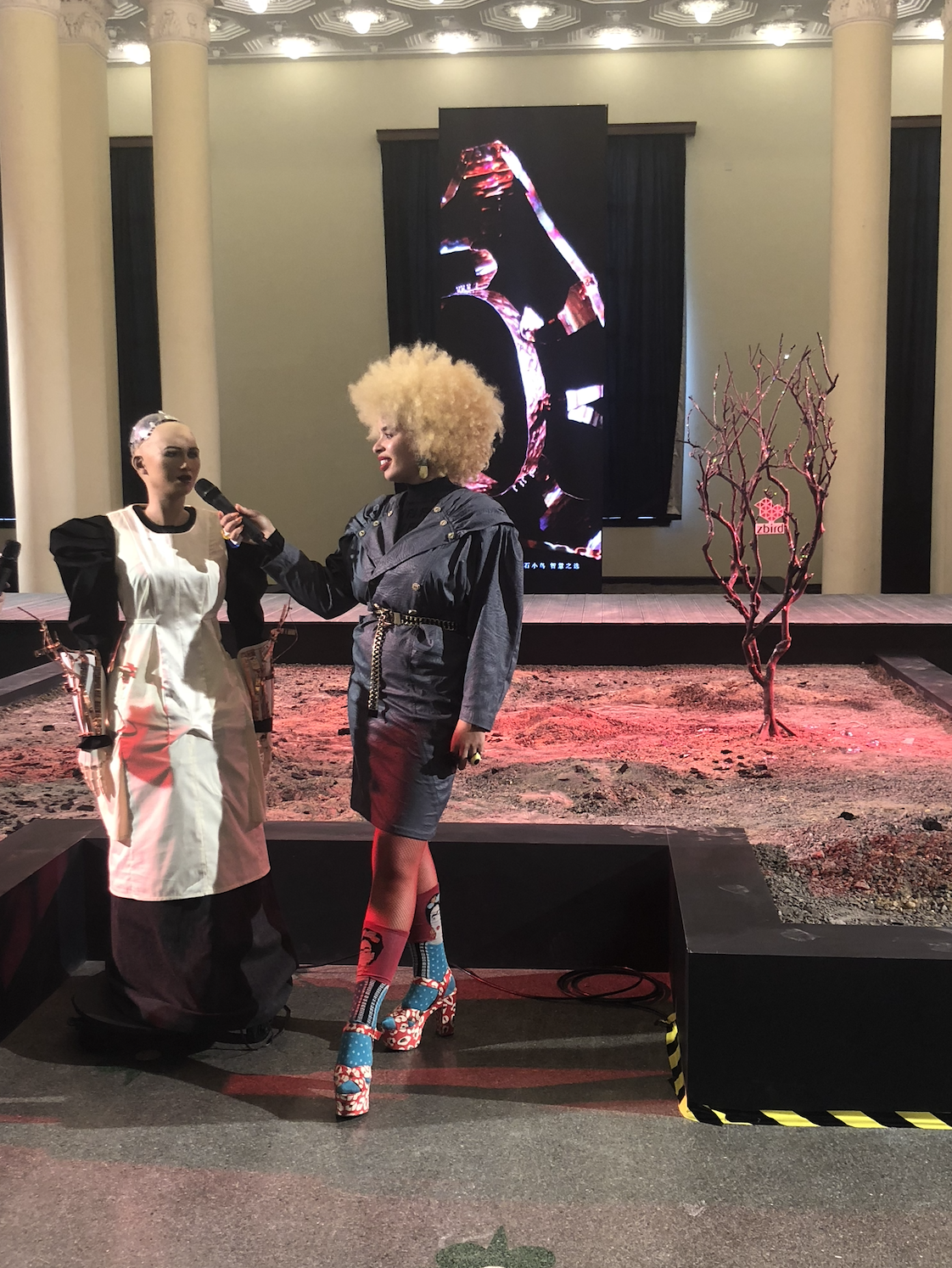
I worked with Ai before it became the thing. I worked with Sophia - the world-famous humanoid robot - before she went and sat at Alexander Wang's fashion show in New York. I spotted her because she was wearing Roksanda's clothing. So, I knocked on that door for weeks upon weeks and I didn't stop. I found the guy that owns the robot on LinkedIn and said, "Hi, I've emailed you three times. I've not heard anything. I want to do this, this is what I do." And he was like, "Oh my god, amazing. Let's do it." And then Sophia and I ended up opening Shanghai Fashion Weekend together.
“I think my big word is curiosity. You need to be curious; you need to feed that soul.”
The world is literally your oyster. There's nothing that I think I can't do from a creative, innovative perspective. I'm not a scientist or an academic in that way - I'm very much a creative academic - but I put it out there and make it happen.
I wouldn't say I'm a natural writer, but what I do is tell stories authentically through my eyes as a creative, and that's my niche within the space of journalism.
Copper appears across your body of work, from your graduate collection in 2013 to the copper Christmas tree for The Ivy Granary Brasserie 2018. What is it about copper that resonates with you creatively?
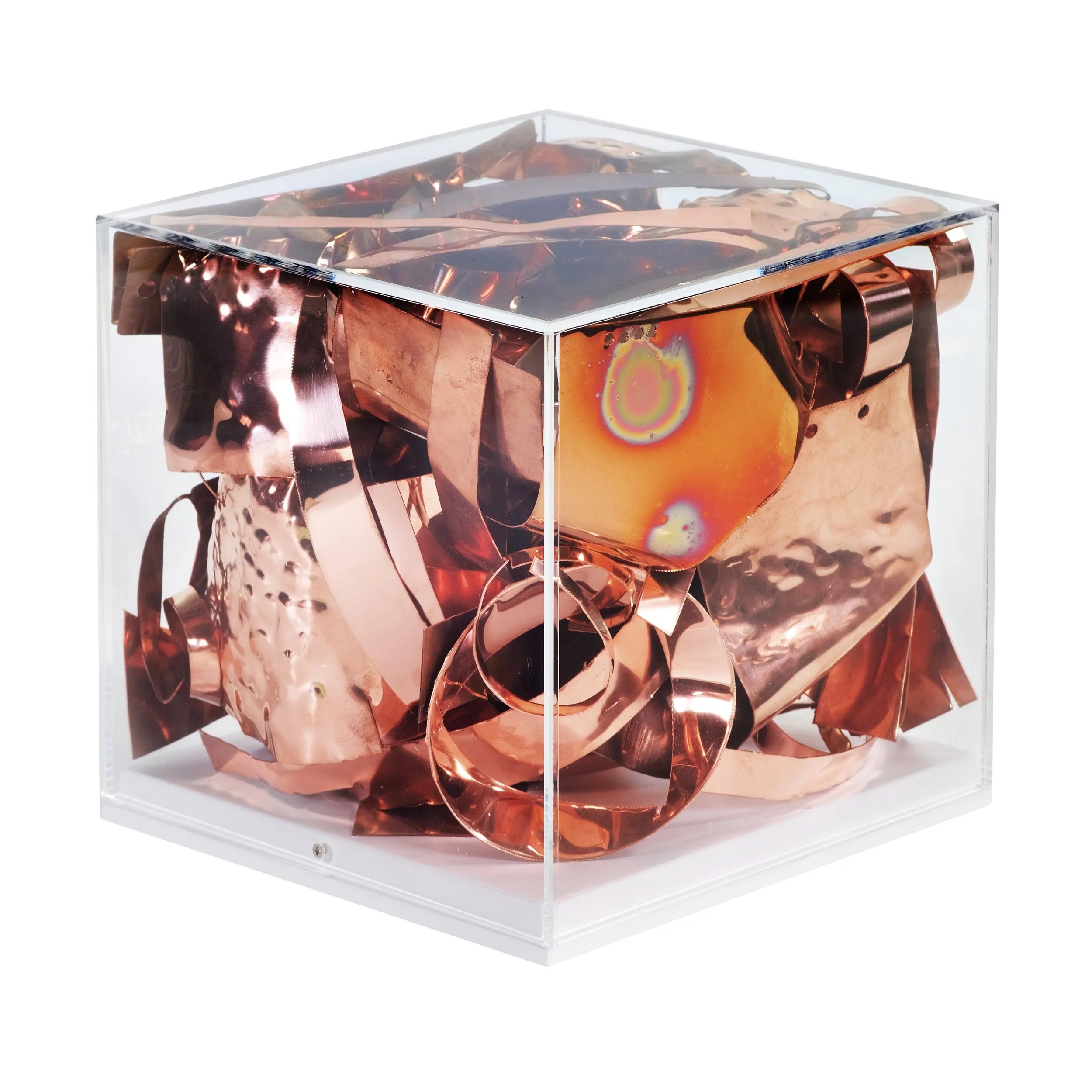
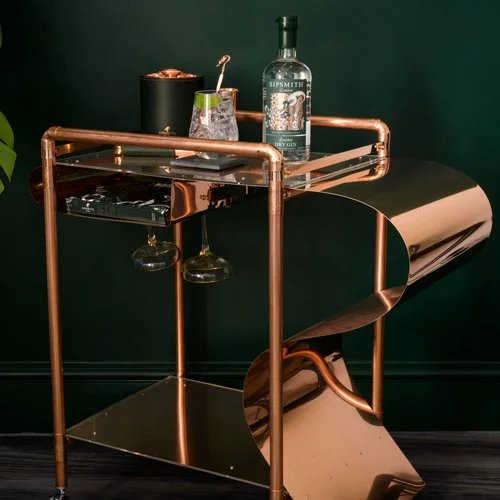
When I first started using copper as a fashion designer, you never saw it in the industry, and I've always been someone that likes to do things differently. But I never actually knew the connotations behind it or the benefits of copper. I just loved the look and feel of it.
And then it was actually through COVID that I realised there's more to copper than just the obvious. We all know, it's good for your health, it's amazing environmentally, but it's also a spiritual conductor. It repels negativity, amplifies thoughts, provides mental clarity and focus, and it's a stone for good luck. It's very much used in the Ayurvedic way of living, through copper pans and copper vessels.
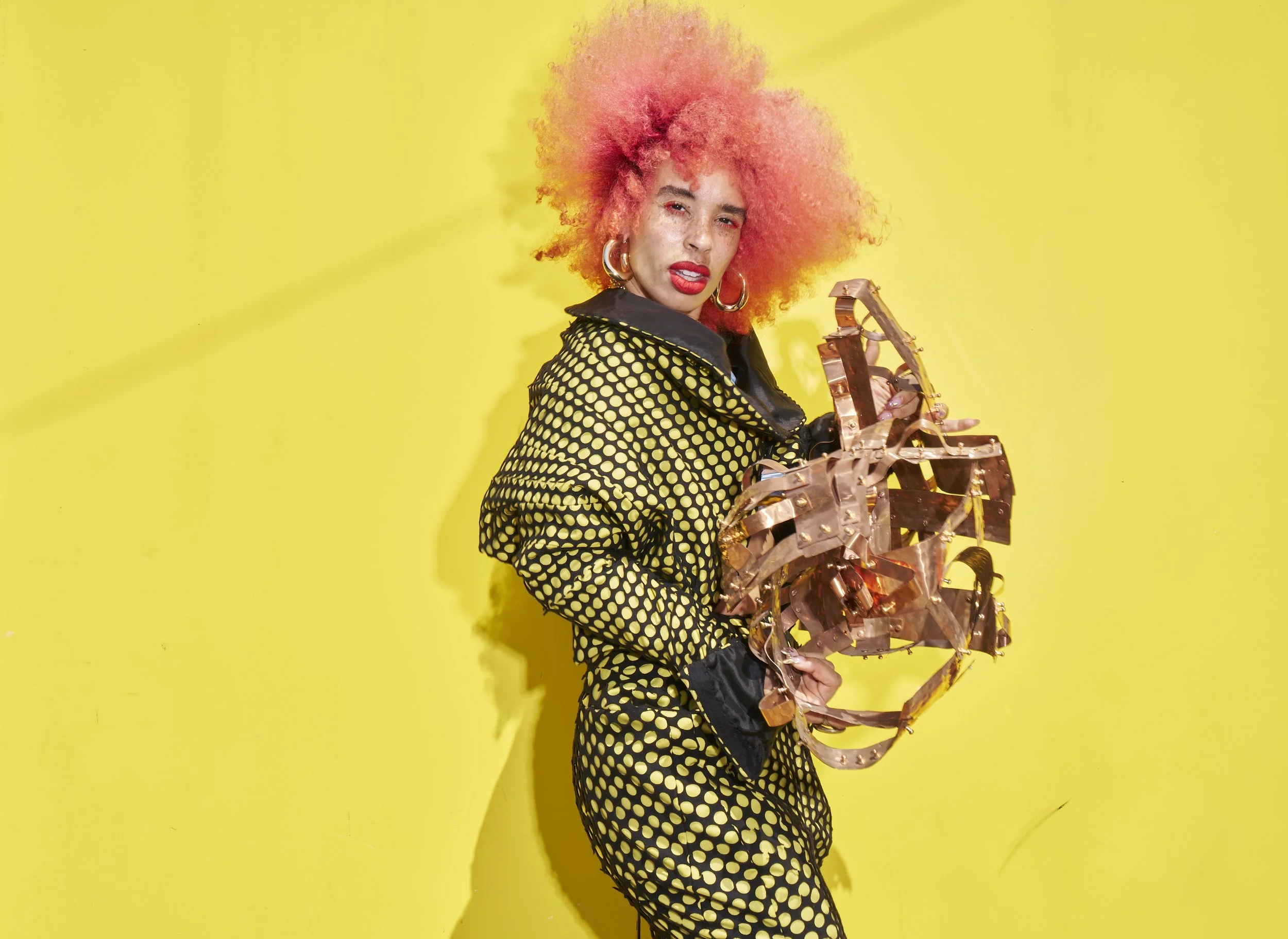
Now I use it from a space of wellness. When I deliver my workshops, or showcase at exhibitions, or even my piece up in the Lakes, it's all about people connecting with the material and feeling uplifted and rejuvenated when they walk away.
When I do my workshops, I always say, "Right, this is your time now. It's your permission to pause, slow down, get off your phone." It's mesmerizing how people will literally get sucked into making and creating using their hands. At the end, when they produce their little sanctuary, you can see there's a big sense of relief and reset.
That's my narrative around it. It's getting more and more prevalent now that wellness is such a huge industry. I can speak to so many different pieces and projects because of the copper.
Your practice has landed you TV appearances across Sky Arts, Channel 4, the BBC and CBBC, as a mentor, featured in documentaries, as an artist and a presenter. In 2026, there is a lot of discussion about building a brand and being visible as a creative person, as a key driver for success in the industry. What advice would you give to a young person now, just graduating, that isn’t as comfortable being in front of a camera or putting their work out into the world?
I think the word consistency is really important. I don't have a massive following, but I have influence within the community I've built. I say that I'm a cultural communicator because the things I communicate are of cultural relevance. I wouldn't say I'm an influencer. I just have views, opinions, and storytelling that resonates.
Resonating with an audience is one thing, consistency is another, followed by believing in yourself. Being in front of a camera, you either love it or hate it, you're good at it or you're not.
“You don't need to be in front of the camera to be successful, but what you do need is an opinion. You need to have a voice, work, or something that gives you presence.”
Even if you don't want to be in front of the camera, just being in those spaces and networking is key. So, resonating, networking, and consistency - those are the three key things.
You’re a wonderfully recognisable person, with a bright colourful dopamine dressing approach to styling. How would you advise a young person looking to stand out?
Find your unique style. Don't go with a trend! I've dressed like this since I was 13 years old. If you look back at old photos of me at London Fashion Week when I was a student, I've got massive platform Buffalo boots on, odd earrings, one lip coloured red, big clumpy mascara, dripping in vintage, clashing prints and colours. I was just experimenting, playing, and layering.
Finding your thing, even if it takes a journey to find it, is amazing. Going through the motions to find it, matters. I don't want to fit in with a trend, I'm a trendsetter, not a trend follower. I wear colorful mascara and now loads of girls on Instagram want to wear colorful mascara!
Just because everyone is doing it doesn't mean you have to do it. Social media trends, this whole "kind of chic" thing - it's annoying! Follow me or unfollow me, I actually don't care if you follow me or not. It's about being bold and secure enough in yourself to have opinions. Conformity is optional. You don't have to follow trends, but if you do, be comfortable with it and own it. My mum is a huge trend follower, whereas I couldn't care less what colour is "in" - I'll wear it if I like it. Be your own mind. Just because it's popular doesn't make it required. Going against the grain is important these days.
Currently, you hold the role of Head of Partnerships and Engagement at LCCA. The Foundation is dedicated to creating opportunities for the next generation of multidisciplinary creatives. As a mentor, judge for GFW awards and someone in the education space, what would you like to see from young people when they come in to present their work?
I want to see unique stories, storytelling is so important. I want to hear your story, not anybody else's. I don't care if you did something because it's trending. I want to see a unique story that is culturally relevant.
I work with copper - I've been named the "Copper Queen" by Clare Lilley, the ex- Director of the Yorkshire Sculpture Park, because I found my thing. Find your thing! Don't do what everyone else is doing; it's already been done.
For the Non-Design Award, I found it fascinating through styling, storytelling, and filming. My husband is a creative director and sees photographers' work day in and day out for big brands. What's the point of difference? What's the hook that makes us hire you over somebody else? I want to be drawn in straight away. Don't try to be anybody else - be you.
With such an extensive career, is there a moment that has stood out to you most?
That's hard. I've had loads of career highlights across different categories.
For example, I went to Art Basel Miami to showcase my copper sculptures. I was in the airport, just got off the plane flown from London to Rome, Rome to Miami, feeling like a shell. A woman came up to me and said, "Excuse me, are you here for Art Basel Miami?" I said, "Yeah, I'm showing my work." She gave me her card - she was the Vice President at Fendi and said, "We're here for Design Miami and I'd love to do some work/content." Within 24 hours, I was at her hotel having breakfast talking motion graphics, and they interviewed me for F is For... I went to dinner, met big journalists, they gave me a Fendi bag and sunglasses! It was a world I was so far removed from, but it showed that all these worlds collide - fashion, art, identity, curiosity, being authentic. She felt she could approach me because of how I looked, and I was there because of my talent as an artist. So that was a total pinch-me moment.
Another would be when Sophia, the robot, and I opened Shanghai Fashion Weekend in front of the local Chinese government. I was like, "Hang on, I'm little old Sadie Clayton from Yorkshire who tapped on a few doors asking to make sculptures for this robot who's been on a date with Will Smith!" She was wearing my commercial pieces and copper sculptures, and CNN Style filmed me dressing her and putting her makeup on.
From a fashion-academic perspective, LCCA supports a series I host called Making It: Creative Careers Unlocked. I interview people across different career pathways such as the Visual Merchandiser of Oxfam, founder of Lazy Oaf, Creative Director of Gucci, CEO of Outiumberg , Head of Designer Initiatives at the British Fashion Council, Head of Community at Schuh.
The latest one was interviewing the Sustainability Director at Versace. They flew me to Milan, I went into the Versace head office showroom surrounded by beautiful couture pieces, and interviewed her on sustainability and after care. That was a real pinch-me moment within fashion academia.
I am a multi-hyphenate talent. Without the tech, I wouldn't have gotten Sophia and CNN; without fashion, I wouldn't be an academic interviewing industry leaders; without art, I wouldn't have been at Art Basel or on Sky Arts. It's all interconnected.
So what’s next? Are there any exciting plans or projects in the pipeline?
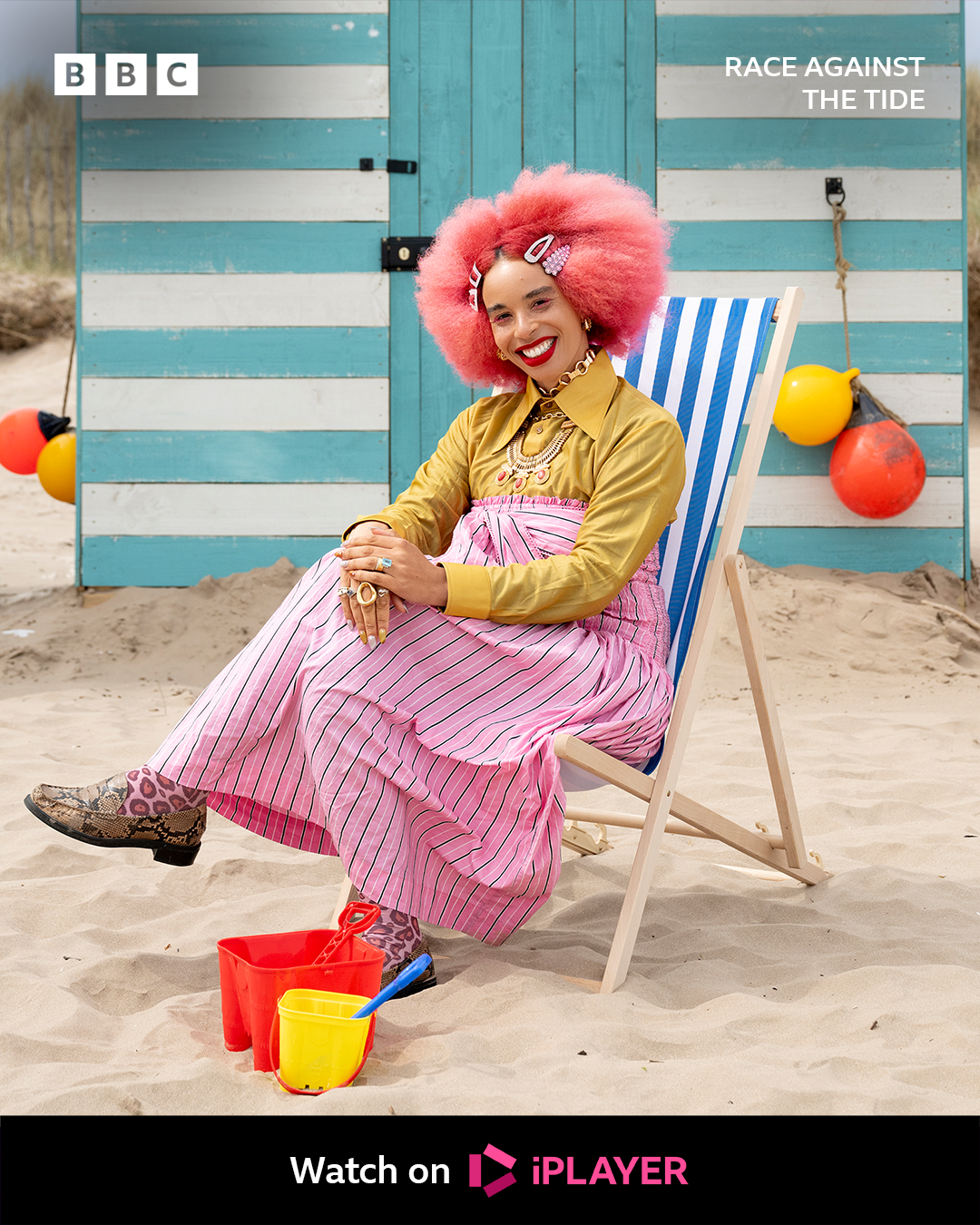
A new TV show aired that I want everyone to watch because it's the epitome of who I am. I was an art judge and expert on a new BBC six-part series called Race Against the Tide. Think MasterChef or Glow Up, but with sand sculptures! Teams have six hours to create a sculpture out of sand based on a brief, and after six hours, it gets washed away by the tide. As a creative, that's devastating, but it gives a new level of respect, resilience, and patience.
I filmed that less than a year postpartum while exclusively breastfeeding. I had my baby on set, my village around me, and every time I finished a take, I'd go feed him while doubting if I said the right thing or produced enough milk. It built real strength and shows that women can be moms and still continue their careers. It's on iPlayer now!
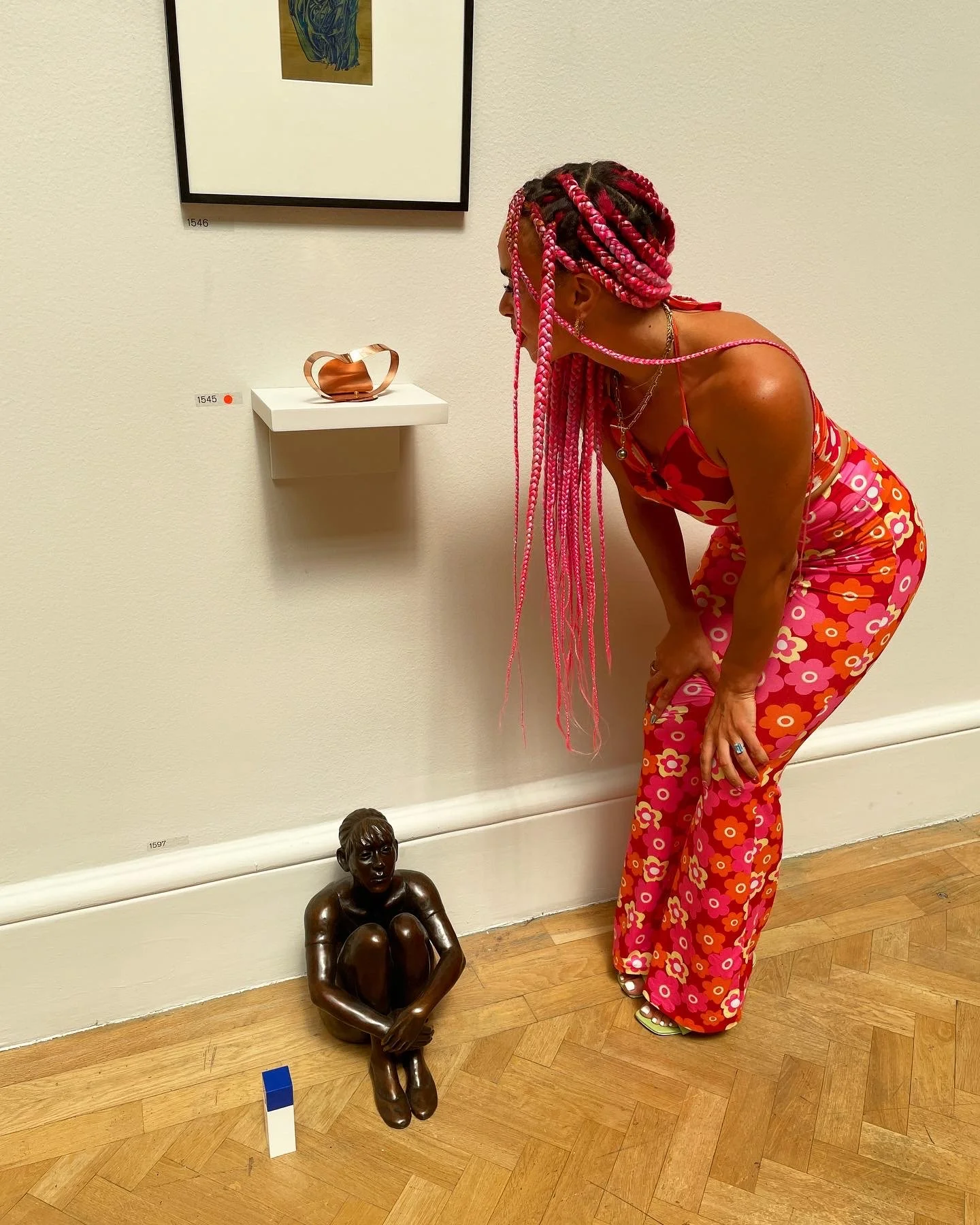
I'm also doing more writing about art and culture. This year I judged the Royal Academy of Arts Summer Exhibition award, and I'm writing an article for their magazine. For my copper work, I have a couple of workshops toward the end of the year and need to focus more on commissions and getting into the studio.
Find out more about Sadie by following her instagram here.
Where It All Began
|
Where It All Began |
Thank you to Sadie for giving up her time to speak with the Foundation about her career journey so far. Sadie’s experience showcases the expansive ways in which a fashion education can be applied across multiple disciplines, to craft an original perspective and entwine a rich career with several creative pursuits.
Inspired by this conversation? Graduate Fashion Foundation has an exciting array of alumni in leading industry roles from education to design, marketing to pattern cutting. In our 35th anniversary year, we’re celebrating our alumni community. Discover the series here.
If you’re a student at a member university, we’d love to hear more about your story, experience and ideas - pitch us a story here.
