
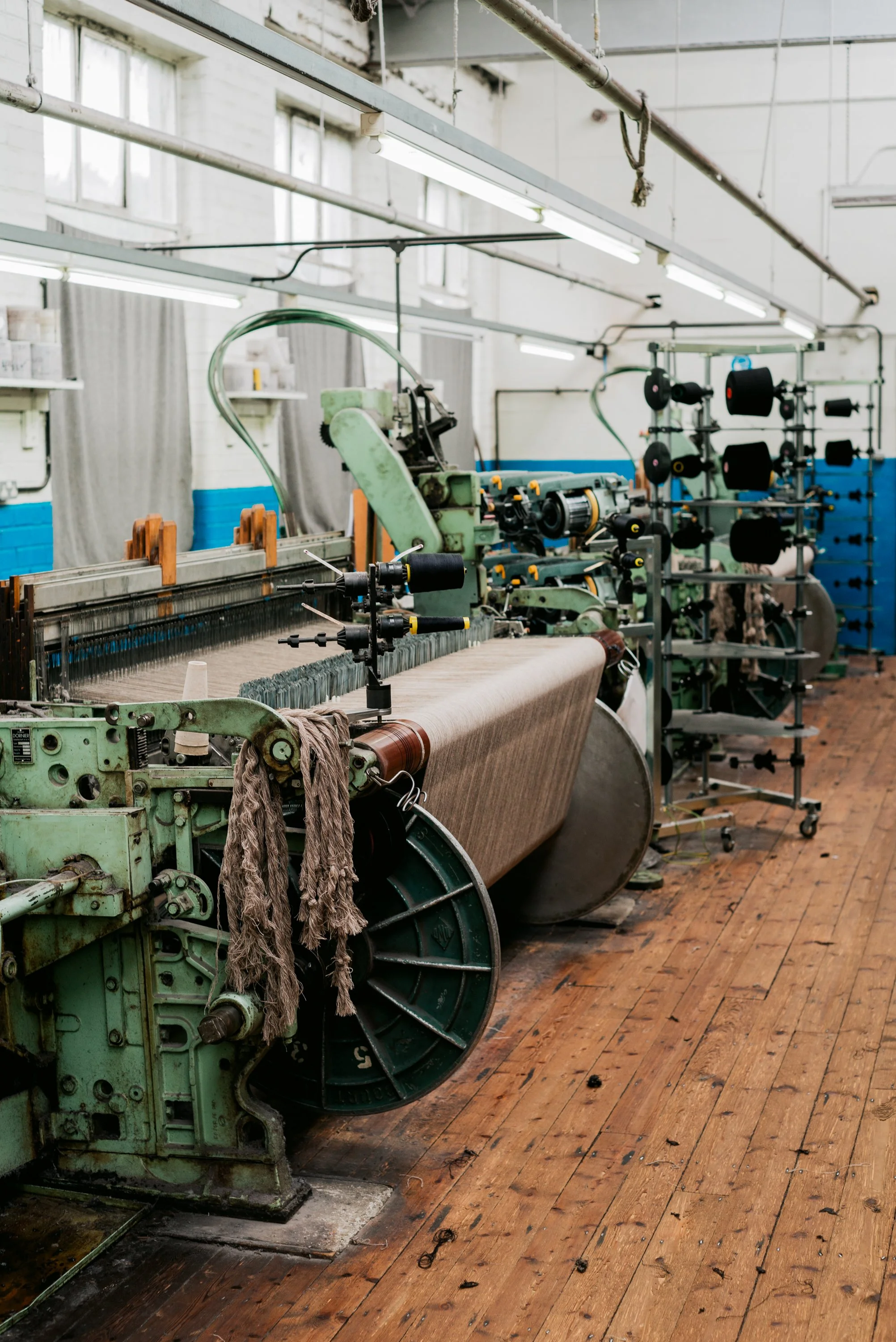
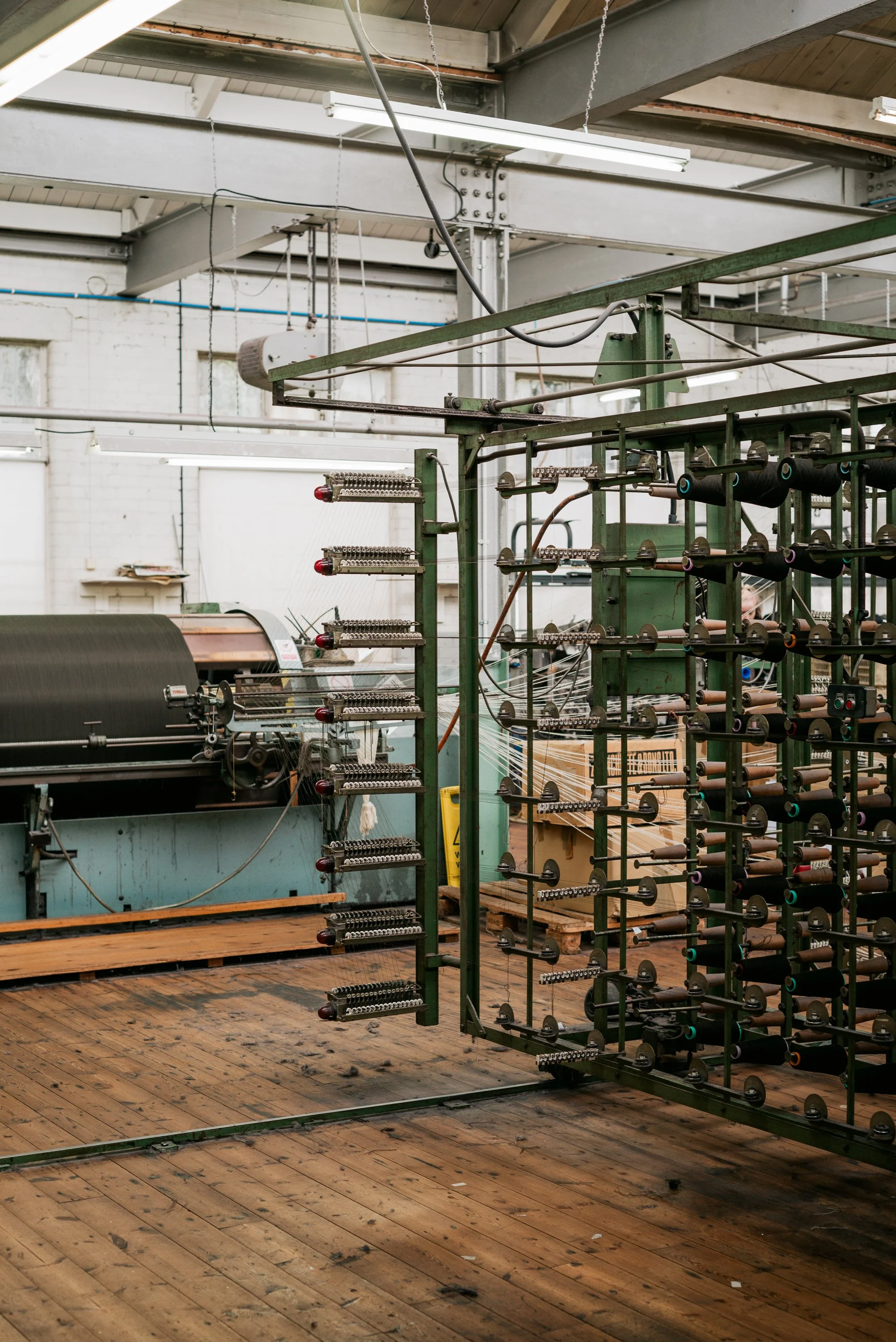
As part of an exciting collaboration, we have been travelling around the UK this Autumn with Dugdale Bros & Co, the last remaining independently owned cloth merchant in Huddersfield. For over a century, Dugdale Brothers & Co have operated as both a cloth maker and merchant, supplying the world’s finest tailors and brands with exceptional cloth, combining heritage, innovation and a relentless commitment to quality.
Sourcing cloth can be a challenging task when you’re limited by cost, access and knowledge - so we sat down with Anna Woods, Showroom Manager at Dugdale Bros & Co, to find out what her non negotiables are when looking for fabrics for your graduate collections.


Feel Free To Ask Questions:
Don’t be afraid to go into a cloth method and ring the bell, come on in, merchants are passionate about textiles and are there to guide you.
Always handle the cloth physically. If you are constructing a garment, this fabric will rest against someone’s skin for hours.
Does it feel soft, stiff, scratchy, or smooth?
No question is too small or basic.
You can ask about fabric care, wash precautions, grainline direction, shrinkage, and fiber origin.
The Price:
A higher price tag doesn’t always guarantee better quality. Expensive fabrics often reflect brand markup or complex weaves/finishes rather than actual durability. Always check the bolt label for fabric composition.
Look closely at natural fiber percentages (like wool, silk, linen, or cotton) versus synthetic blends (polyester, acrylic, nylon). Remember: not all synthetics are bad, a high-percentage wool blend with a small amount of synthetic fiber can add durability.
Consider Weight, Drape, & Structure:
How will it love on the body? Is it structured? Is it unstructured? What do you want it to do?
How a fabric hangs and works under the needle determines how your finished piece will perform, and how easy it is to work with.
Choosing the Right Weight when learning:
Avoid lightweights: Fabrics like silk chiffon or satin can slide easily so are difficult to control under the presser foot. Thick/heavy fabrics can add strain to needles and also make seams difficult to press. Mid-weight is best: medium-weight wool suiting or cotton drill are forgiving, hold press lines well, and can easily handle beginner mistakes.
Evaluating Drape & Structure:
Unroll a section of the cloth and let it hang over your hand to observe. Structured fabrics hold shape well, making them ideal for sharp tailored garments. Fluid fabrics move naturally with the body, so are best suited for draping techniques or bias-cut pieces. Always try to match the fabric’s natural drape to your intended silhouette.
Let The Fabric Inspire You:
It is good to enter a shop with a pattern or silhouette in mind, but keep your mind open to surprises. You might go in with an idea of what you want and be pulled into a completely different direction. Allow textures, weaves, and patterns to influence your design direction. You might walk out with a whole new realm of creative ideas!
Choosing A Colour:
Avoid focusing on one colour. Be broad and open.
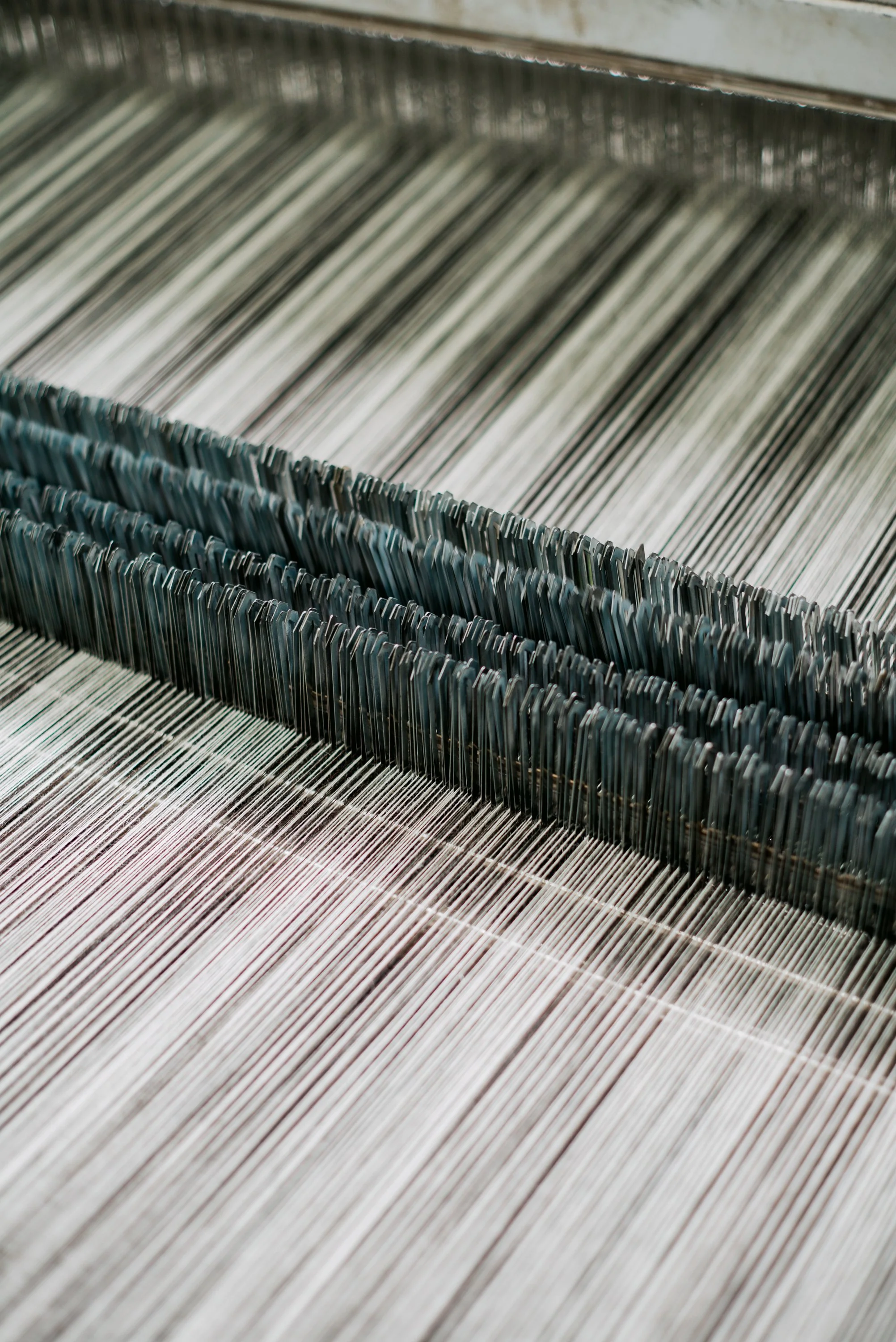
High-quality textiles are often woven from multi-tonal threads. Look closely, what appears as a simple flat navy from a distance may actually combine subtle strands of cobalt, black, and grey.
Lighting also matters, take a sample toward natural daylight before making a descision. Flourescent shop lights can alter how a color appears, especially against your skin.
Attend Cloth Fairs:
While local fabric shops are great for convenience, attending trade fairs can open up entirely new sourcing avenues.
These fairs allow you to meet wholesalers and independent weavers directly. You will also gain access to specialty weaves, vintage deadstock, and higher-grade materials that rarely make it to high street retail shelves.
Enjoy the Process!
Selecting fabric can feel like a daunting part of the making process, especially with so many options to choose from, but sourcing cloth is where your design process really begins. Dugdale emphasise to ‘make the most of it’ and embrace the creative potential in every bolt of fabric.
Dugdale Bros & Co offer a student discount to those studying fashion - get in touch with them and head to their showroom on Clifford Street to find out more.
