
Discover How Seatbelts Became an Inspiration to This Award Winning Designer
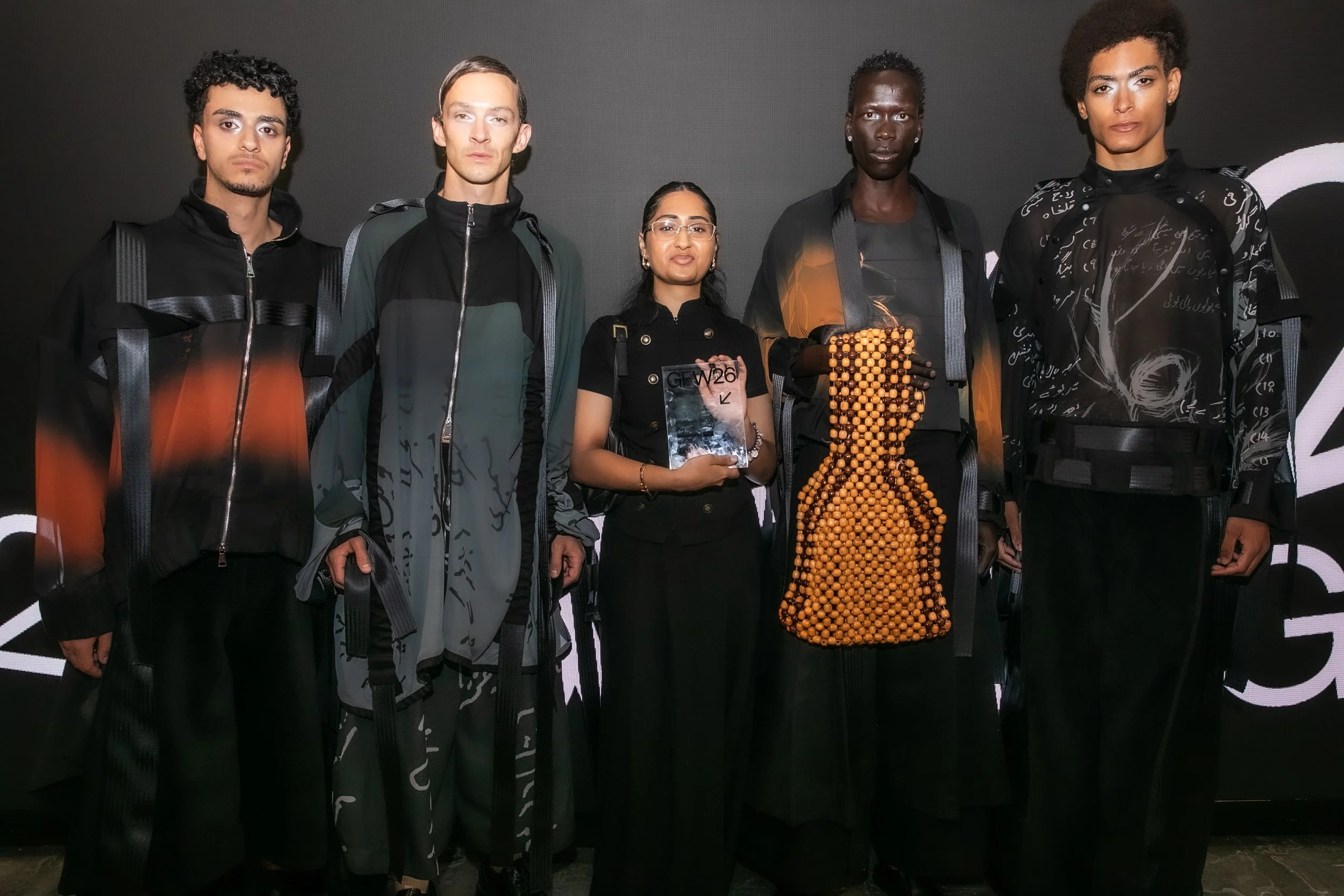
An Interview with the winner of De Montfort University’s GFW Catwalk & the Bronze Award 2026: Nawal Ali
Nawal Ali is a British-Pakistani fashion design graduate from De Montfort University, specialising in menswear, but is also an avid storyteller. Almost all of Nawal's work starts with a story, often rooted in family, community and experiences growing up between cultures. It’s important to Nawal that the creative process remains grounded, so through conversations and personal experiences, stories that may otherwise go unheard are uncovered and explored from her unique angle.
From there, these narratives are translated through fabric, print and technical design. Nawal's approach is disciplined and considered, but also introduces a sense of vulnerability and emotion, reflecting these nuances within the stories being told.
If these are all for the same publication, this keeps the wording and structure almost identical while reading naturally in the third person.
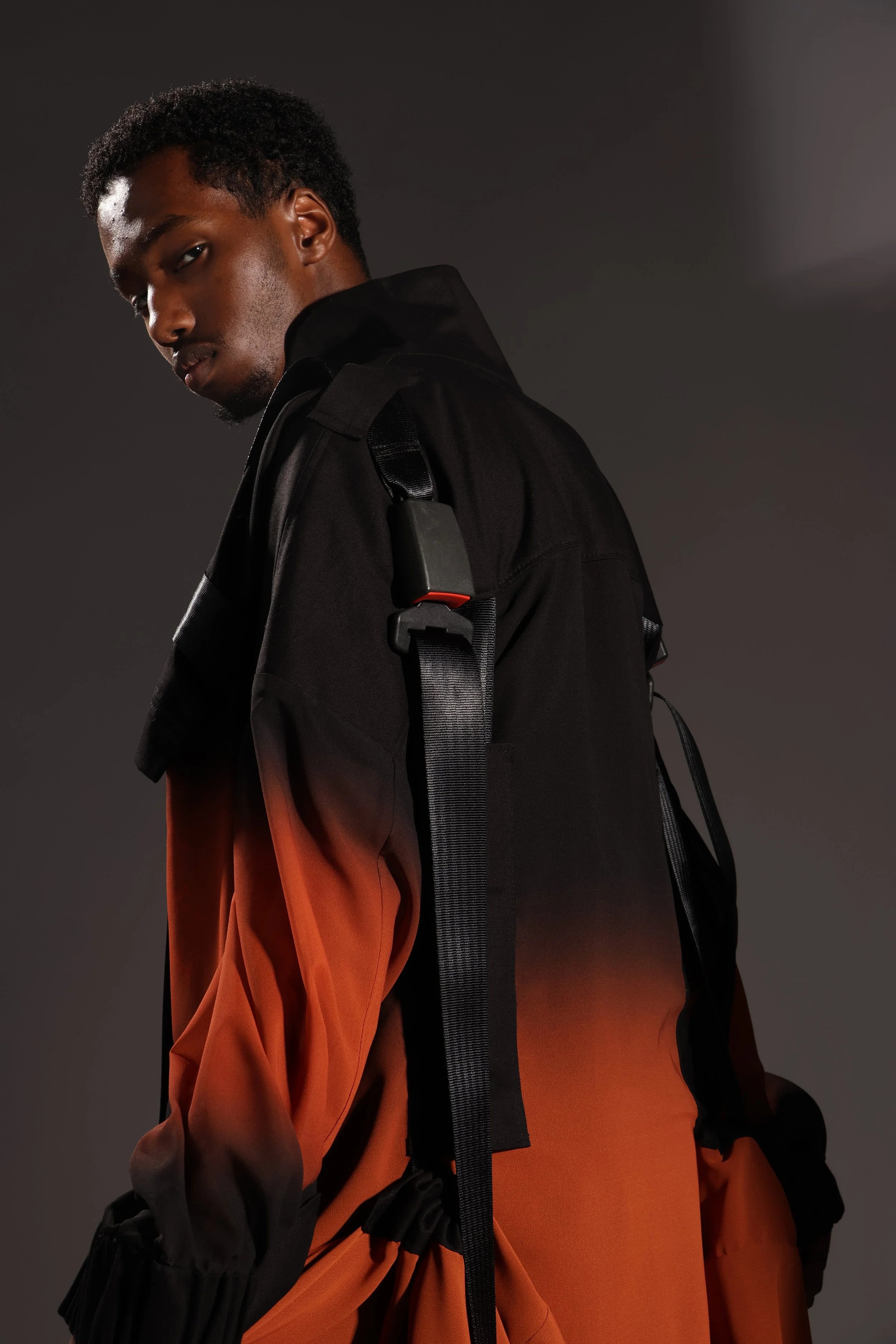
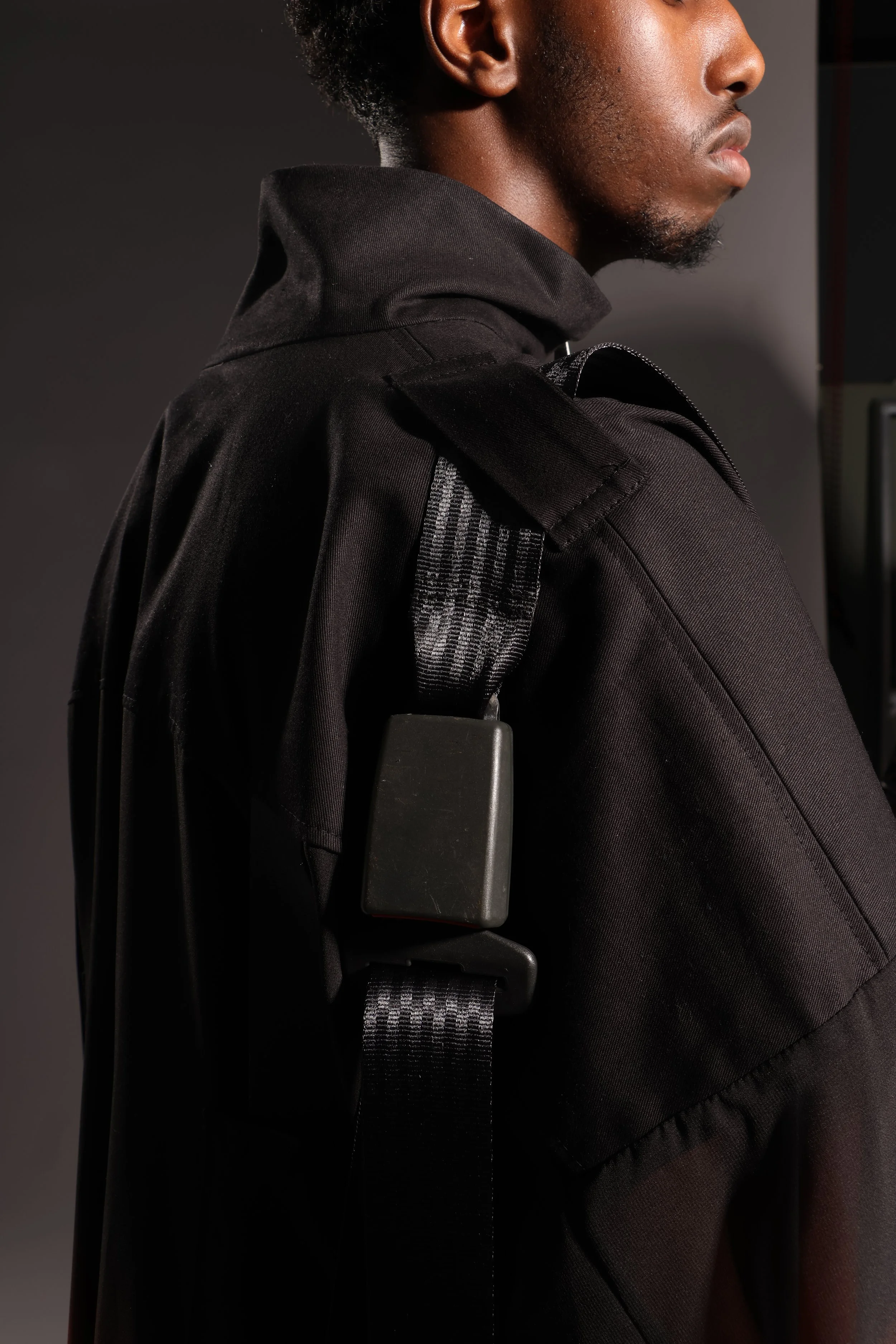
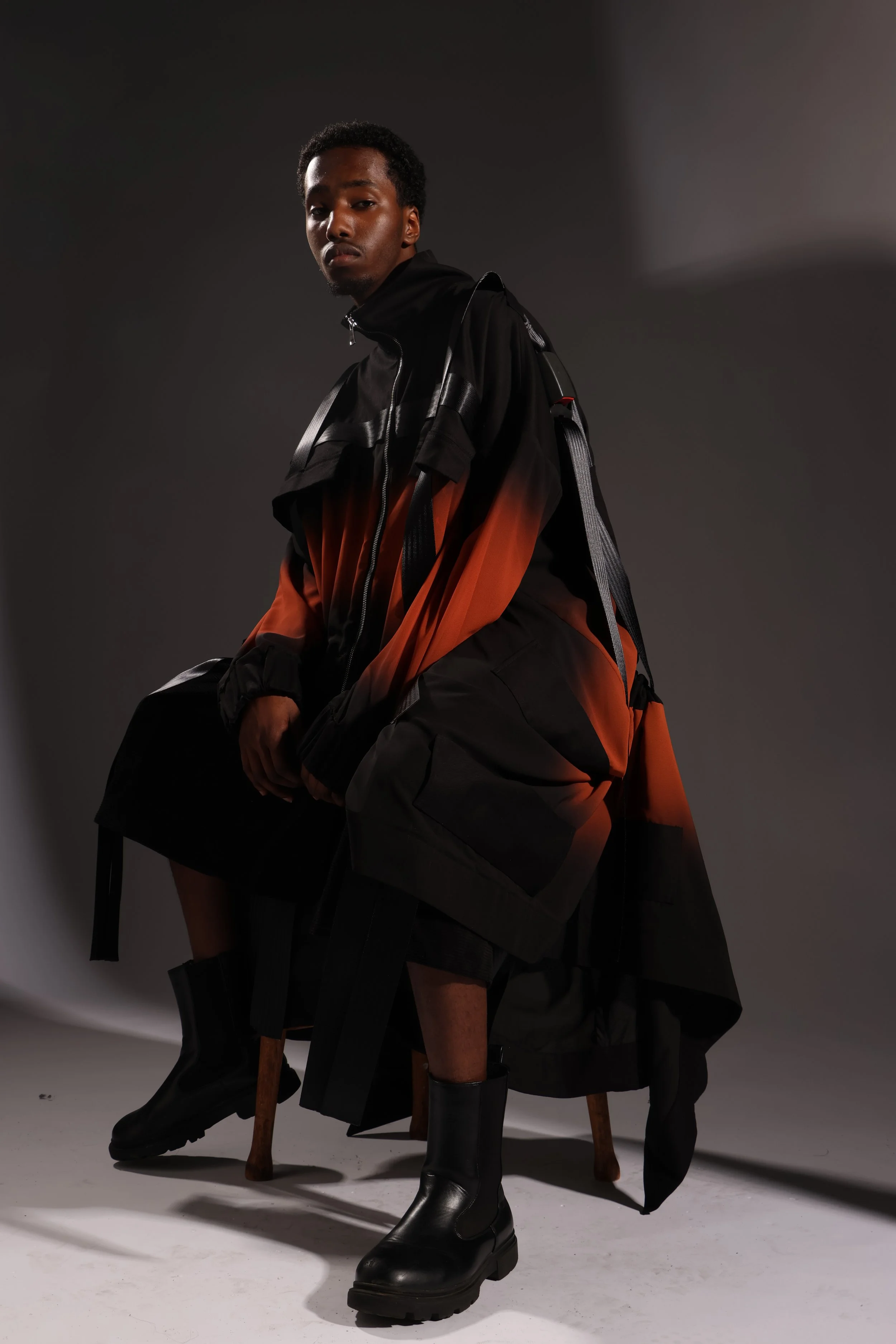
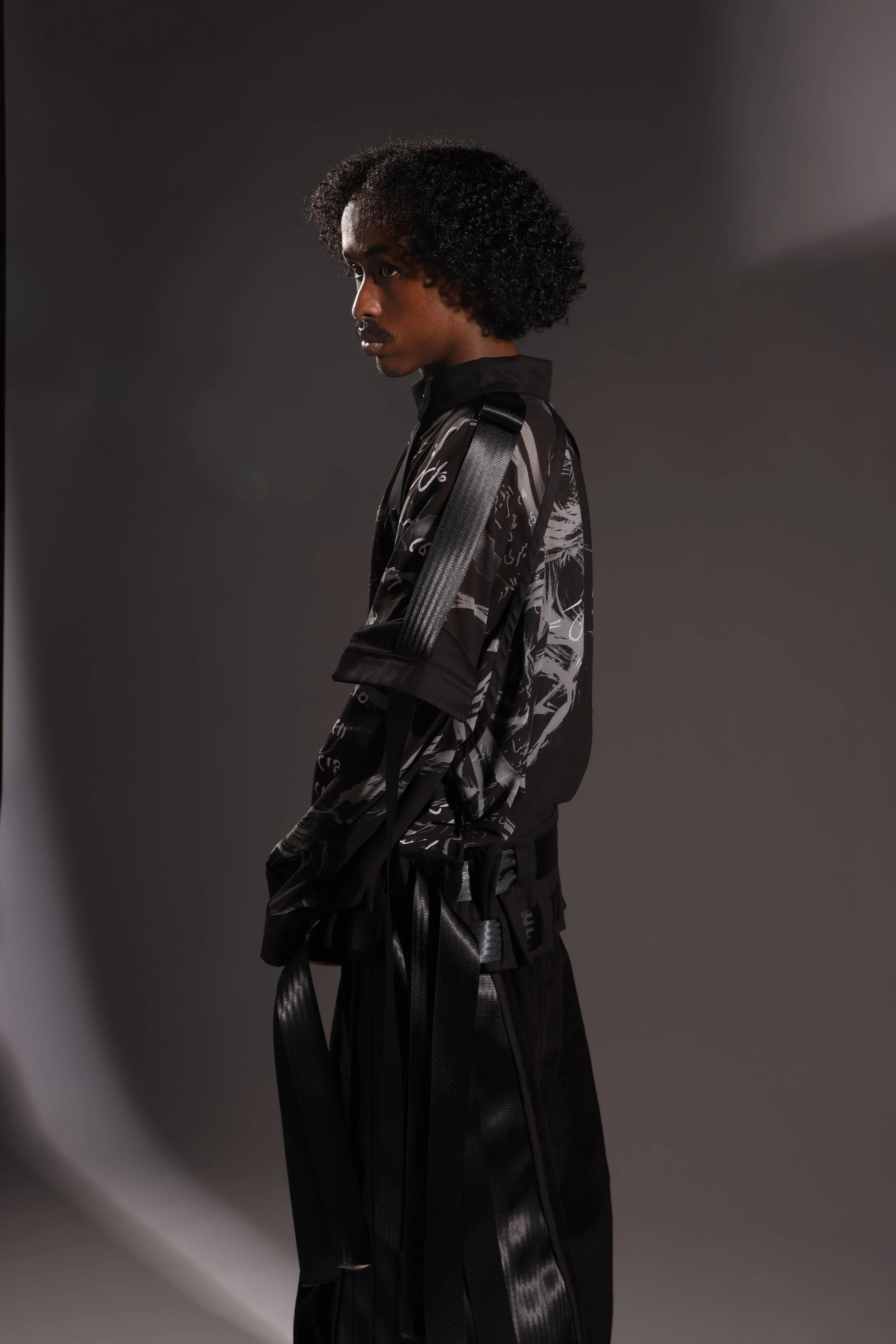
What unexpected source influenced your final outcome?
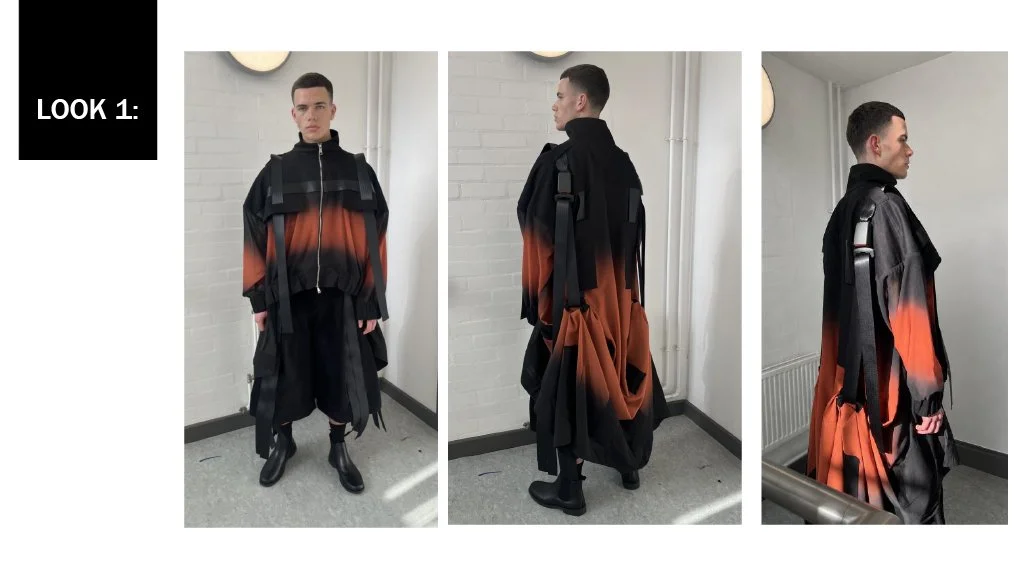
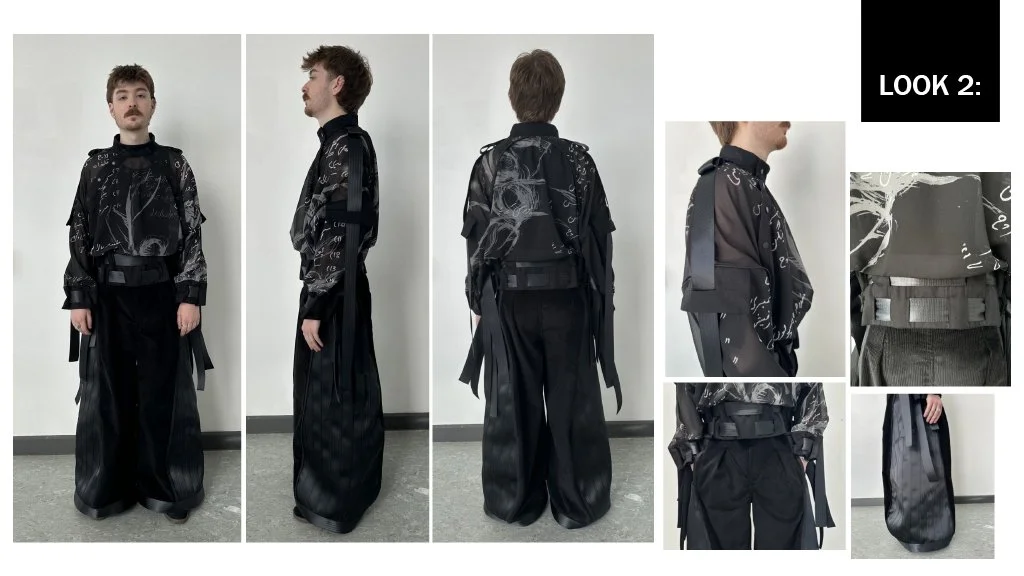
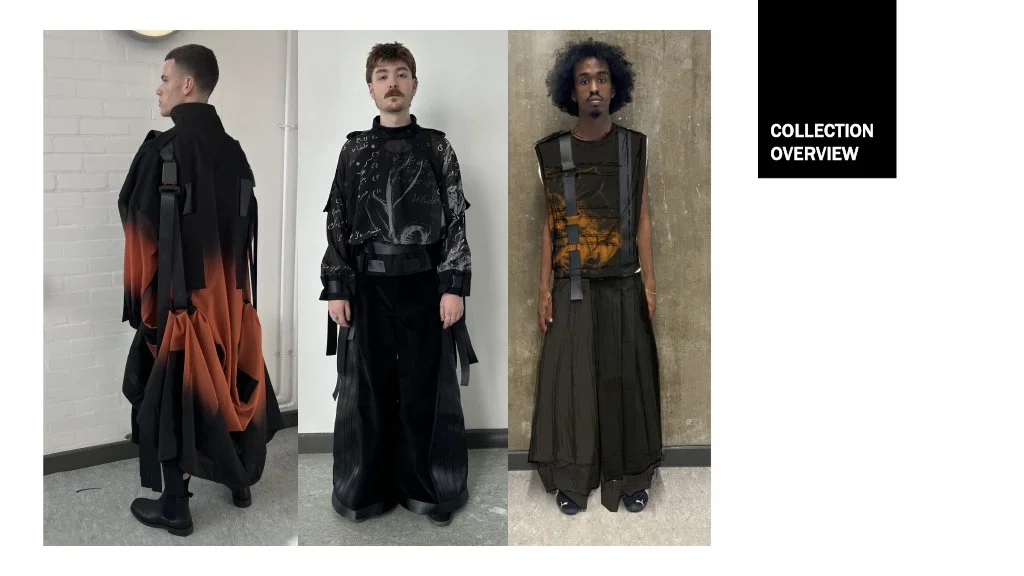
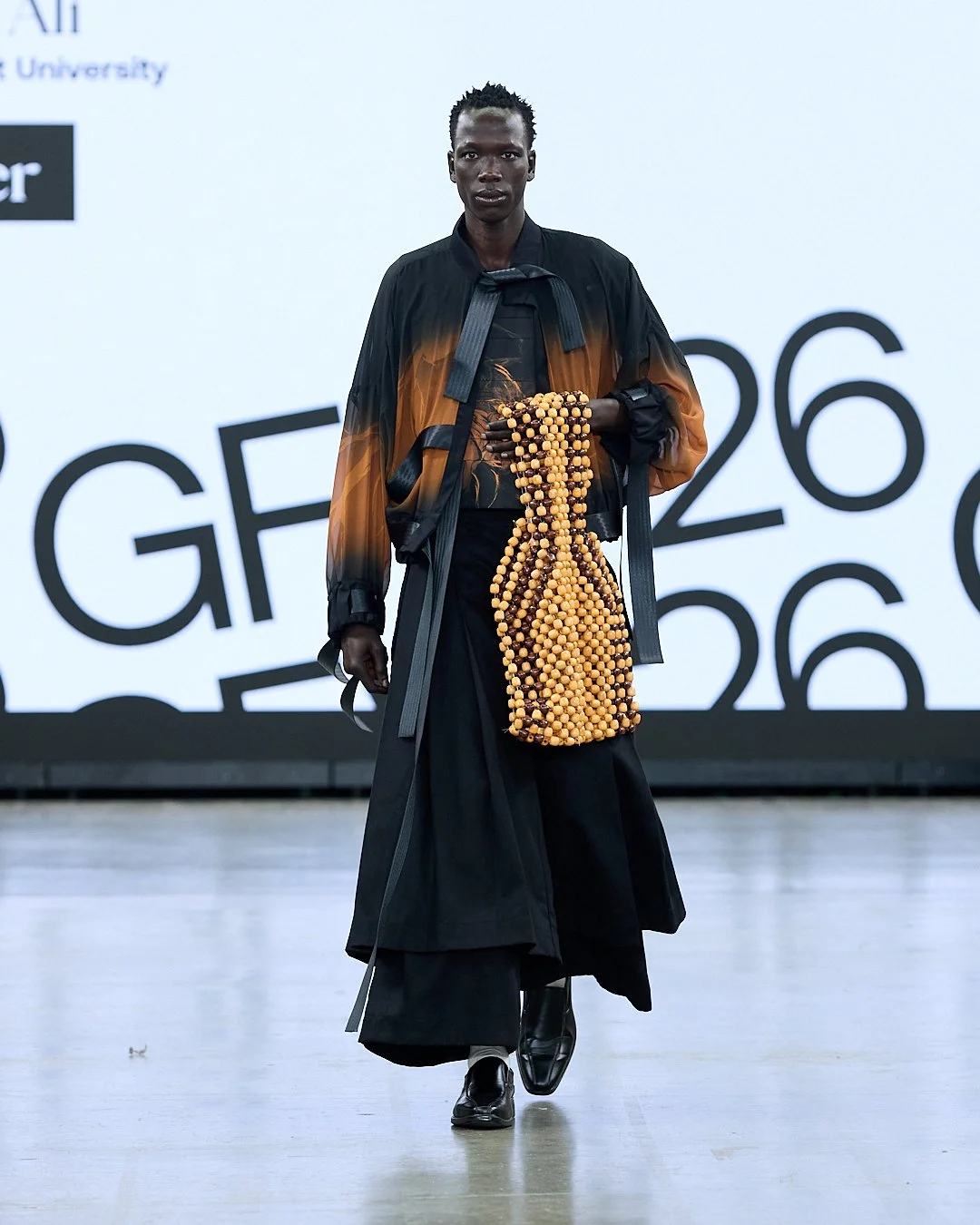
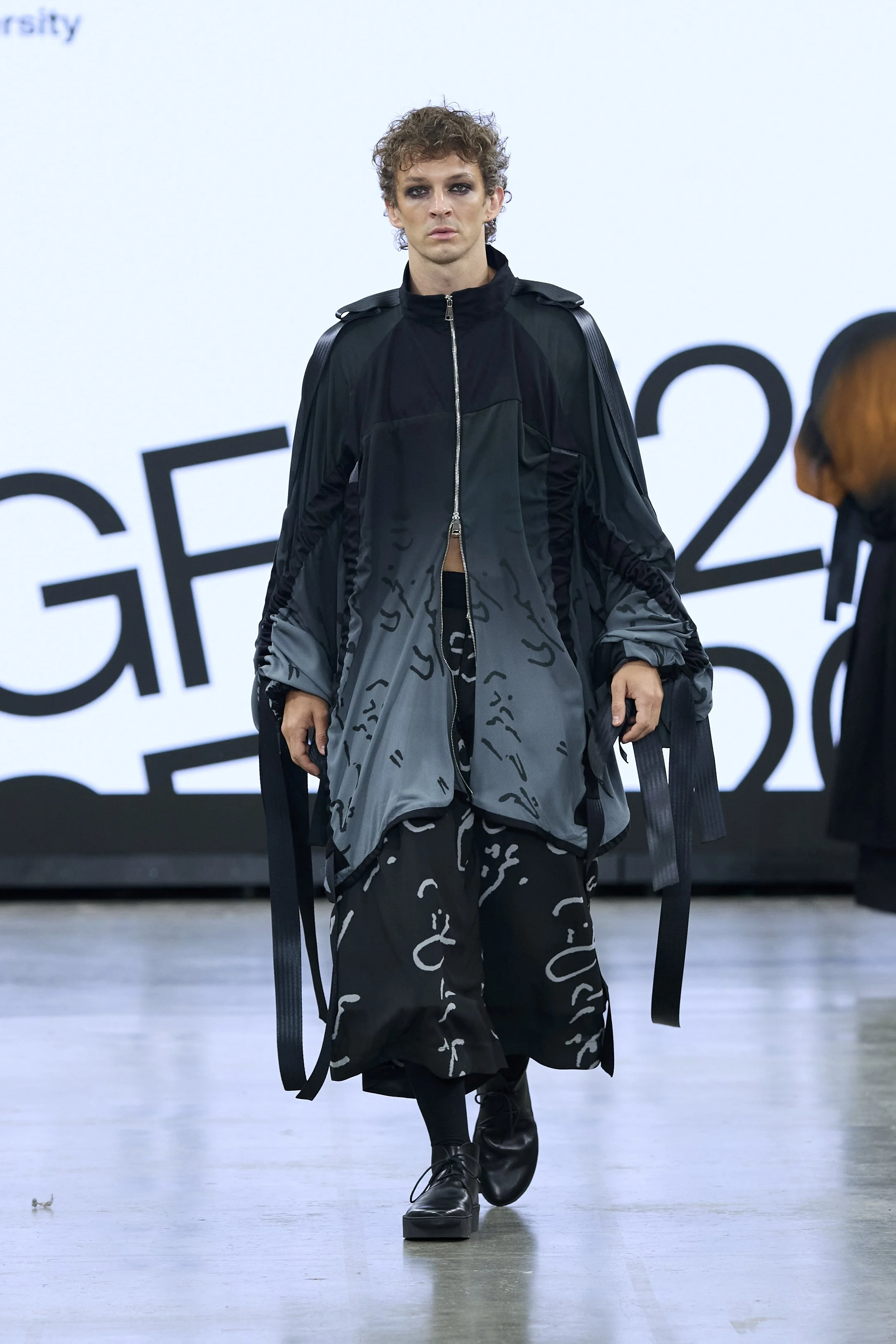
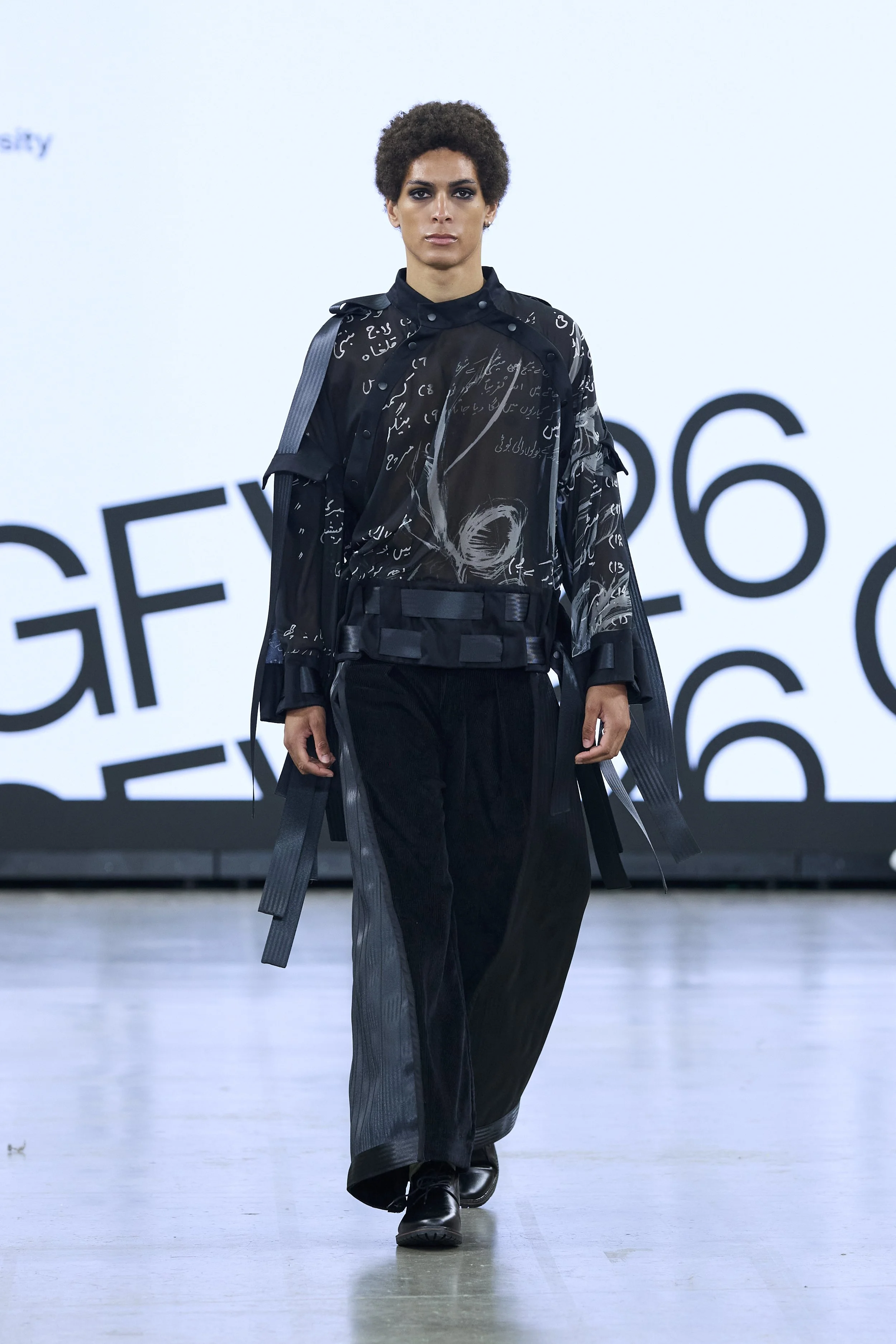
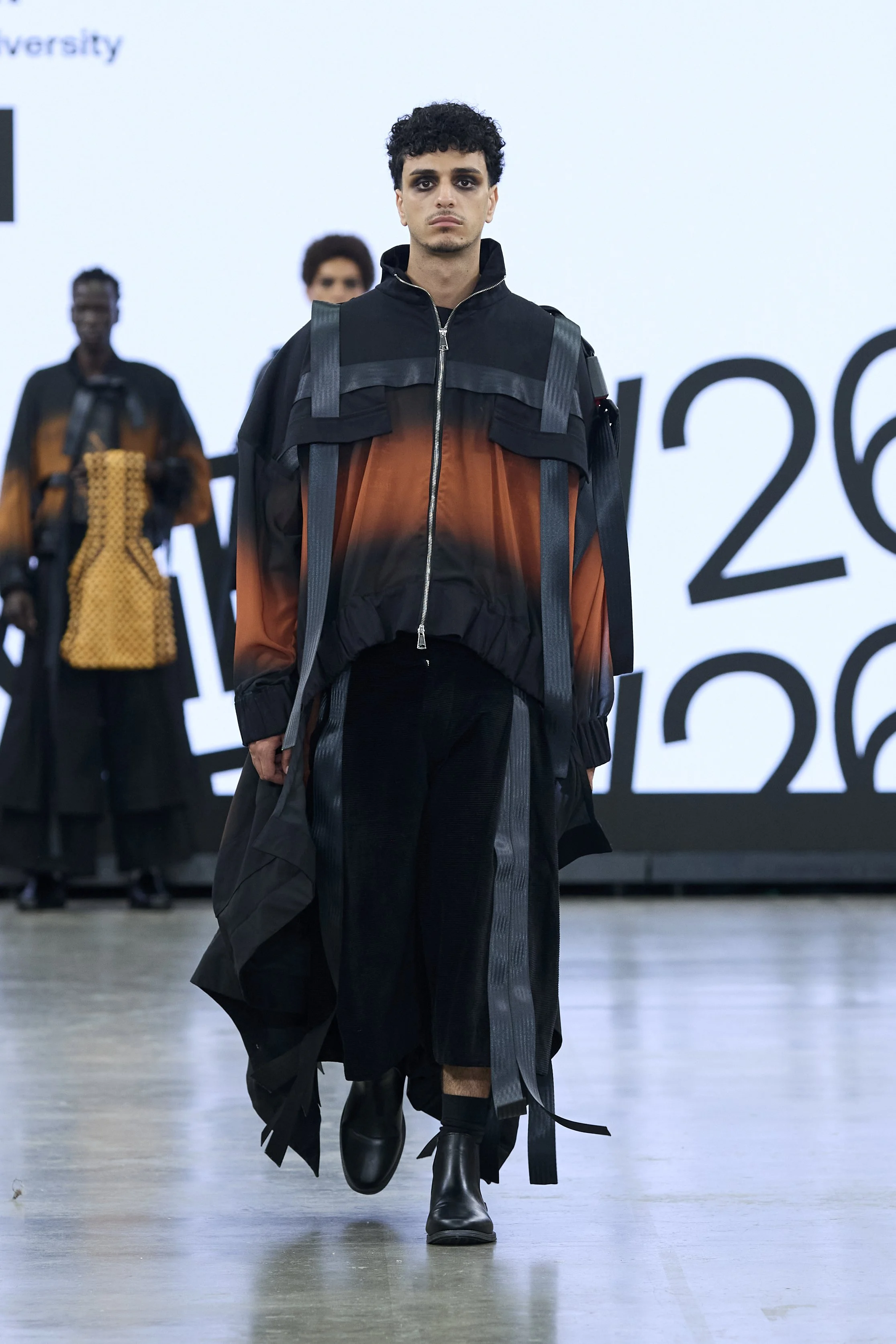
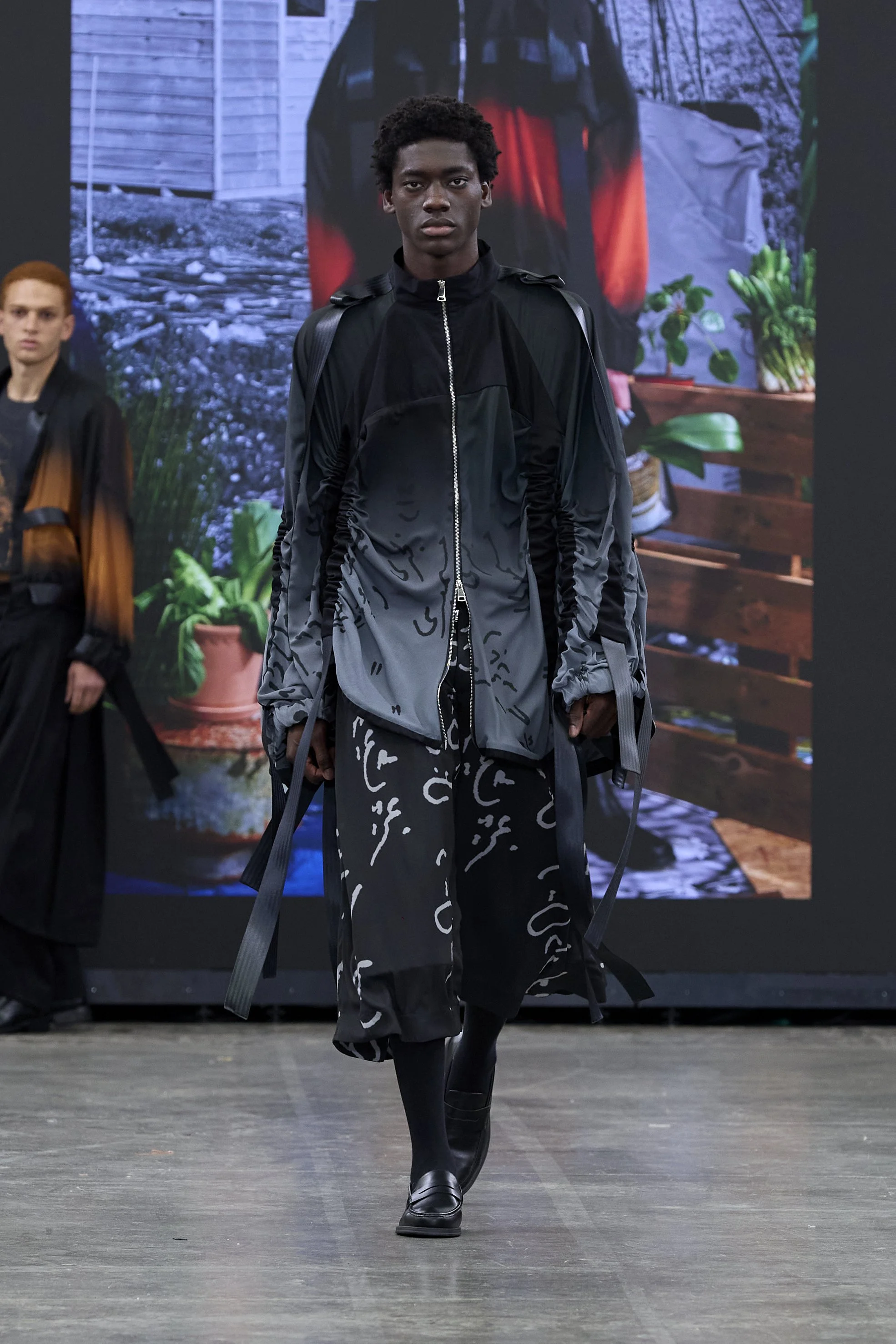
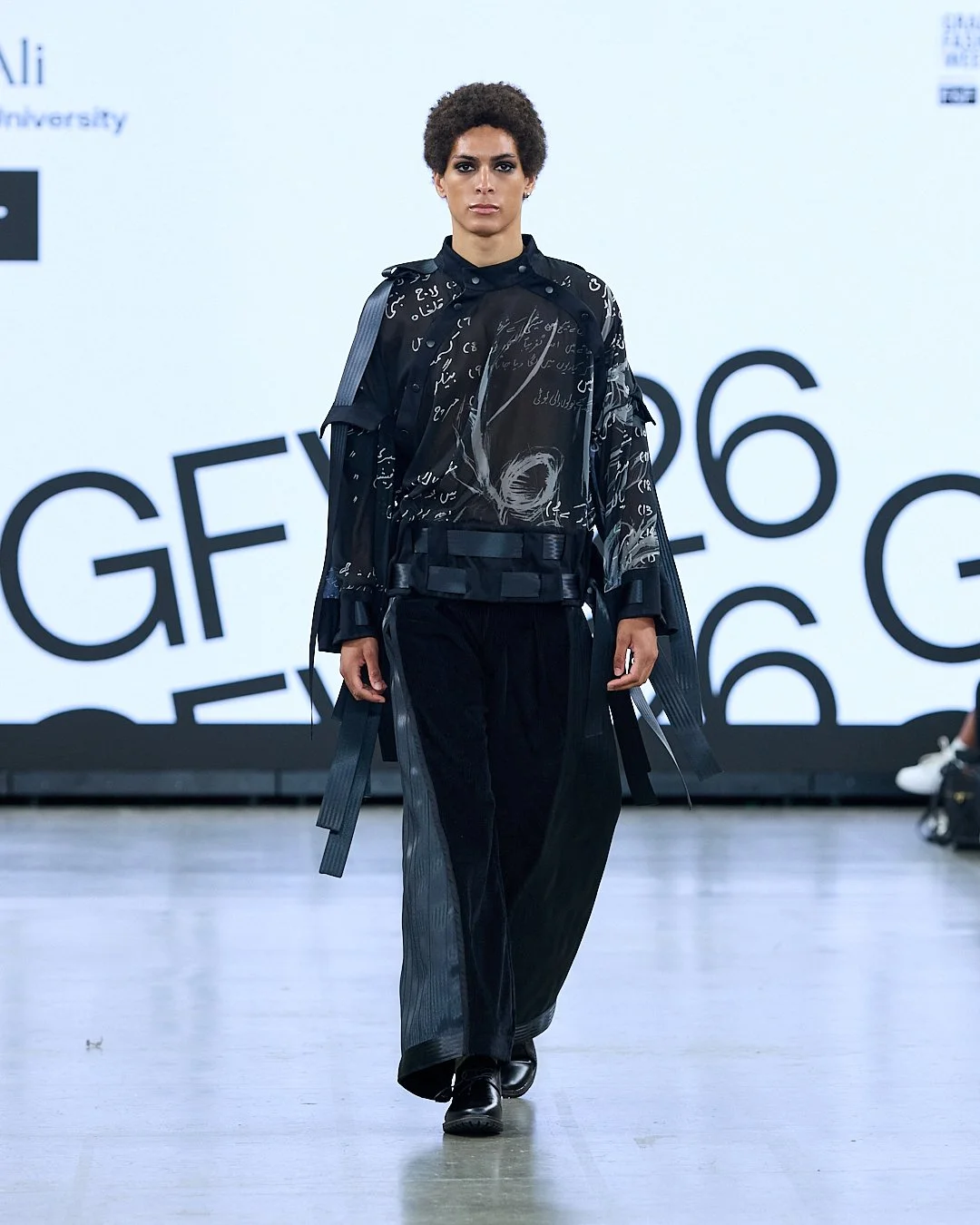
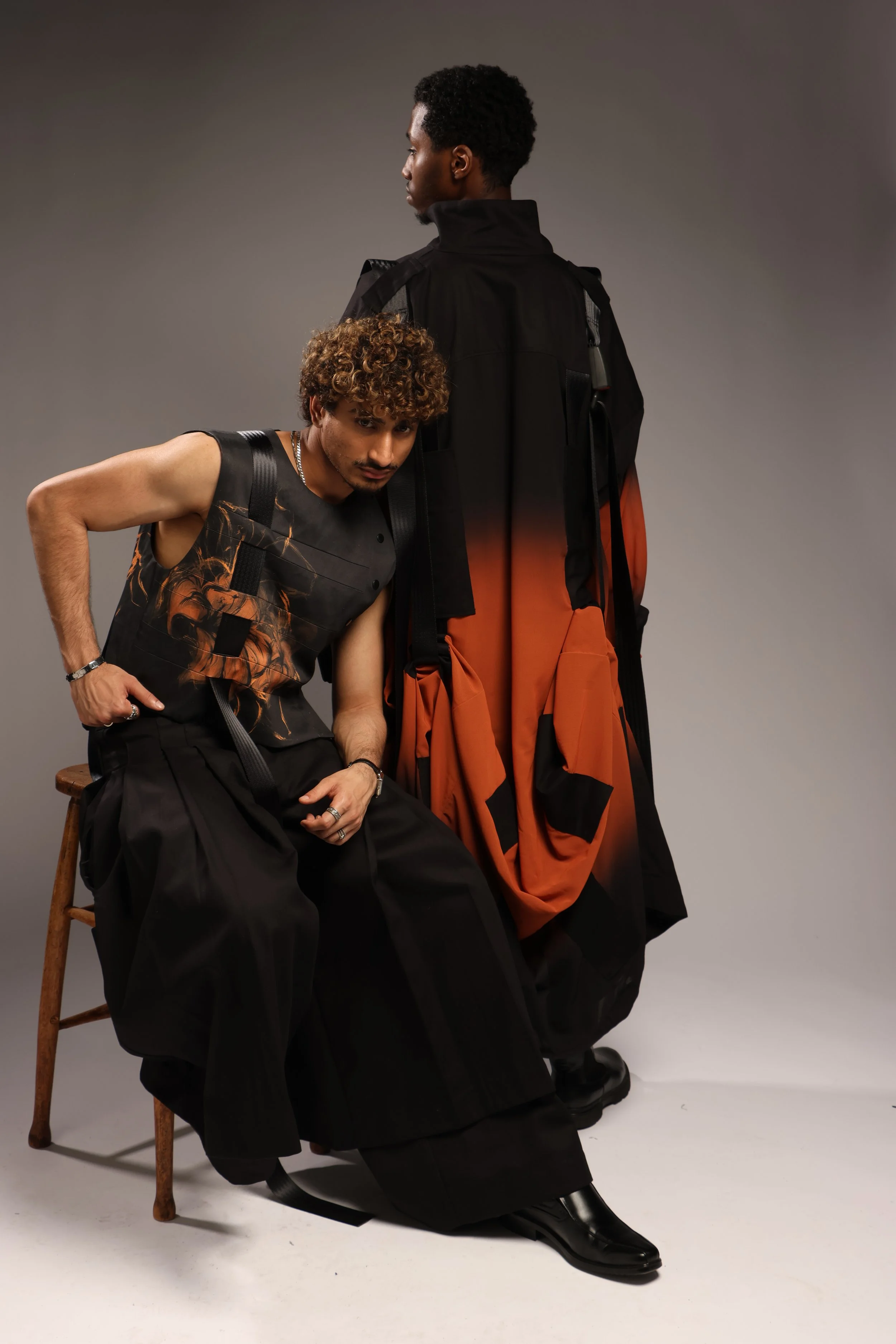
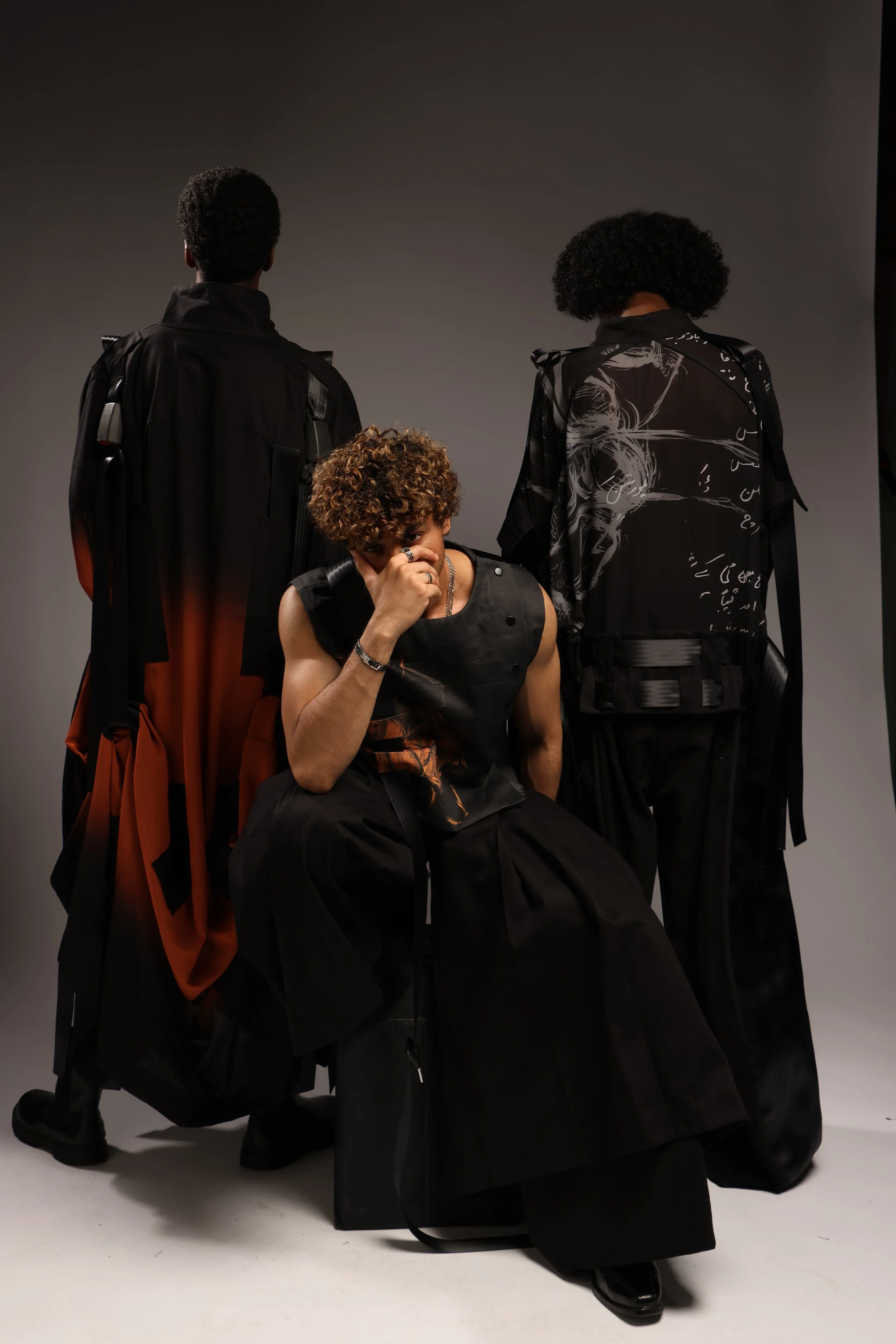
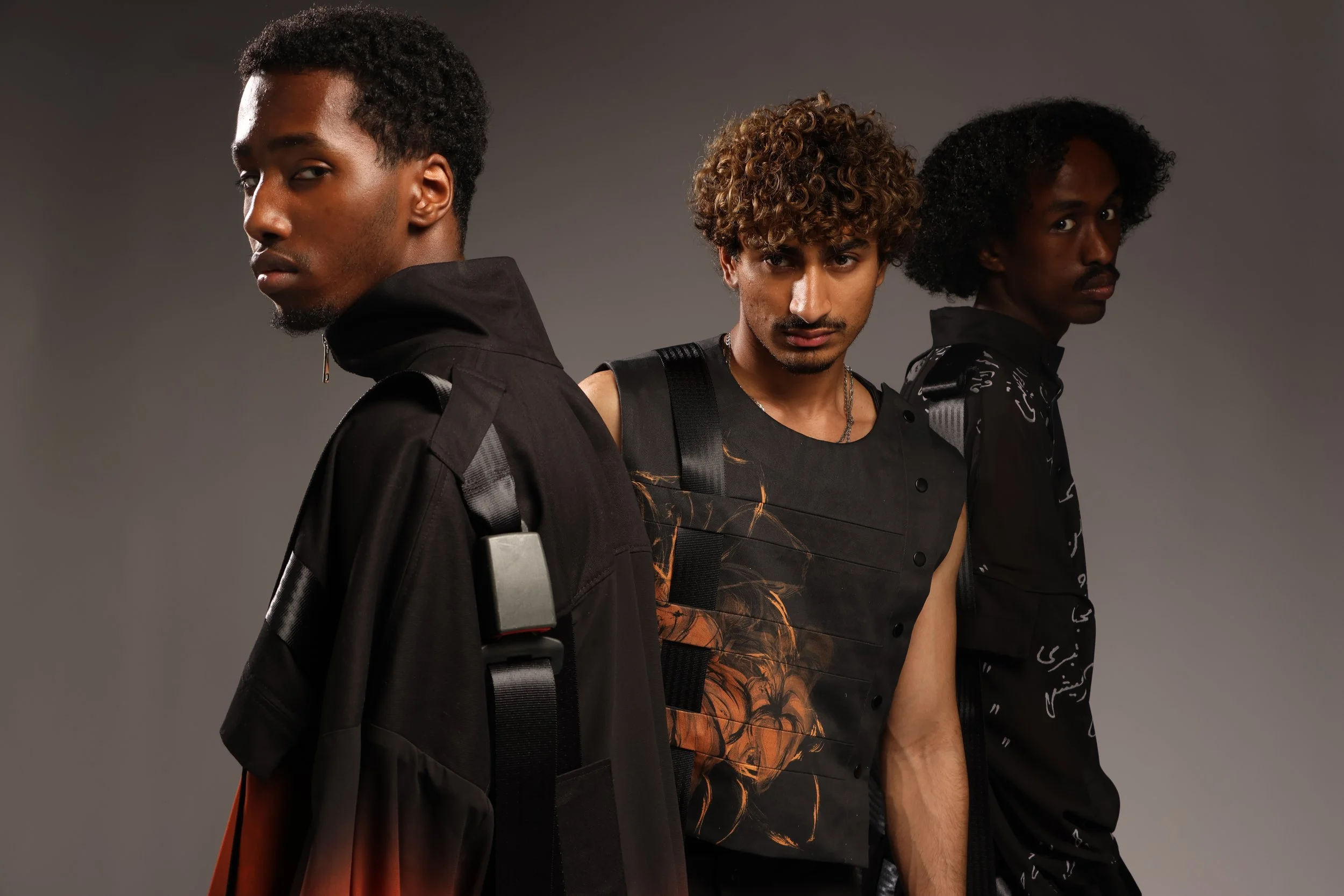
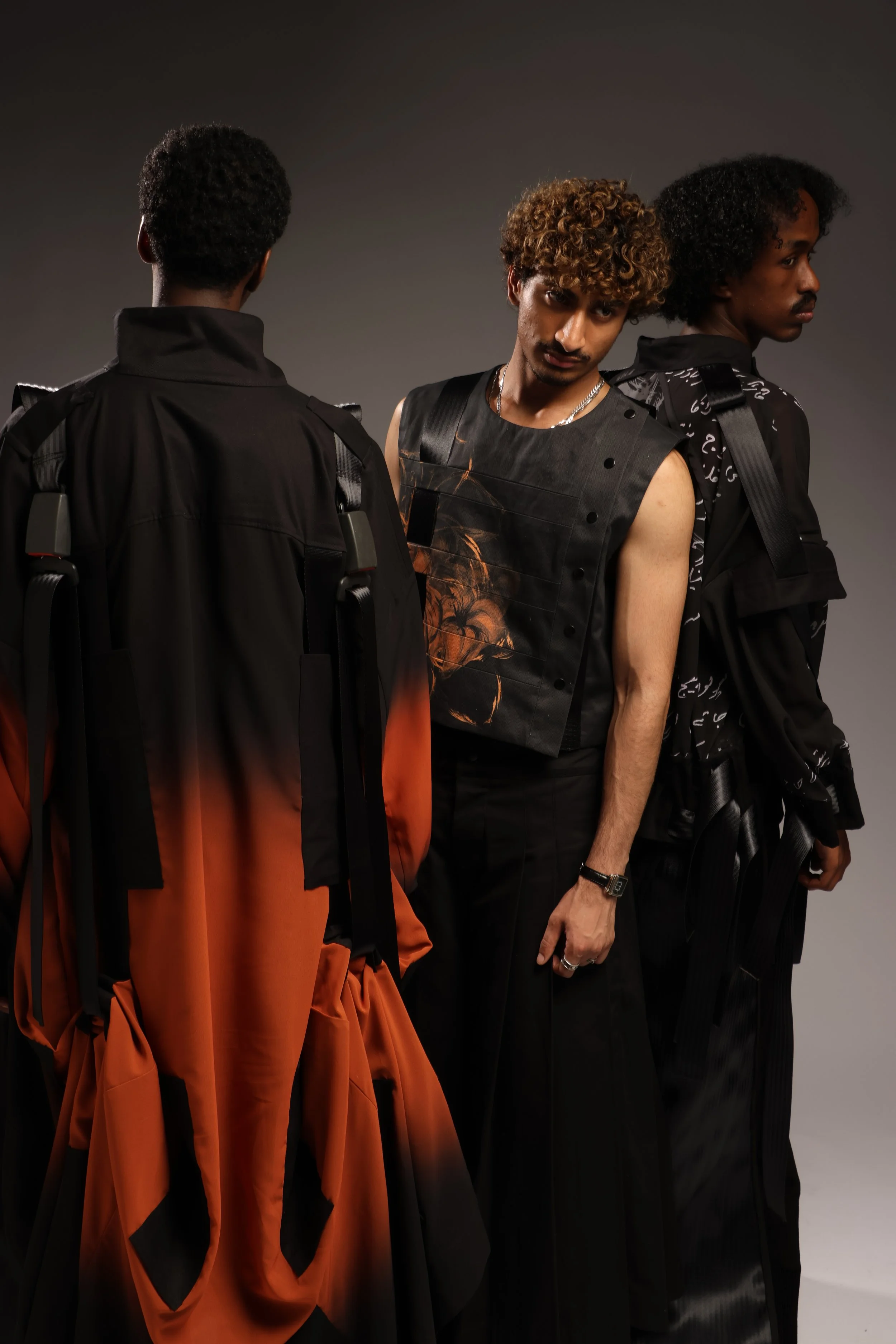
“An unexpected source that influenced my final outcome was the seatbelt. I found myself stuck quite a few times during the project because, as a deep thinker, I was so focused on the nuances and subtle references within my father’s story that the more obvious physical elements of a taxi hadn’t even occurred to me. I was exploring details like the car-grill-inspired belt on Look 2, rather than thinking about the actual objects and hardware found inside a taxi.
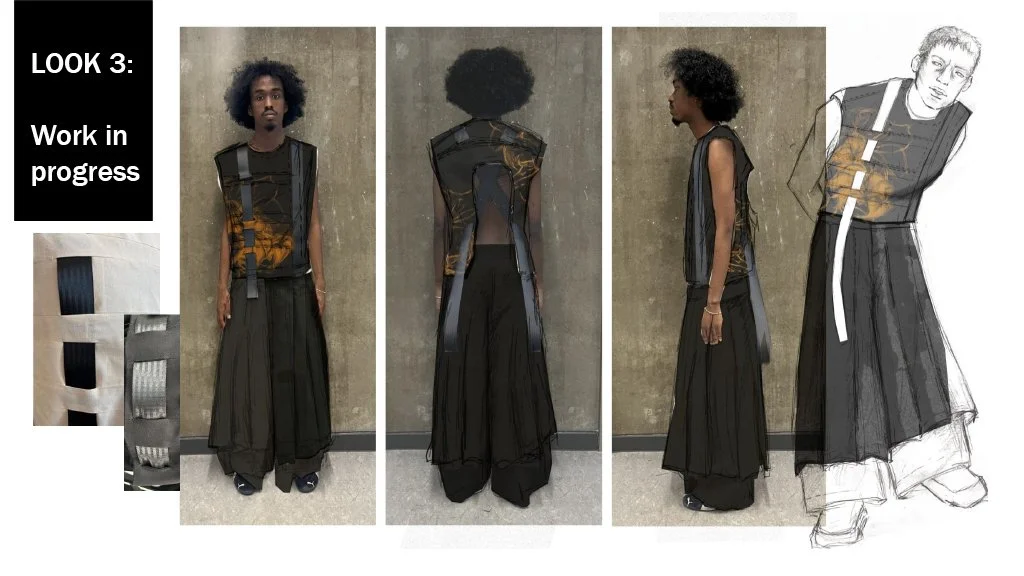
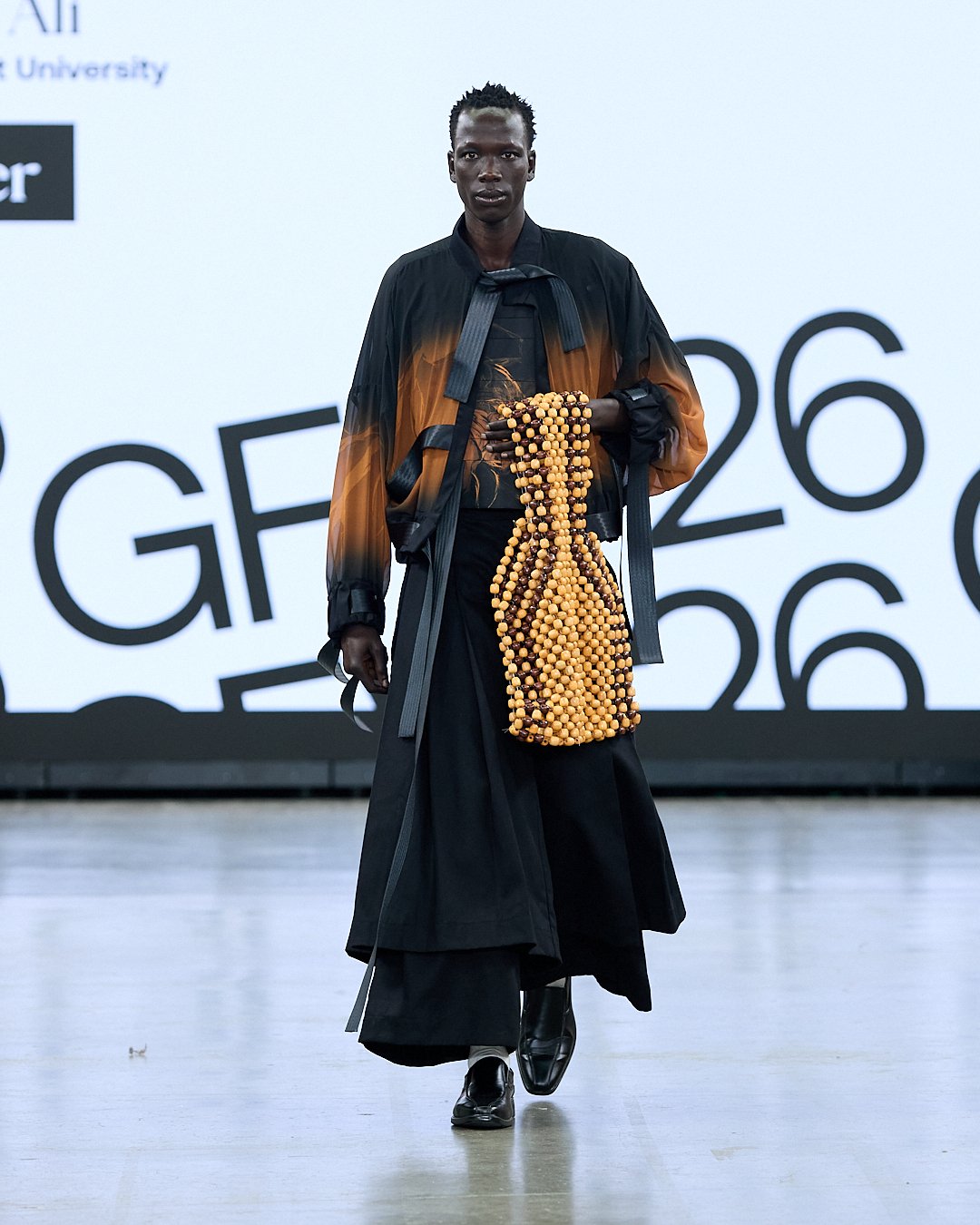
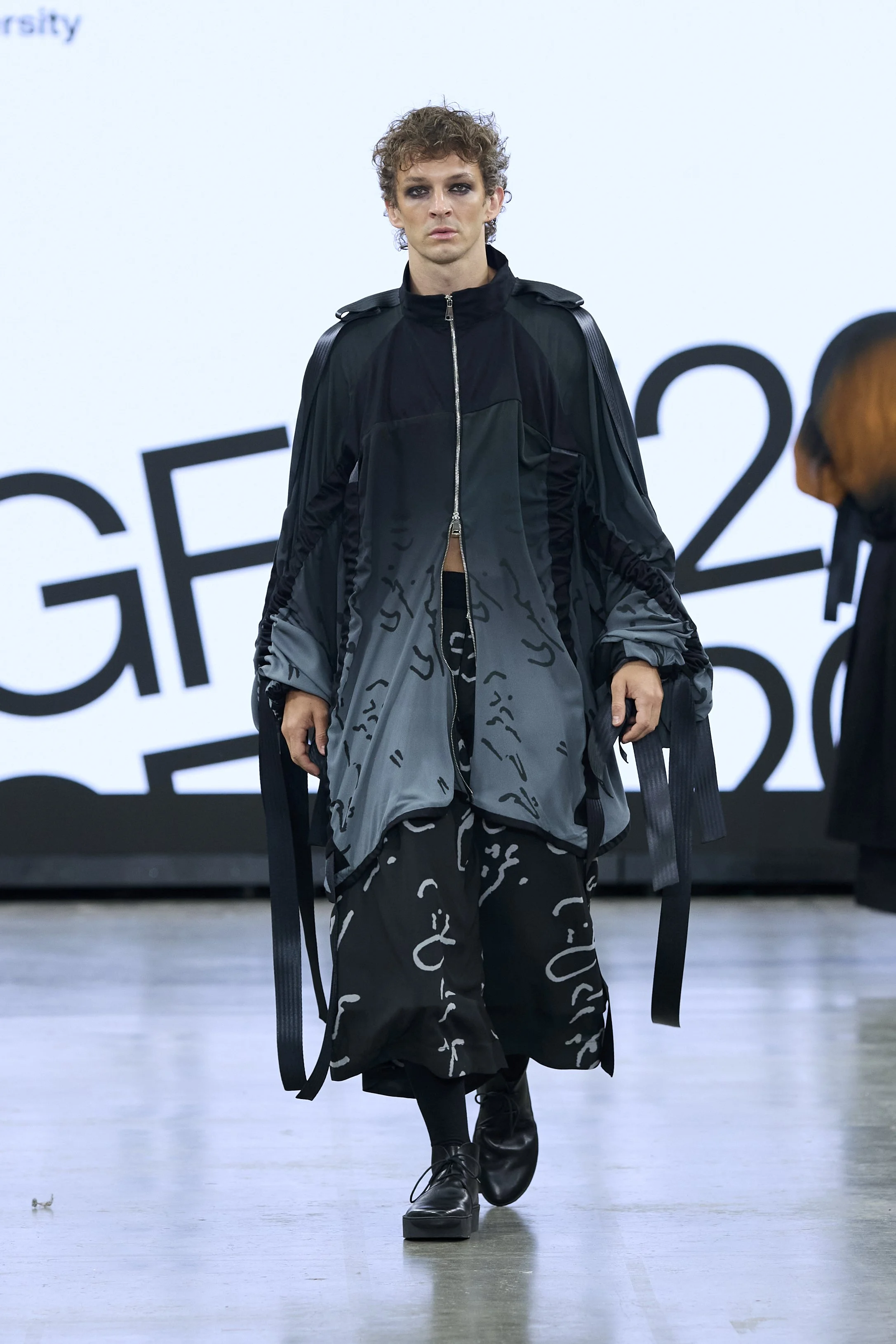
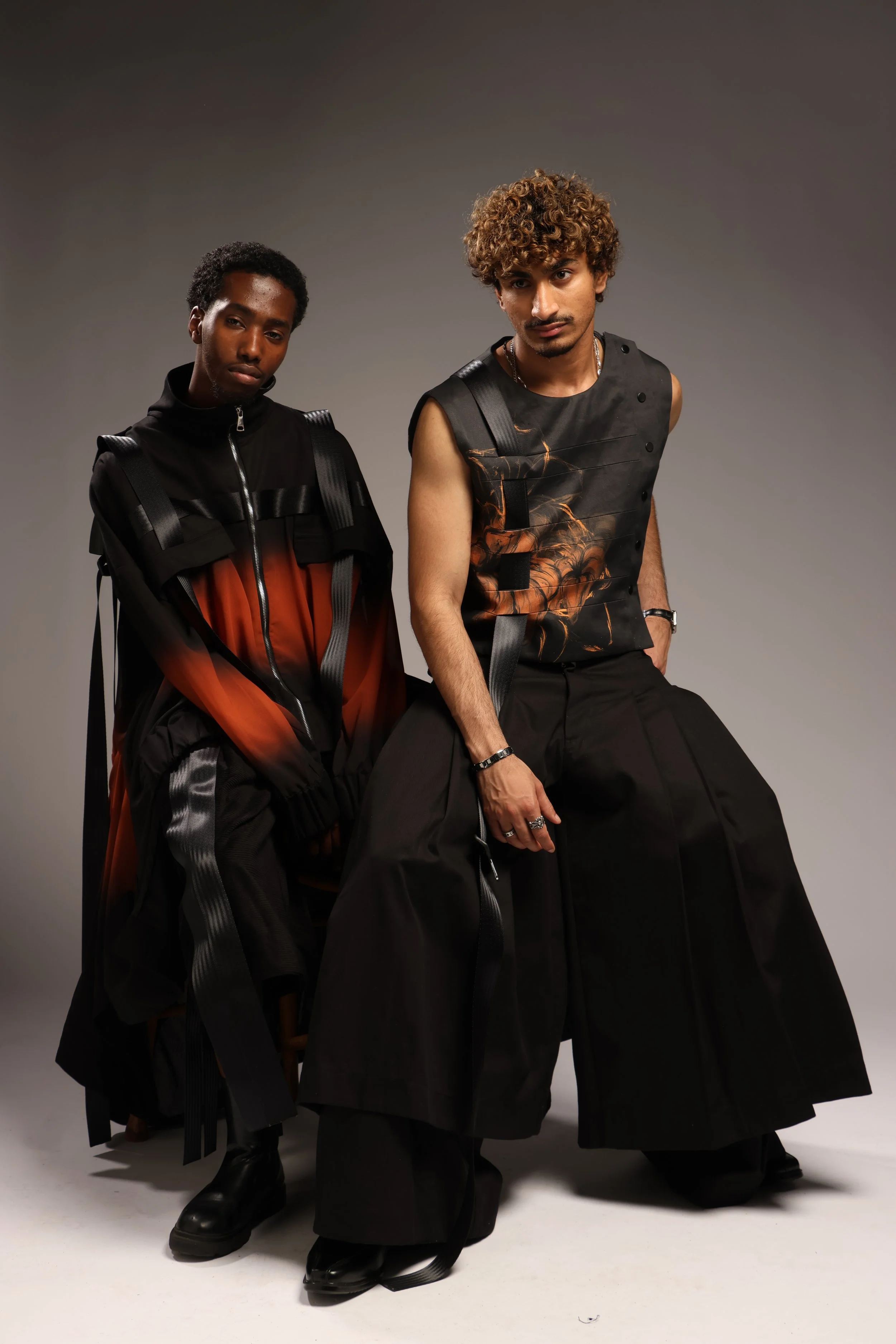
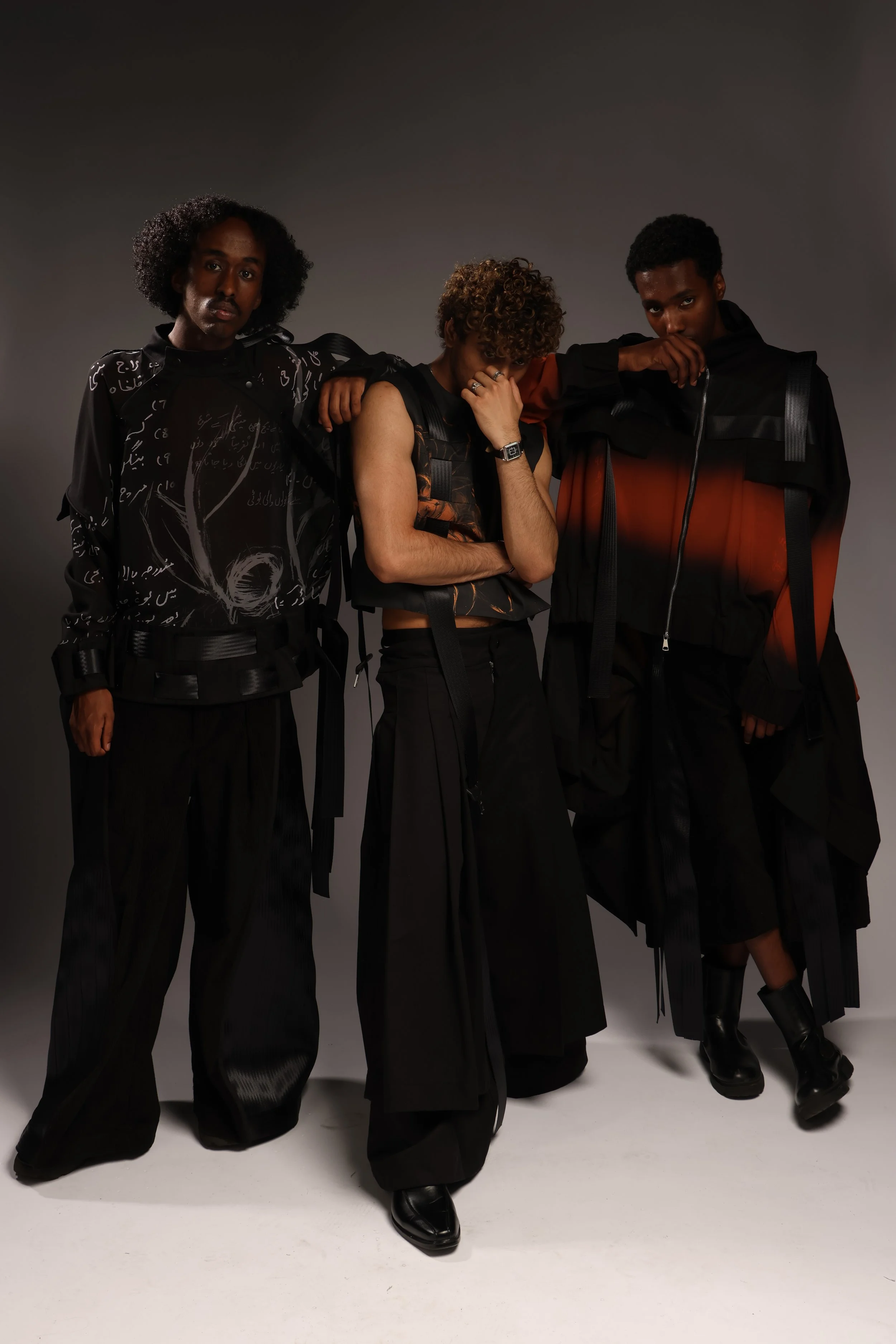
It was during a conversation with my peers and lecturers that someone suggested using actual seatbelts. Initially, I was cautious because I didn’t want the collection to feel too literal or costume-like. However, the seatbelt was a way to express the ideas of safety, protection and trust that sit at the heart of my project, while introducing a harder, industrial element against the softer aspects of the collection. In the end, it became the perfect detail to tie the designs together and create cohesion across the collection.”
What’s the best piece of creative advice you’ve ever received?
“The best advice I have ever received would be - “if you hate it, move on”.
I found myself sticking to one toile or idea for hours, almost adamantly trying to make it work, even when I knew it wasn’t. Which quickly became draining. I feared starting again, but that advice helped change my mindset. Removing the permanency from my work allowed me to experiment more freely. I could explore multiple ideas, from which I would then manipulate, merge or just abandon if they didn’t work. My final project changed directions constantly, but it allowed me to engage fully with my sources and explore every avenue. It brought back the fun to design and helped avoid any mental blocks during the creative process. While also creating a bank of objects/images /designs that I could pull on for later projects. Don’t feel obliged to stick to one idea; it’s not wrong to start again.”
How would you describe your creative voice in three words?
“Grounded. Cultural. Poetic.
I tell the underdogs’ stories. My creative voice explores the complexities and contradictions within people’s experiences, translating them through technical design, fabric and print to create bold, impactful work that balances strength with delicacy.”
What kind of impact do you hope your work has beyond aesthetics?
“Beyond aesthetics, I hope my work challenges the expectations we place on ourselves and each other. I’m interested in the nuances and contradictions within people (strength and softness, masculinity and femininity) and showing that these qualities can coexist. Through my menswear practice, I want to encourage a more emotionally considered understanding of masculinity and remind people that they are not limited by the stereotypes or expectations placed upon them. You can be strong and soft at the same time. Embracing these contradictions is what makes us human.
Especially as a British-Pakistani woman working in menswear, I know my career path isn’t necessarily the typical one. I hope my work can empower other diasporic creatives to pursue their stories, regardless of where they start or what they have. Don’t let your perceived ‘level’ hold you back. A taxi driver’s daughter has achieved so much in three years; I know this is possible for so many more.”
Which designer, artist or creative would you most like to show your work to?
“I would love to show my work to Simone Rocha and Riz Ahmed, for very different reasons. I really admire Simone Rocha’s approach to menswear, particularly the way she balances technicality and aesthetics while challenging traditional ideas of what menswear can be. She is a huge inspiration. Riz Ahmed has also been a creative inspiration throughout this project, particularly through his advocacy for British-Pakistani communities and his ability to challenge the stereotypes surrounding them. My work sits at the intersection of these ideas, exploring identity and diaspora through a technical yet emotionally considered approach to menswear, so I would love to hear their perspectives.”
What advice would you give to a student currently starting their final collection or portfolio?
“Think bigger, then look closer.
Always allow yourself to explore multiple facets of what your project or portfolio ‘could be’. We, as creatives, often have an image in our heads of how we want our collections or portfolios to look. But in the long run, that can be very limiting. Either you get frustrated when you don’t achieve that image, or it becomes harder to expand your collection past 1 or 2 outfits that fit your isolated idea. For range, you need to explore. Even if ideas end up being left halfway through the collection, it’s worth experimenting; you never know, they could become an accessory, a detail, or a surprise finish that ties the collection together. It’s much more rewarding to see a design go through a journey; it may lead you down avenues you would’ve otherwise never thought of. It’s also important to have a few key grounding ideas. So that if exploring becomes overwhelming, you can always refer to your key words/ ideas to make sure you are on the right track and that your original concept remains consistent throughout. Have fun with the process rather than focusing on the outcome – cliché, but it’s true.”
What conversations do you hope your work starts?
“I hope my work encourages people to look at culture beyond its most recognisable symbols. As a British-Pakistani, my experience of culture is much more nuanced than a shalwar kameez; it is something we live every day through family, community and shared experiences. I want to create more space for conversations around the everyday immigrant experience, particularly the stories of hardworking men and women whose lives can so often be reduced to stereotypes.
My final collection began with my father, but I don’t want his story, or the story of the taxi driver, to exist only within the context of my project. I hope it encourages people to look around them and recognise the stories that already exist within their own communities. Talk to your driver. Talk to your neighbour. Share these stories.”
So what’s next for you after graduating?
“I’m currently looking for design internships and roles within menswear and print, where I can continue developing my skills and learn within a team. I still love illustration and creating bold silhouettes, but I’m excited to become more hands-on and experience the journey of bringing a product to life from start to finish. I really enjoy collaborating with others and learning from the people around me, and I’m looking forward to finding my feet in the industry and discovering where my interests can take me.
Eventually, I would love to have my own studio, where I can continue developing stories through clothing and create a space for my creative practice to grow. I’m incredibly grateful to Graduate Fashion Week for giving me the platform to share my work and connect with the industry. It feels like a preview of what’s ahead, and I’m excited to see where the next chapter takes me.”
