
Where It All Began… An Interview With Tarika Kinney
Tarika Kinney is an Irish-Indian designer based in London whose practice centres around making craft sexy again.
Her creative journey began at the Glasgow School of Art, where she studied BA (Hons) Fashion Design and graduated with First Class Honours in 2025. It was in Glasgow that Tarika fell in love with knitting, having been given the freedom to explore knit as a creative medium and the body as a canvas. This experience completely transformed her approach to textiles and fashion.
During her undergraduate degree, she spent a semester at the Paris College of Art contextualising her creative process within the commercial fashion industry before returning to Glasgow to complete her graduate collection.
After graduating, Tarika spent a year at home in Belfast building her brand and distilling the core ideas she wanted to bring into the fashion industry. She is currently studying MA Fashion Artefact at the London College of Fashion while continuing to develop her brand alongside her studies.
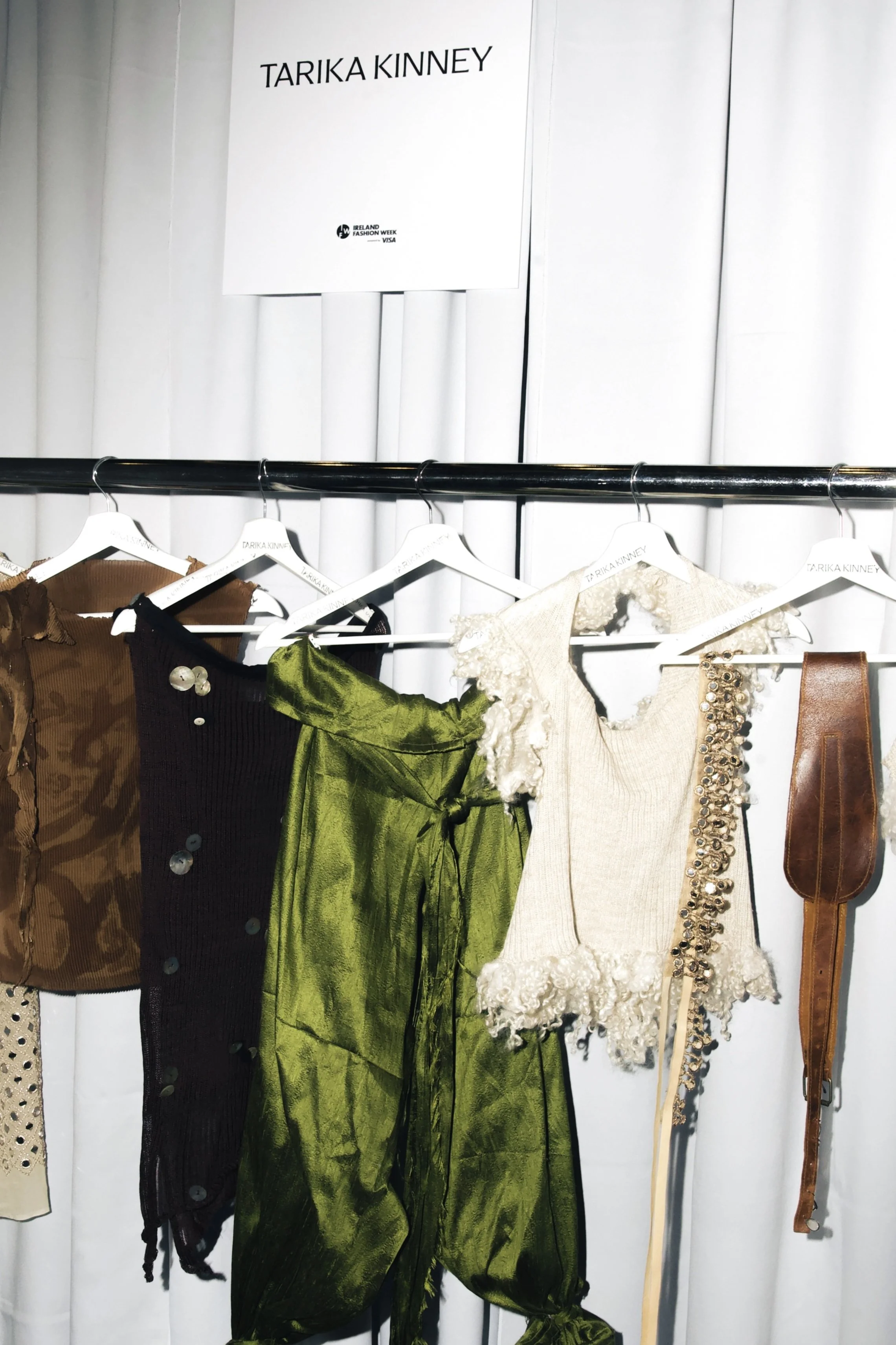
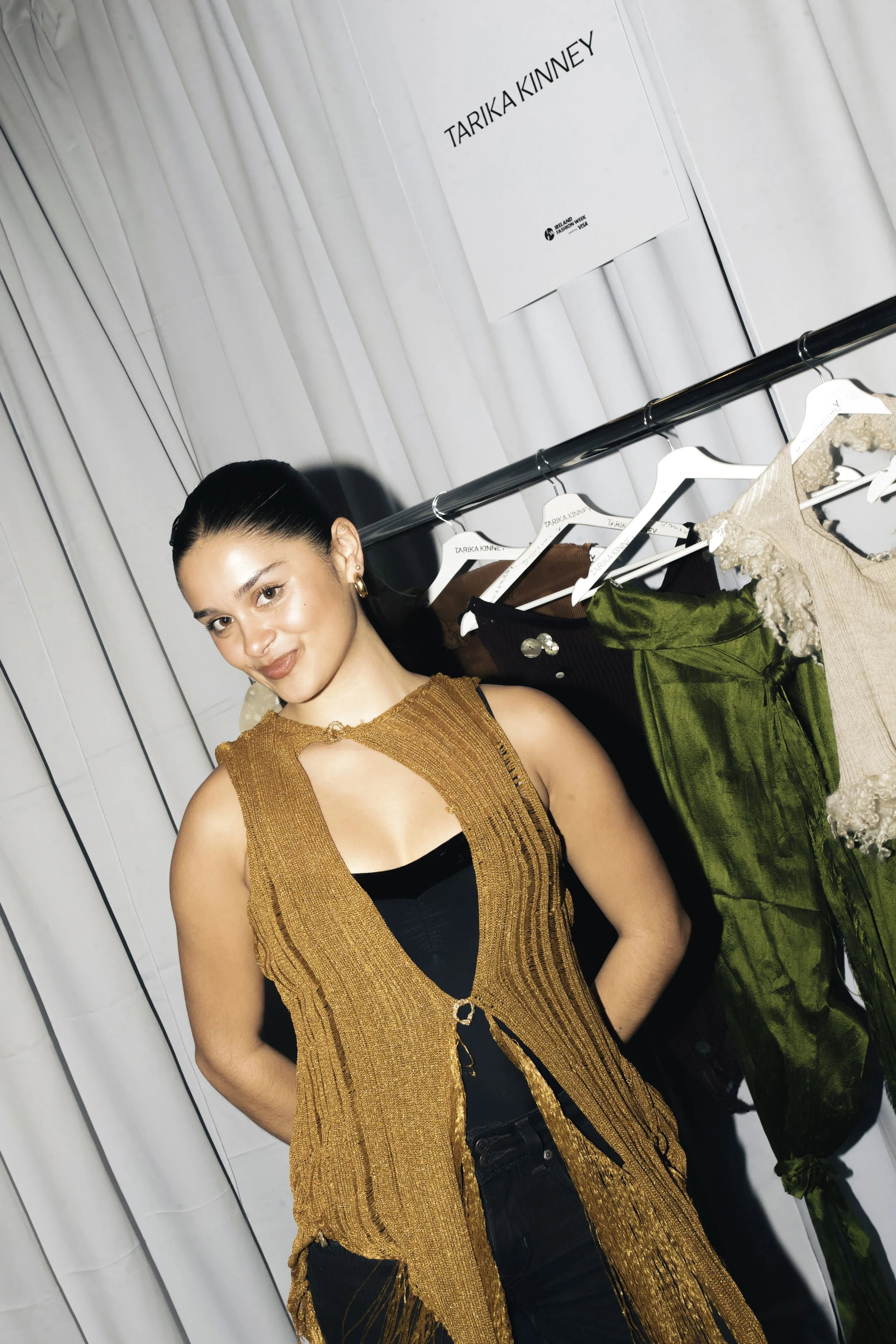
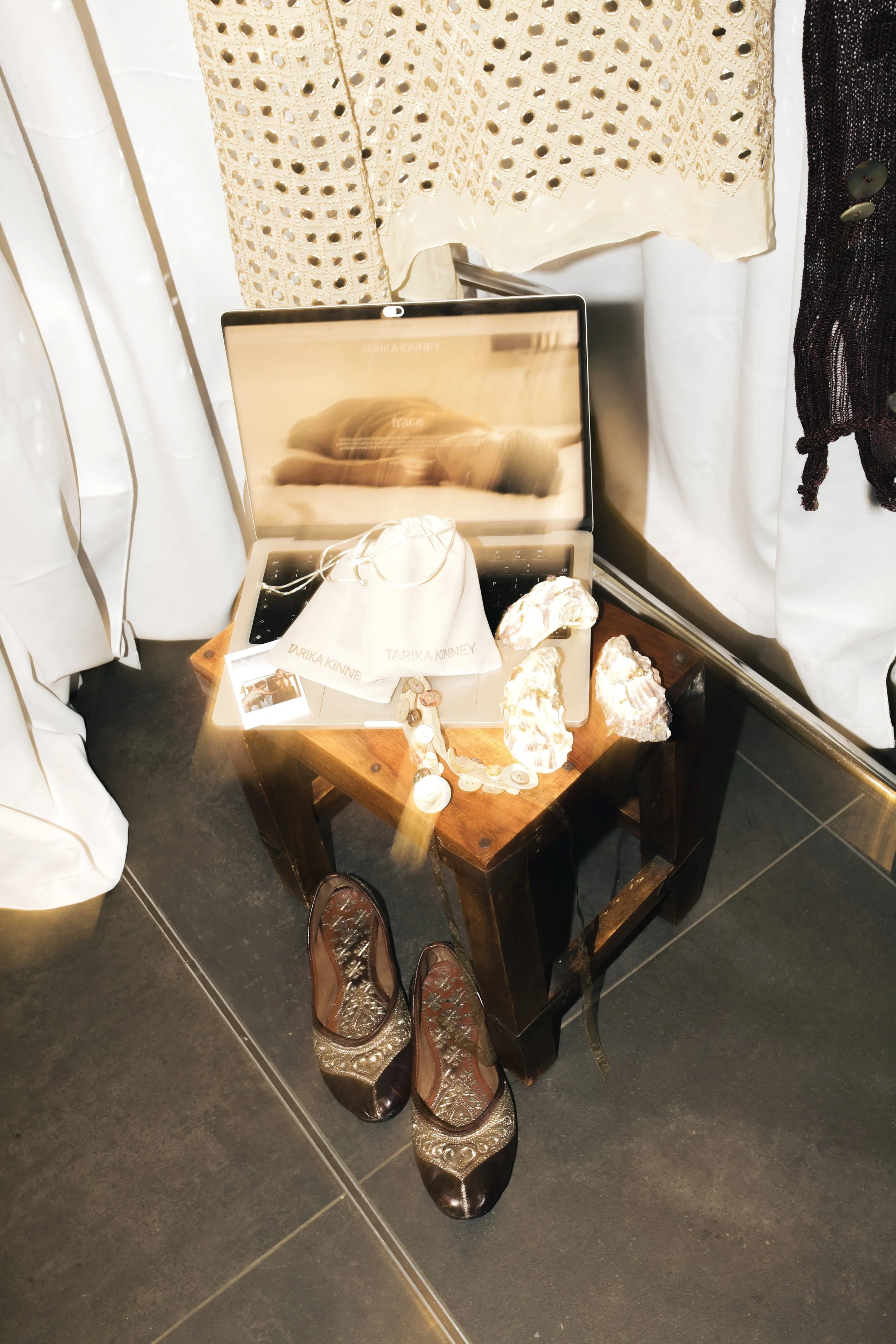
You recently showcased your work at Ireland Fashion Week, could you tell us more about the experience and how it felt to present your designs within that space?
Ireland Fashion Week is a brilliant platform for showcasing Irish talent, "you’re surrounded by creatives from across the country, all bringing different skills, perspectives and approaches to their work, and that’s what makes it so valuable."
Tarika explained that while Ireland has an "incredibly rich creative landscape," its networks can sometimes feel disconnected, therefore making a dedicated space that celebrates Irish talent, craftsmanship, and creativity is really special.
Reflecting on her journey with the event, she recalled, "I was fortunate to be involved in the inaugural Ireland Fashion Week, presenting a couture look as part of the graduate showcase." Noting that as the week has grown, so has her own practice, and adding, "This year, it was an honour to develop and present my first commercial couture collection, while continuing to expand my skills and understanding of the industry."
Tarika shared that more than anything, the experience has allowed her to explore the kind of designer she wants to become and the direction she wants to pursue: "one that places craftsmanship, individuality and material exploration at its heart."
How do you honour traditional craft techniques through contemporary fashion?
Over the past year, Tarika has spent time learning from craftspeople in both Ireland and India, sharing that "perhaps the most important lesson I’ve taken away is the value of slowing down."
She recalled meeting people who have carried the same skills and traditions through eleven generations, "their dedication to their craft, and their respect for the time it takes to get something just right, is something I’ve tried to emulate in my own practice."
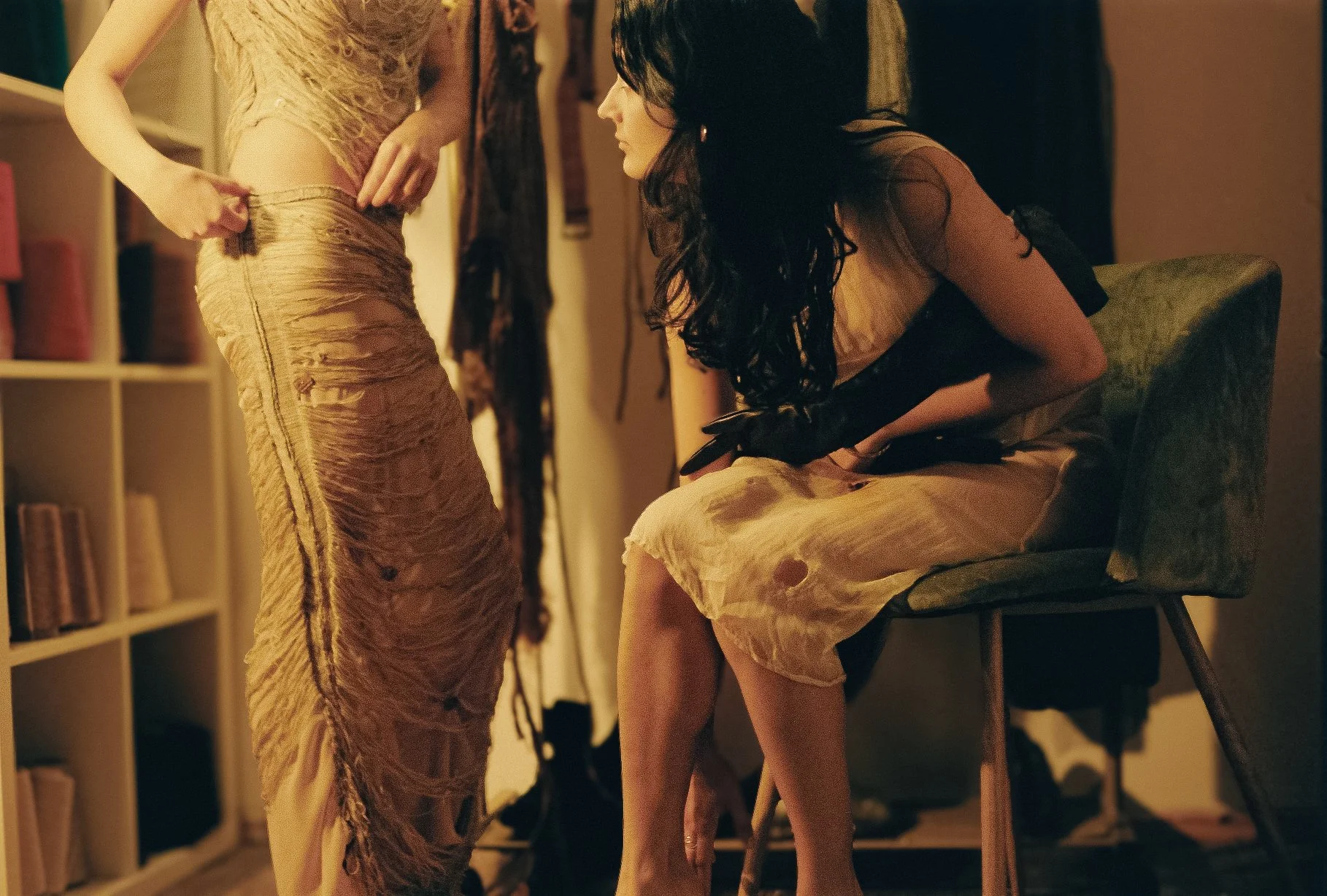
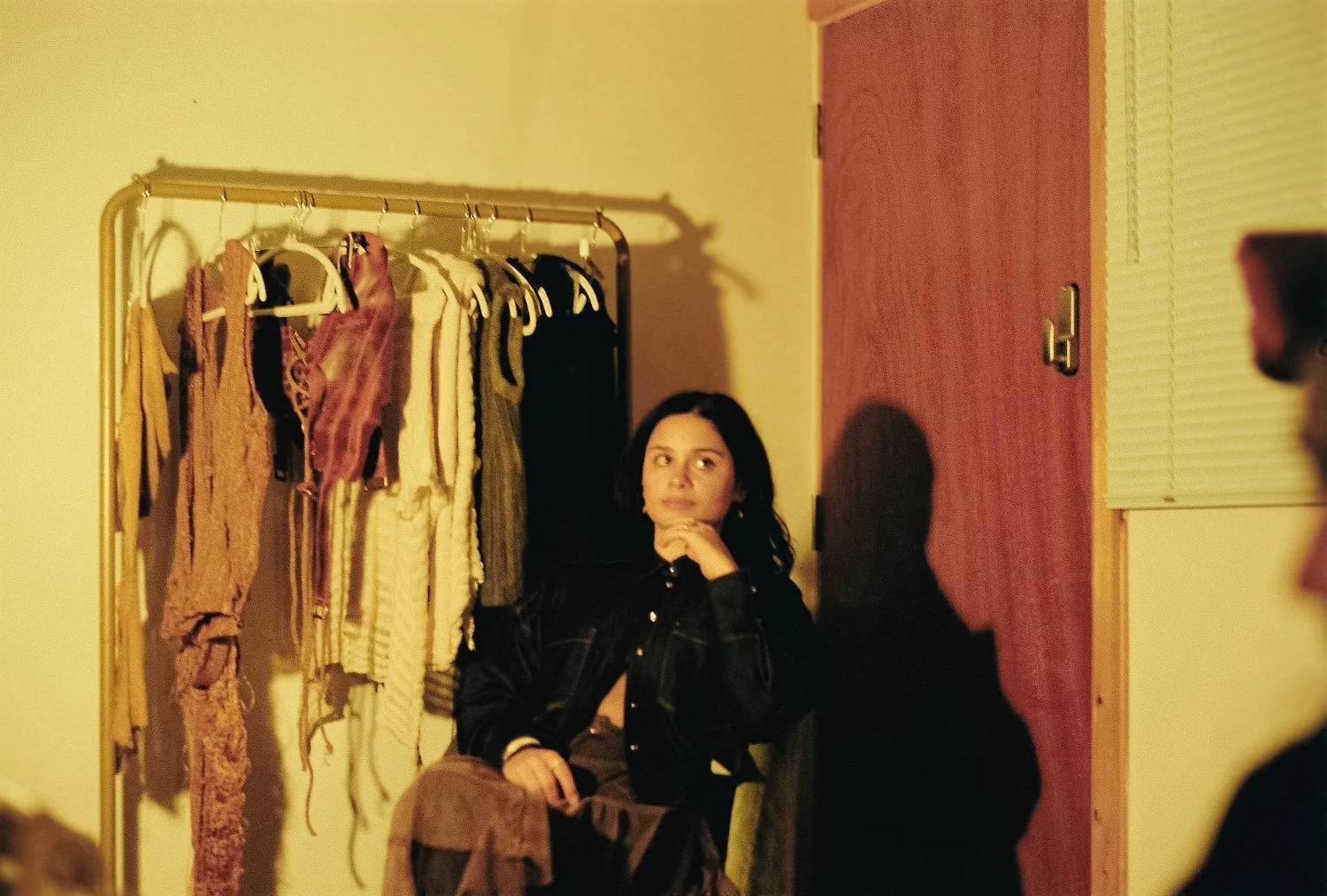
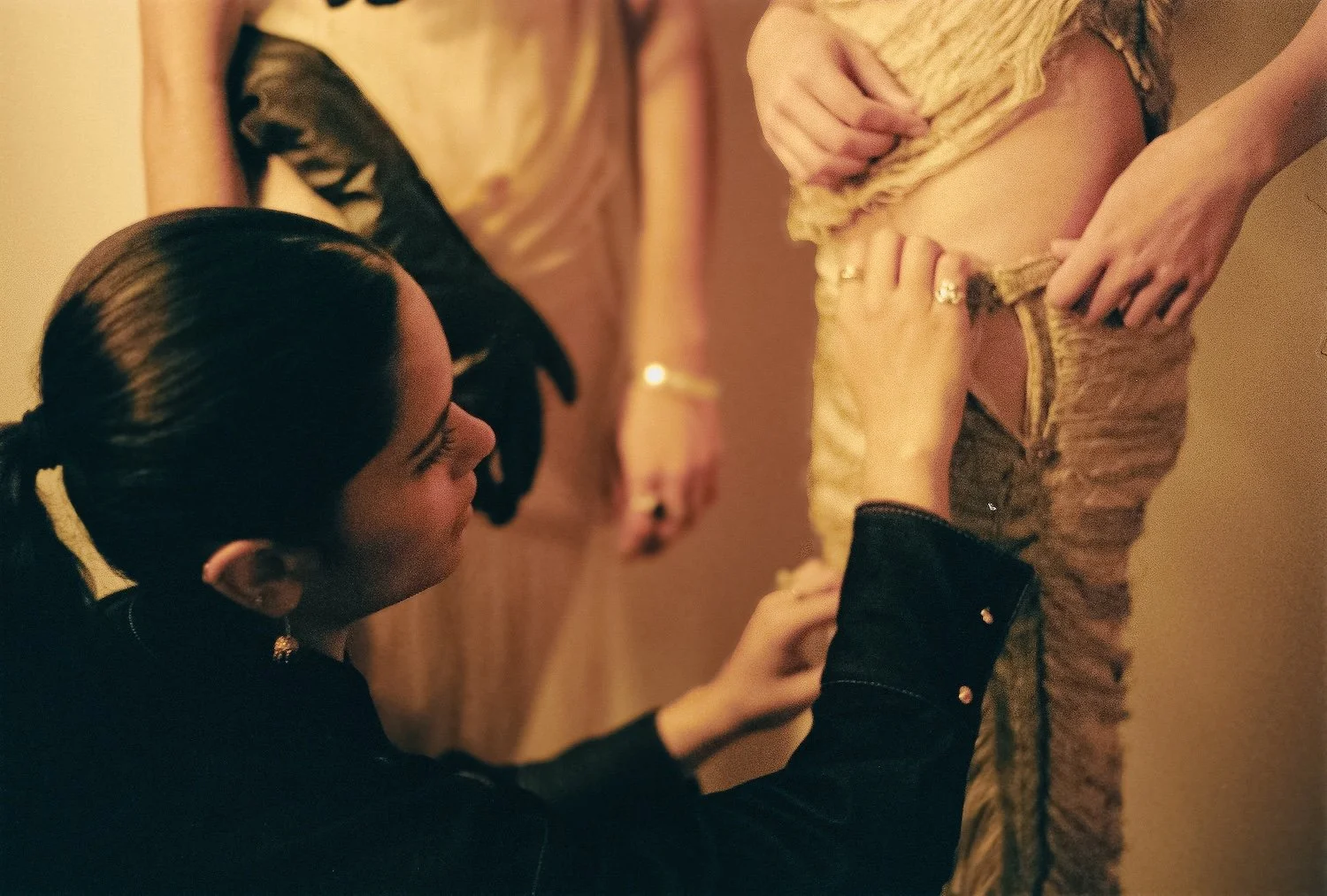
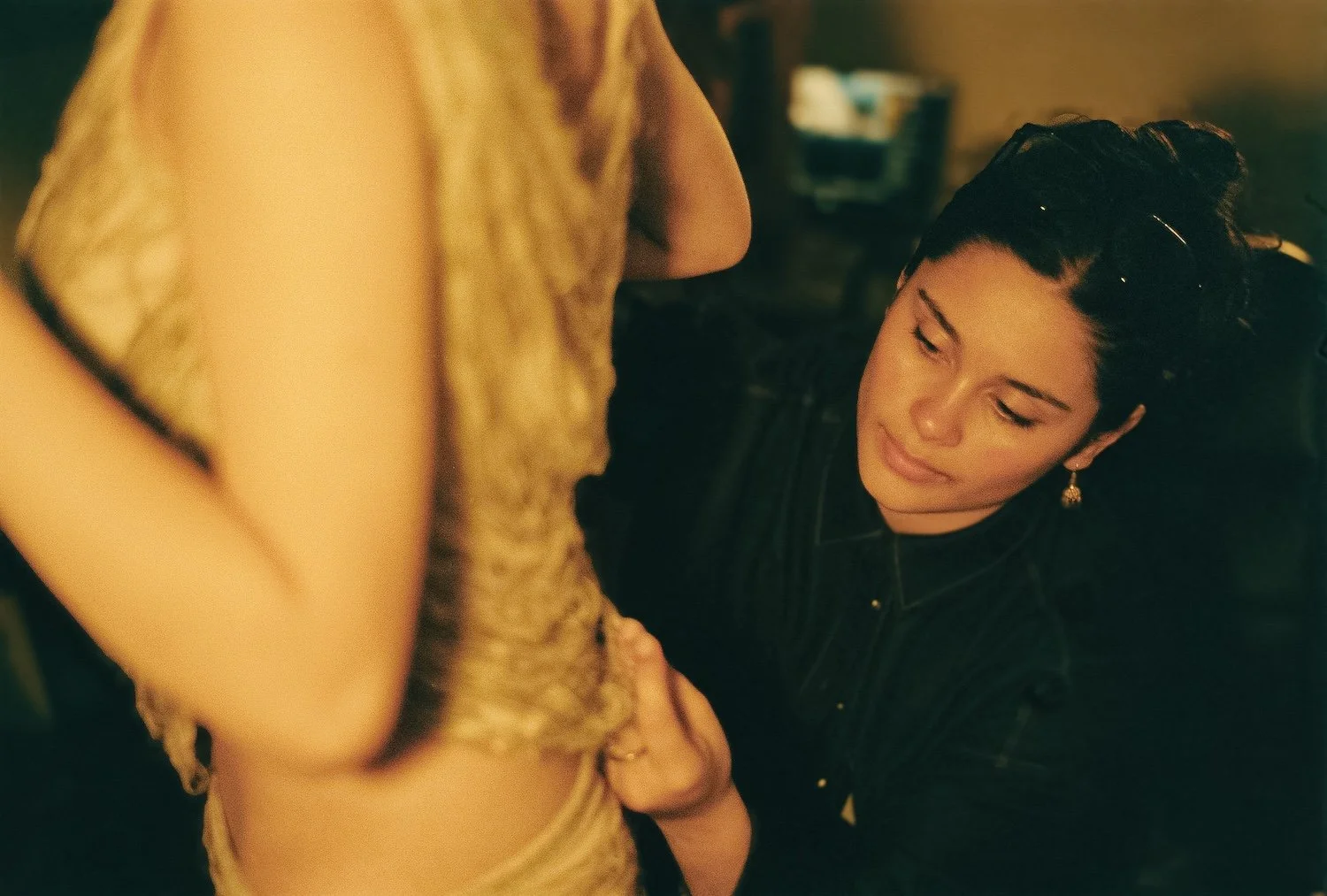
Tarika explained that materiality is central to her creative process. "I tend to work material-first, draping and moulding textiles around the body rather than beginning with traditional pattern cutting, which I can sometimes find restrictive," she said, adding that she prefers to let the material inform the form, allowing its qualities and possibilities to guide the design.
For Tarika, this approach is another way of honouring the people and processes behind the materials themselves. She concluded, "I want to work with textiles with the care and consideration they deserve, creating pieces that respect the craft that has gone into making them while exploring what those techniques can become in a contemporary context."
How does working with deadstock and repurposed textiles influence your creative process and your approach to sustainability?
"I love the idea that materials have a life before they become mine." Tarika explained that beyond the environmental benefits, she is fascinated by their histories: "what they were originally made for, what they were intended to become, and how I can reinterpret them while honouring their past."
She also stated that working with a finite amount of material acts as a creative brief, explaining, "you know you have a certain amount to work with, so you have to be more intentional about how you use it. Those limitations often lead to more interesting and unexpected solutions."
Sustainability extends far beyond the raw materials themselves, she concluded, "working with what already exists encourages me to slow down, think more critically and create pieces that feel considered rather than disposable."
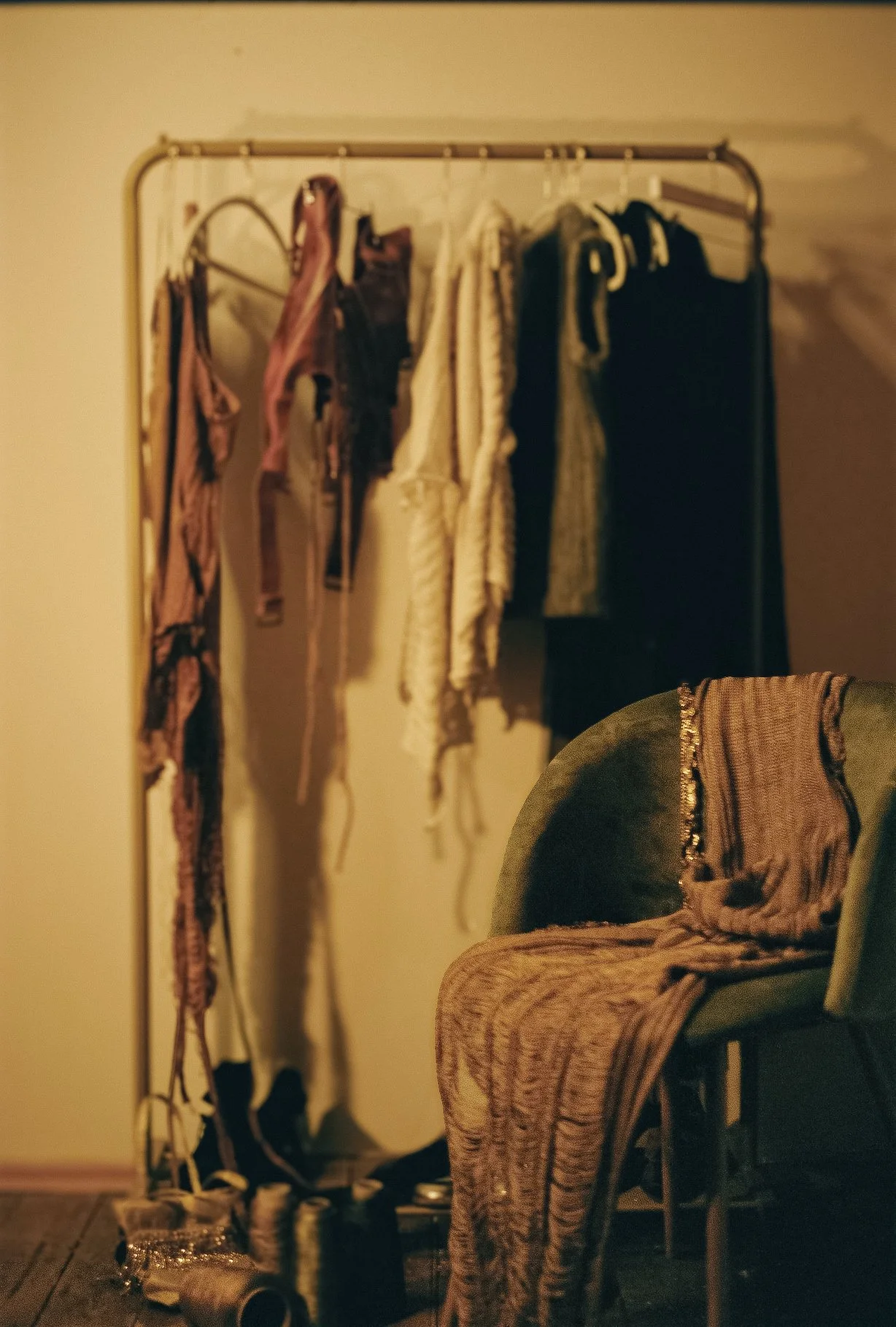
What do you think makes a garment emotionally meaningful, and how do you approach designing pieces that people can form lasting connections with?
"One of the things I love most about craft, and a big reason why I believe it can be such an intimate form of fashion, is that it encourages a connection between the wearer, the object and the person who made it."
Tarika noted that wearing something handcrafted creates a heightened awareness of the effort behind it, sharing, "when you wear something that you know has been carefully handcrafted, you become more conscious of the time, skill and human presence behind it. There’s an intimacy in knowing that another person’s hands have shaped something that you then bring into contact with your own body."
She believes this relationship can fundamentally alter how people value their clothing."Rather than seeing a garment as something purely functional or trend-led, we begin to understand it as an object with a story, a history and a human connection," she observed.
She hopes her practice inspires a shift in how we view what we wear, "that’s something I want my work to encourage: a deeper relationship with the things we choose to wear, and a renewed appreciation for the craft and care that goes into making them."
As an emerging designer, what have you learned about building a distinctive creative identity and finding your place within the fashion industry? What advice would you give to graduates wanting to develop their own design practice?
Firstly, Tarika acknowledged that "the fashion industry can feel incredibly daunting, particularly when you’re not based in London or another city with an established creative network." However, her main piece of advice to graduates is "not to let that become a barrier."
Looking back at her own journey, she shared how moving back to Belfast after university initially felt like a setback. "At the time, I felt as though I was taking a step backwards. Looking back, I genuinely think it was one of the smartest career decisions I’ve made," she explained, adding that reconnecting with home and discovering a new creative network "opened up new perspectives and encouraged me to approach my work with a renewed respect for my craft and heritage."
Having that space allowed her to identify what sets her work apart. "I think it’s easy to look at what everyone else is doing and feel pressure to follow the same path," she observed, "but some of your most distinctive ideas come from embracing the things that are uniquely yours."
She advised emerging designers to give themselves patience and room to grow, "I’d also say not to rush. You don’t need to have everything figured out immediately, and not every opportunity is necessarily the right one for you. Trust your instincts, give yourself room to develop, and remember that building a creative practice is a process in itself."
You recently participated in the GFF Fashion Accelerator Programme. What has been your most valuable takeaway from the experience, and how has it influenced your approach to developing your brand?
Discussing her time in the GFF Fashion Accelerator Programme, Tarika admitted she initially applied "on a whim, without realising how much it would influence my approach to fashion and developing my brand."
The mentorship and workshops reinforced the need to forge her own space in the industry. "What works for one designer won’t necessarily work for another, and recognising that has been really valuable," she pointed out, adding that the experience pushed her to "identify the elements that make my brand distinctive and to build on those through the way I create, make and communicate my work."
Beyond business strategy, she singled out the cohort as the true highlight. Having worked alongside "some of the most talented people I’ve had the pleasure of meeting, working with and collaborating with," she found watching her peers grow incredibly rewarding."Design can sometimes be presented as a solitary pursuit, but I don’t think it has to be. The people you surround yourself with, the conversations you have and the relationships you build are just as important as the work itself." That shared environment, she concluded, proved to be "one of the most valuable parts of the experience."
Looking ahead, what are you most excited to explore through your work, and how would you like to see your brand and creative practice evolve?
Looking to the future, Tarika expressed enthusiasm for delving into the more artistic side of her practice. Her current MA at the London College of Fashion, she explained, encourages her to consider fashion in a much more holistic context, “exploring how an object exists in relation to the body, rather than viewing fashion solely through the lens of clothing."
As her brand develops, she aims to lean further into crafting “meaningful, wearable pieces of art that challenge conventional ideas of what craftsmanship can be and where it belongs within contemporary fashion”. She hopes to push traditional techniques in unexpected ways, experimenting with raw materials and exploring the relationship between the body, the object and the maker.
"For me, making craft sexy again is about bringing that level of care and craftsmanship back into the conversation in a way that feels relevant, exciting and contemporary," Tarika highlighted.
Ultimately, she strives to produce garments that are both “distinctive and desirable, but simultaneously carry a deeper sense of meaning, celebrating the skill, time and human touch behind them."
Imagery credits: Sophia Willow Mackey & Sia Suil
Find out more about Tarika by following her instagram here.
Where It All Began
|
Where It All Began |
Thank you to Tarika for giving up her time to speak with the Foundation about her career journey so far. Tarika’s experience highlights how traditional craftsmanship and contemporary fashion design can converge to form an original perspective: seamlessly blending heritage, materiality, and modern artistry.
Inspired by this conversation? Graduate Fashion Foundation has an exciting array of alumni in leading industry roles from education to design, marketing to pattern cutting. In our 35th anniversary year, we’re celebrating our alumni community. Discover the series here.
If you’re a student at a member university, we’d love to hear more about your story, experience and ideas - pitch us a story here.
